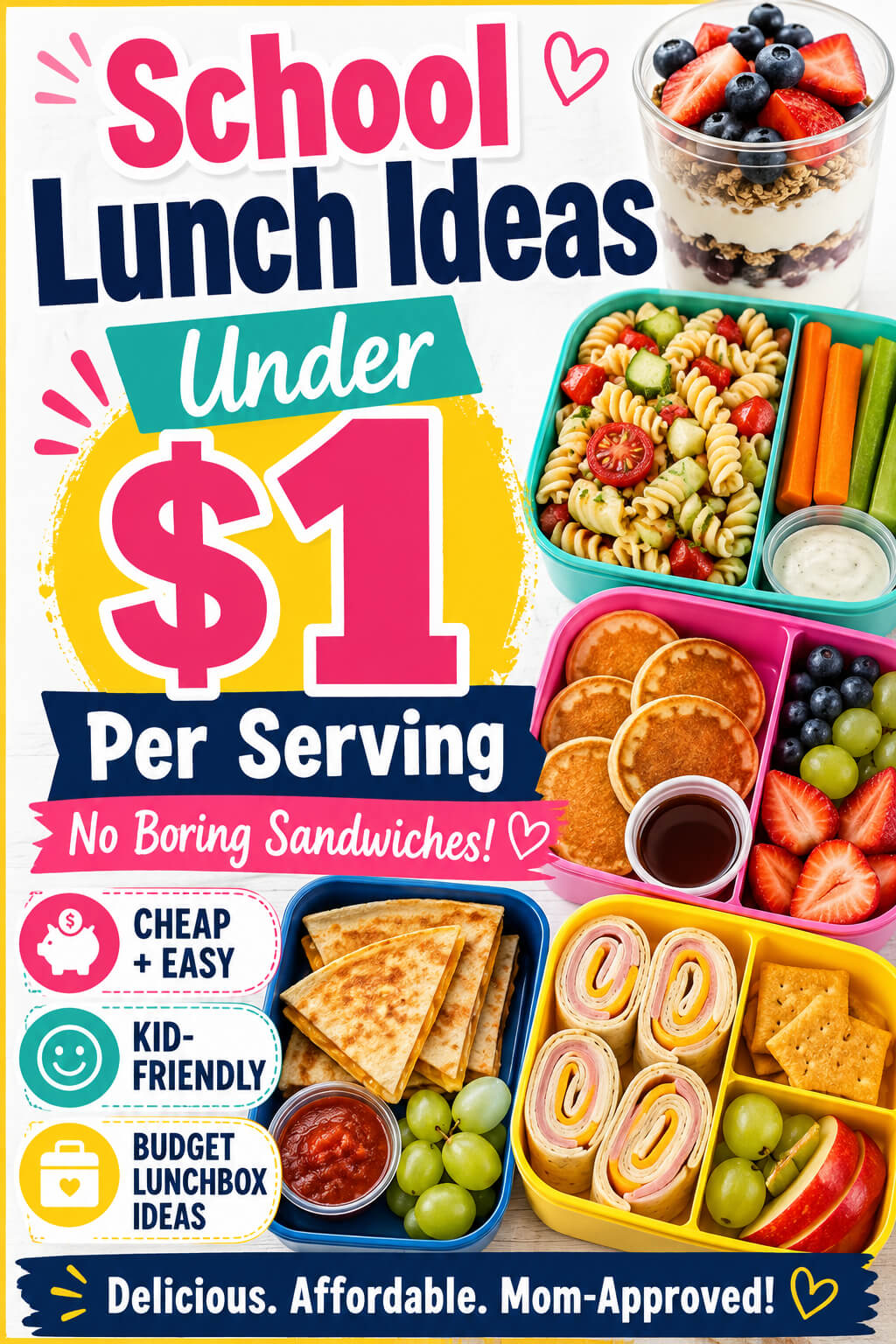
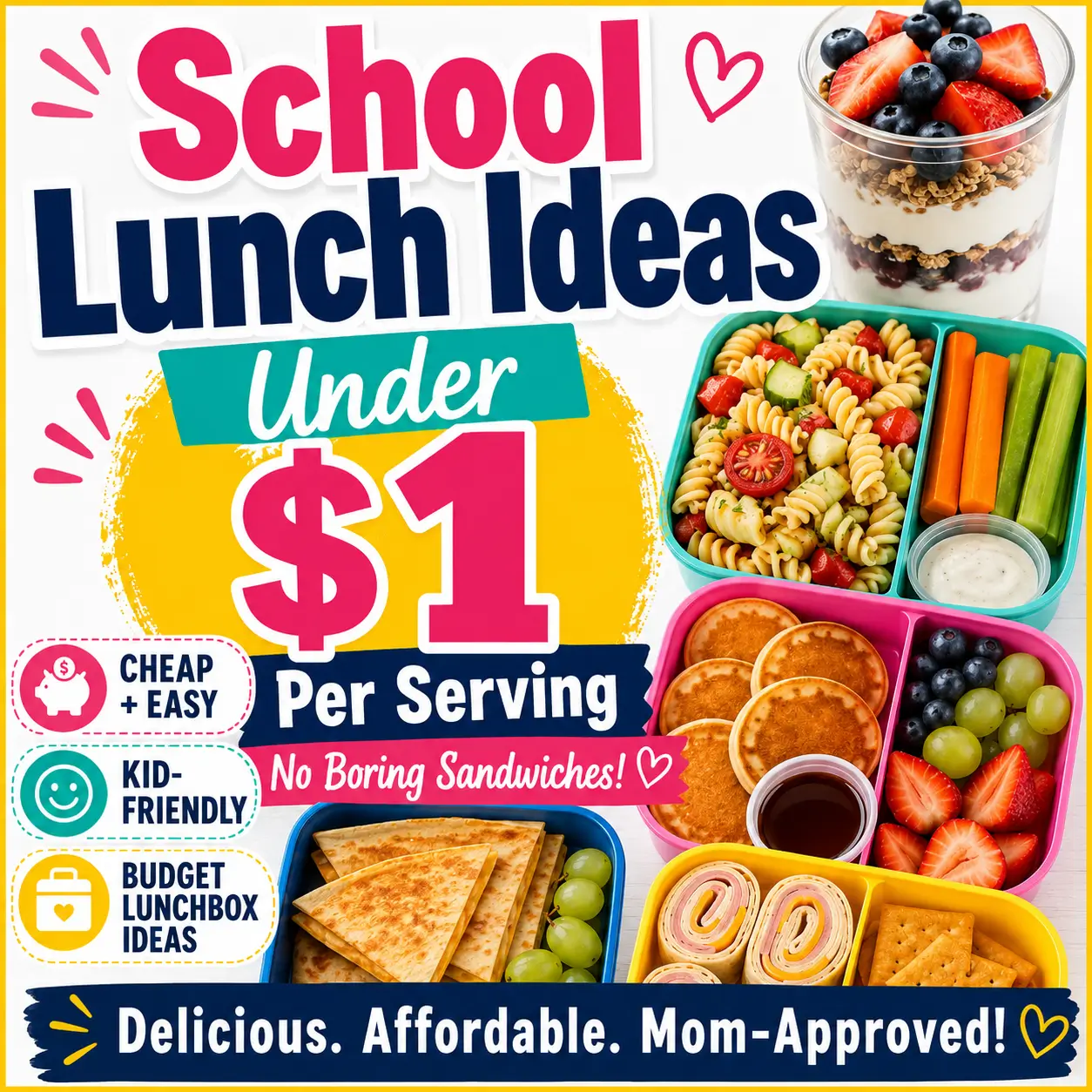
School Lunch Ideas Under $1 Per Serving: No Boring Sandwiches
If you’ve ever opened a lunchbox at the end of the day and found the sandwich exactly where you left it — untouched, slightly warm, maybe a little sad — you already know what this is about.
Packing school lunches is one of those things that sounds simple until you’re actually doing it five days a week.
Grocery prices are up. Kids are picky. And somehow a loaf of bread, some deli meat, and a bag of chips can blow $40 in a week without you even noticing.
You do not need a sandwich to pack a good lunch. You also don’t need to spend more than a dollar per serving to pack something your kid will actually eat.
Below are more than 20 lunch ideas that are cheap, filling, and not boring, along with a sample weekly plan, a real grocery list, and tips for making it all work on a Tuesday morning when you’re running late.
How to Build a School Lunch Under $1 Per Serving
The easiest way to keep costs down is to stop thinking in terms of “lunch items” and start thinking in terms of components.
A good lunchbox has four things:
- 1 protein: eggs, beans, cheese, peanut butter, leftover chicken, canned tuna, yogurt
- 1 filling carb: rice, pasta, tortilla, crackers, bread, leftover rice, popcorn
- 1 fruit or veggie: apple, banana, carrot sticks, cucumber slices, grapes, whatever’s on sale
- 1 small treat or extra: a few crackers, a homemade muffin, a small handful of popcorn, a cookie
Four things.
That combination keeps you under a dollar almost every time, because you’re building from cheap staples instead of buying assembled products at a markup.
A dozen eggs at Aldi run around $3. A bag of rice is $1.50 and lasts weeks. A bunch of bananas costs less than $1.50. Tortillas — the unsung hero of cheap lunches — are about $1.50 for a 10-pack at Walmart.
The trap most people fall into is buying pre-packaged lunch kits, individual snack bags, and brand-name everything. Those markups are brutal.
Buy the big tub of yogurt, cut your own fruit, and portion crackers into a small container yourself.
You’ll save $30 a month without noticing.
Best Budget Ingredients for School Lunches
These are the staples worth keeping stocked.
None of them are fancy, and all of them can be found at Aldi, Walmart, or any regular grocery store.
Tortillas — $1.50 for 10. More versatile than bread. You can roll them, fold them, cut them into triangles, or bake them into chips. Kids like them.
Rice — $1.50–$2 for a 2 lb bag. Cook a big batch on Sunday and use it all week. Goes with almost anything.
Pasta — $1–$1.50 per box. Rotini and penne hold up better in a lunchbox than spaghetti.
Eggs — $3–$4 for a dozen. Hard-boil a batch on Sunday. Use them in egg salad, slice them onto crackers, or pack them whole with a little salt packet.
Shredded cheese — $2–$3 per bag. Works in quesadillas, burritos, pasta, egg muffins, and nachos. Goes a long way.
Canned beans — $0.70–$1 per can. Black beans, pinto beans, chickpeas. Good protein and very filling.
Peanut butter — $2–$3 for a jar. Or sunflower butter if nut-free schools are a factor. Either way, it’s about $0.10–$0.15 per serving.
Yogurt (large tub) — $3–$4 for 32 oz. About $0.35 per half-cup serving vs. $0.99–$1.50 for individual cups.
Apples — $3–$4 per 3-lb bag. Hold up well without refrigeration. Kids eat them.
Bananas — $0.20–$0.30 each. Cheap, filling, zero prep.
Baby carrots — $1.50 for a 1 lb bag. Pair well with hummus or just on their own.
Crackers — $1.50–$2 for a big box of Saltines or store-brand butter crackers.
Popcorn — $1.50 for a large bag, or pop it yourself for even less. Fills a container fast.
Muffins — Homemade muffins from scratch cost about $0.15–$0.20 each. Freeze them and grab one each morning.
Leftovers — Free. The most underrated lunch ingredient there is.
20+ School Lunch Ideas Under $1 Per Serving — No Sandwiches
1. Cheese Quesadilla Triangles
What to pack: 1 flour tortilla folded with shredded cheese, cooked in a pan for 2 minutes, cut into triangles. Add a small cup of salsa if your kid likes to dip.
Estimated cost: $0.45–$0.55 per serving
Why kids like it: It feels like a snack, not a “lunch.” Warm when you make it, holds fine at room temp by the time they eat it.
Make-ahead tip: Cook the night before, wrap in foil, and refrigerate. Reheat in the morning or send cold. Honestly, either way works.
2. Egg Salad Cracker Box
2 hard-boiled eggs mashed with a little mayo, mustard, and salt. Saltines or store-brand crackers on the side. Add sliced cucumber or a handful of grapes.
Estimated cost: $0.60–$0.75
Spreading and stacking are half the fun. They build each cracker themselves, which means they actually eat it.
Boil eggs on Sunday. Egg salad keeps in a sealed container in the fridge for up to 3 days.
3. Pasta Salad Lunch Cup
Cooked rotini tossed with a little Italian dressing, shredded cheese, diced cucumber, and any vegetables you have around. Serves cold.
Estimated cost: $0.55–$0.70
Most kids will eat pasta in basically any form. The cold version is especially good on hot days.
Make a big batch Monday night. It gets better the next day once it soaks up the dressing.
4. Mini Pancake Lunchbox
4–5 small pancakes made from a store-brand mix. Add a small container of maple syrup for dipping, a banana, and a few slices of cheese.
Estimated cost: $0.50–$0.65
Pancakes for lunch are an automatic win. There’s nothing to argue about.
Make a double batch on the weekend. Freeze leftovers flat in a zip bag. Microwave for 45 seconds in the morning.
5. Rice and Beans Bowl (in a thermos)
Leftover cooked rice and canned black beans were heated together with a pinch of cumin and salt. Pour into a thermos. Add a tortilla and some shredded cheese on the side.
Estimated cost: $0.50–$0.65
It’s warm, which already gives it a leg up on most cold lunchboxes. Add a little hot sauce on the side for older kids who want it.
Keep cooked rice in the fridge all week. Beans take 2 minutes to heat on the stovetop each morning.
6. Yogurt Parfait Box
Half a cup of plain or vanilla yogurt from a large tub, layered with a handful of granola and some sliced strawberries or banana. Pack the toppings separately if your kid doesn’t like things mixed.
Estimated cost: $0.55–$0.70
It feels a little special. Kids who won’t touch a plain cup of yogurt will sometimes eat the same yogurt when it’s layered with something crunchy.
Portion yogurt into small containers the night before. Takes 2 minutes.
7. Homemade Pizza Roll-Ups
A thin layer of jarred pizza sauce spread on a flour tortilla, topped with shredded mozzarella and whatever topping your kid will eat. Roll tightly, wrap in foil, and warm in the oven for 8 minutes at 375°F. Slice into rounds.
Estimated cost: $0.55–$0.70
Why kids like it: Pizza. That’s it.
Assemble the night before, refrigerate, and bake in the morning while you’re getting ready.
8. Hummus and Veggie Dippers
3–4 tablespoons of hummus in a small container. Baby carrots, cucumber slices, and a handful of crackers or pita chips for dipping.
Estimated cost: $0.50–$0.65
Dipping makes everything more interesting. Store-bought hummus works fine, but if you blend a can of chickpeas with olive oil, garlic, and lemon juice yourself, you’re down to about $0.30 per serving.
Homemade hummus takes 5 minutes and keeps in the fridge for a week.
9. Chicken Rice Leftover Bowl (thermos)
Last night’s dinner repackaged — shredded rotisserie chicken, rice, and a splash of chicken broth or soy sauce, reheated and poured into a thermos.
Estimated cost: $0.50–$0.70 (most of this is already covered by dinner)
It’s something they already ate and liked the night before.
Nothing extra to do. This is just leftovers.
10. Bean and Cheese Burrito Bites
Canned refried beans and shredded cheese spread on a small tortilla, rolled up tightly, and sliced into 4 pieces. Pack with sliced bell pepper strips on the side.
Estimated cost: $0.45–$0.60
Small pieces feel snackable rather than like a “meal,” which some kids respond to better.
Assemble the night before and refrigerate. Slice in the morning so you’re not doing it half-asleep.
11. DIY Nacho Lunchbox
What to pack: A handful of tortilla chips in a separate bag. Shredded cheese. A small container of black beans. Salsa or sour cream on the side. Everything is packed separately, so nothing gets soggy.
Estimated cost: $0.65–$0.80
Building their own nachos at the lunch table is genuinely fun for most kids.
Portion the chips and beans the night before. Cheese goes in a small zip bag.
12. Breakfast-for-Lunch Egg Muffins
Mini egg muffins baked in a standard muffin tin — beaten eggs poured over whatever fillings you have on hand (cheese, diced peppers, leftover sausage crumbles). Add a banana and a handful of crackers.
Estimated cost: $0.55–$0.70 for 2 muffins
Handheld, no utensils, and breakfast for lunch always sounds like a treat to a kid.
Bake a full 12-muffin batch on Sunday. Refrigerate for up to 4 days, or freeze the rest.
13. Peanut Butter Banana Roll-Ups
Peanut butter spread on a flour tortilla, a whole banana placed along the bottom edge, rolled up tightly, and sliced into pinwheels.
Estimated cost: $0.35–$0.45
Sweet, filling, no utensils, easy to eat in a hurry. This one rarely comes home.
Roll and slice the night before. Wrap tightly in plastic wrap so they don’t dry out overnight.
14. Tuna Cracker Stackers
One small can of tuna in water (drained) mixed with a little mayo and sweet relish. Saltines on the side for scooping. Baby carrots to round it out.
Estimated cost: $0.70–$0.85
Same idea as the egg salad crackers — they build their own bites, which means more engagement and less complaining.
Mix the tuna salad the night before. Keep chilled with an ice pack in the lunchbox.
15. Mac and Peas Lunch Cup (thermos)
Homemade mac and cheese — just pasta, butter, and shredded cheese — with a handful of frozen peas stirred in while it’s still hot. Pack it in a thermos.
Estimated cost: $0.55–$0.70
Mac and cheese is one of the more reliable lunchbox options out there. The peas blend in well enough that most kids don’t notice or mind.
Cook a big batch of plain mac the night before. Reheat it with the peas in the morning.
16. Mini Bagel Pizza
A mini bagel split in half, spread with pizza sauce and shredded cheese, toasted in the oven or toaster oven until the cheese melts. Pack in a container with grapes or apple slices.
Estimated cost: $0.65–$0.80
Why kids like it: Still pizza. See #7.
Toast the night before and refrigerate. Send it cold or reheat in the morning — your call.
17. Hard-Boiled Egg Snack Box
2 hard-boiled eggs, a handful of crackers, a small piece of cheese, and a fruit — grapes, apple slices, or a clementine.
Estimated cost: $0.55–$0.70
It’s basically a homemade Lunchable. The variety keeps it interesting, and it’s actually filling.
Boil a full dozen on Sunday. Peeled eggs stored in water keep in the fridge for up to 5 days.
18. Pasta with Butter and Parmesan
Cooked pasta tossed with butter, garlic powder, and a sprinkle of Parmesan. Pack warm in a thermos. Add a banana and a few crackers on the side.
Estimated cost: $0.45–$0.60
Buttered pasta is a rare food that almost every kid will eat without drama.
Cook a big batch on Monday night. Reheat each morning portion with a small pat of butter to keep it from clumping.
19. Leftover Taco Rice Cup (thermos)
Leftover taco meat or beans mixed with leftover rice and a spoonful of salsa, heated through, and poured into a thermos. Shredded cheese on top.
Estimated cost: $0.50–$0.65
Kids who liked taco night on Thursday are usually happy to eat it again on Friday. The thermos makes it feel like a real warm meal.
This is just Thursday’s dinner repurposed. Nothing extra to prepare.
20. Apple Nachos with Peanut Butter Drizzle
Apple slices arranged in a flat container, drizzled with peanut butter, and sprinkled with granola or a few mini chocolate chips.
Pack the toppings in a separate small container to add right before eating.
Estimated cost: $0.35–$0.50
It looks like a dessert. They feel like they’re getting away with something, which is most of the appeal.
Slice the apple the night before and toss with a tiny squeeze of lemon juice to stop browning.
21. Homemade Muffin Lunchbox
1–2 homemade muffins (banana, blueberry, or chocolate chip), a hard-boiled egg, and a handful of grapes.
Estimated cost: $0.55–$0.70
Muffins feel like a treat even when they’re not that sweet. Pair it with the egg for protein, and it’s a filling, balanced lunch.
Bake a batch and freeze them individually. Pull one out the night before, and it’ll be thawed by morning.
22. Popcorn Chicken-Style Leftover Bites
Leftover roasted or baked chicken, cut into small bite-sized pieces.
Pack cold with a small dipping sauce — honey mustard, ranch, or ketchup. Add crackers and a piece of fruit.
Estimated cost: $0.55–$0.75
Finger food with a dipping sauce covers a lot of ground with most kids.
Pull the chicken into pieces the night before and store them in a small container in the fridge.
Sample 5-Day School Lunch Plan Under $1 Per Serving
One full week for one child, keeping every day under $0.80:
Monday
- Main: Cheese quesadilla triangles
- Side: Baby carrots
- Fruit: Apple slices
- Estimated total: $0.65
Tuesday
- Main: Pasta salad cup (rotini, Italian dressing, shredded cheese)
- Side: Saltine crackers
- Fruit: Banana
- Estimated total: $0.70
Wednesday
- Main: Rice and beans thermos bowl
- Side: Flour tortilla + shredded cheese
- Fruit: Small bunch of grapes
- Estimated total: $0.65
Thursday
- Main: Peanut butter banana roll-up pinwheels
- Side: Homemade muffin
- Fruit: Clementine
- Estimated total: $0.55
Friday
- Main: Leftover taco rice cup (thermos)
- Side: Tortilla chips + salsa
- Fruit: Apple slices
- Estimated total: $0.70
Weekly total for one child: approximately $3.25 — under $0.70 per day on average
Budget Shopping List for One Week of School Lunches
This covers one child for 5 lunches.
Most of these items will carry over into the following week.
| Item | Approx. Price | Notes |
|---|---|---|
| Flour tortillas (10-pack) | $1.50 | Lasts 2 weeks |
| Bag of rice (2 lb) | $1.50 | Lasts several weeks |
| Box of rotini pasta | $1.25 | Lasts 2+ weeks |
| Dozen eggs | $3.00 | Lasts all week |
| Shredded cheese (2-cup bag) | $2.50 | Lasts 2 weeks |
| Canned black beans (2 cans) | $1.50 | |
| Peanut butter (jar) | $2.50 | Lasts weeks |
| Yogurt (large 32 oz tub) | $3.50 | About 6–7 servings |
| Apples (3 lb bag) | $3.50 | |
| Bananas (bunch) | $1.25 | |
| Baby carrots (1 lb bag) | $1.50 | |
| Saltine crackers (box) | $1.75 | Lasts 2 weeks |
| Jarred salsa (small) | $1.50 | Lasts 2+ weeks |
| Total | ~$26.75 | Tortillas, pasta, rice, crackers, PB, and salsa all roll into next week |
Actual per-lunch cost: around $0.60–$0.80. Weeks when you already have the pantry staples on hand will cost noticeably less.
Make-Ahead Tips for Busy Moms
The fastest way to make school mornings work is to do the prep on Sunday. It doesn’t have to take long — 30 to 40 minutes covers most of it.
Boil a full dozen eggs. Store them unpeeled in the fridge. They last all week and work in at least five different lunches: egg salad, snack boxes, cracker stackers, egg muffins, or just whole with a salt packet.
Cook a big pot of rice. One batch lasts 4–5 days in the fridge. Reheat each portion with a splash of water in the morning to loosen it up.
Cook a box of pasta. Plain, tossed with a little olive oil so it doesn’t stick. Use it for pasta salad on Monday, buttered pasta later in the week, and mac and peas on Thursday.
Portion snacks into small containers or bags. Crackers, grapes, carrots. Having them ready means you’re not measuring things at 7 AM when half of everyone is still in pajamas.
Bake and freeze muffins. A batch of 12 banana muffins takes about 30 minutes start to finish. Freeze them flat in a zip bag and pull one out each night to thaw on the counter.
Cook extra at dinner on purpose. Taco night Thursday = taco rice cup Friday. Roast chicken on Wednesday = leftover chicken bites on Thursday. You’re not cooking more — you’re just plating a little extra.
Prep fruit before the week starts. Slice apples, store them in a container with a squeeze of lemon juice, and wash grapes into small portions. Ten minutes on Sunday morning saves you fumbling with a paring knife at 6:45 AM.
Smart Ways to Keep Lunches Under $1
Buy store brands. At Aldi or Walmart, store-brand versions of almost everything are 30–50% cheaper than name brands. Crackers, yogurt, peanut butter, pasta — in most cases, the difference in taste is undetectable to a seven-year-old.
Skip individual snack bags. A box of portioned Goldfish snack bags runs about $1.00–$1.25 per tiny bag. A full-size bag of the same crackers is $2.50–$3.00 and gives you 8 or 9 servings. The math is not subtle.
Stop buying juice boxes. They’re $0.50–$0.80 each and mostly sugar. Fill a reusable water bottle at home and move on.
Use tortillas instead of bread. A 10-pack of flour tortillas costs $1.50 and goes further than most sandwich bread — and they’re harder for a kid to squash in a backpack.
Buy large tubs of yogurt instead of cups. A 32-oz tub is $3.50 and has about 7 servings. Seven individual cups at $0.99 each is $6.93. That’s $3.43 saved every single week on one item.
Cut your own fruit. Pre-cut fruit cups are $1.50–$2.00 each. A whole apple is about $0.35.
Rotate cheap proteins. Eggs are almost always affordable. Canned tuna goes on sale regularly. A $4.98 Walmart rotisserie chicken covers dinner plus 2–3 lunch portions for the next day. Canned beans are around $0.80 and have more protein per dollar than almost anything else at the store.
Use leftovers on purpose. Cook a little more than you need at dinner with the specific intention of packing the rest. No extra money, no extra morning effort.
Substitutions for Picky Eaters or Food Allergies
No peanut butter at school? Sunflower butter (SunButter is the most common brand) is nut-free and tastes close enough that most kids don’t notice a difference. Cream cheese is another good swap for roll-ups.
Kid won’t eat beans? Hummus is the same basic protein source but milder in flavor. Or just lean on cheese as the protein for that meal.
Dairy-free? A dairy-free shredded cheese works in quesadillas and burritos. You can also skip cheese entirely and add extra beans or a hard-boiled egg for protein.
Gluten-free? Rice cakes instead of crackers, corn tortillas instead of flour, and gluten-free pasta, which is widely available at regular grocery stores now and doesn’t cost much more than regular pasta.
The kid won’t eat yogurt? Cottage cheese is similar in price and texture. Some kids will eat one but not the other, and there’s no logic to it. Try both.
Picky about vegetables? Don’t fight it. Pack whatever vegetables they’ll actually eat. If that’s baby carrots and nothing else, then baby carrots it is. A vegetable that comes home untouched is a waste of money.
Is the fruit they like expensive? Apples and bananas are almost always the cheapest options year-round. Frozen fruit thawed overnight is a good stand-in for yogurt parfait boxes when fresh berries are out of budget.
Lunchbox Safety Tips
Food safety is simpler than people make it sound, but it does matter — especially in the warmer months when lunchboxes sit in hot classrooms and backpacks.
Always pack an ice pack. Anything with eggs, dairy, or meat needs to stay below 40°F. A standard ice pack in a well-insulated lunchbox holds that temperature for 4–5 hours, which covers most school lunch periods.
Use a thermos for hot foods. Preheat it first: fill the thermos with boiling water, let it sit for 2 minutes, dump it out, then add the hot food. Done that way, it’ll stay above 140°F for 3–4 hours.
Pack portions your kid will actually finish. Half-eaten food sitting in a warm backpack for an hour after lunch is a food safety issue, especially with egg salad or tuna. Pack what they’ll eat.
Don’t skip the cold pack with creamy foods. Egg salad, tuna salad, and yogurt all need refrigeration. If you’re packing any of those without an ice pack, don’t pack them.
Wash produce before you pack it, not in the morning rush. Do it during Sunday prep and store it ready to go. You’re much less likely to skip it when it’s already part of a routine.
Final Thoughts
You don’t need to overhaul your entire grocery routine to make this work.
Start with 3–5 of the ideas from this list — whichever ones your kid is most likely to eat — and rotate them across the week. Once those feel automatic, add a few more.
Honestly, the hardest part is just deciding to stop buying the deli meat, the juice boxes, and the individually wrapped everything.
Once you break that habit, the cost drops and the lunchbox actually comes home empty.
Pick three this week. See what happens.