
Aldi vs Walmart vs Kroger: Which Is Really Cheapest?
If your grocery bill has been quietly creeping up every week, you’re not imagining it.
Food prices have climbed steadily over the past few years, and for families on a tight budget, even a $20 difference at checkout matters.
Most moms I know have Googled this at least once:
Is Aldi actually cheaper?
Should I just go to Walmart?
What’s the deal with Kroger coupons?
Here’s the honest answer: all three stores can be the cheapest — depending on what you buy, how you shop, and what’s on sale that week.
But that’s not a cop-out. There’s a real pattern to which store wins in which situation, and once you see it, grocery shopping gets a lot more strategic.
This article breaks down Aldi vs Walmart vs Kroger by category, shopping style, and real-life family budget situations so you can figure out which store (or combination of stores) actually saves your family the most money.
Aldi vs Walmart vs Kroger: Quick Answer for Budget Moms

No time to read the whole thing?
Here’s the short version:
- Aldi usually wins if you’re buying basic groceries and you’re flexible on brands. Their private-label prices on pantry staples, dairy, produce, and frozen food are hard to beat.
- Walmart usually wins for name brands, household products, and one-stop shopping. Their everyday low price model means you don’t need to coupon to get a decent deal.
- Kroger can win if you work the system — weekly ads, digital coupons, Kroger Plus Card, and fuel points. For strategic shoppers, Kroger frequently offers the lowest price on specific items.
The mom who just wants to get in and out with a cart full of store-brand basics? Aldi.
The mom who’s buying Pull-Ups, paper towels, Cheerios, and ground beef in one trip? Walmart.
The mom who meal plans around weekly sales and checks the app before she shops? Kroger.
How to Compare Aldi, Walmart, and Kroger Prices the Right Way

Comparing grocery stores sounds simple. It’s not, and here’s why.
Store brands vs name brands change everything
Aldi sells almost entirely private-label products. If you compare Aldi’s “Specially Selected” marinara sauce to Walmart’s Rao’s, Aldi wins easily.
But if you compare it to Walmart’s Great Value marinara, the gap narrows.
The store you’re “loyal” to brand-wise, will affect your total bill more than almost anything else.
Unit prices matter more than shelf prices
A $2.99 box of pasta that’s 12 oz is more expensive per ounce than a $3.49 box that’s 16 oz.
Always check the unit price tag — it’s usually printed in small font on the shelf label.
Regional pricing is real
What Kroger charges in Cincinnati may be different from what it charges in Atlanta.
Aldi prices in rural areas may differ from those in suburban stores.
Prices in this article reflect general national trends, but your local store could look very different. Always check before you shop.
Don’t forget gas, time, and fees
If Aldi is 15 minutes out of your way but saves you $8, is it worth it? Maybe.
If Kroger delivery saves you an hour but adds a $10 fee, it might cancel out the savings.
The “cheapest” store on paper may not be the cheapest in practice.
Impulse buys skew everything
Aldi’s famous “Aisle of Shame” — their rotating middle aisle of random deals — can wreck a tight budget fast.
Walmart’s massive selection makes it easy to add items that weren’t on the list. Track your actual spending, not just your planned list.
When Aldi Is Really the Cheapest Grocery Store
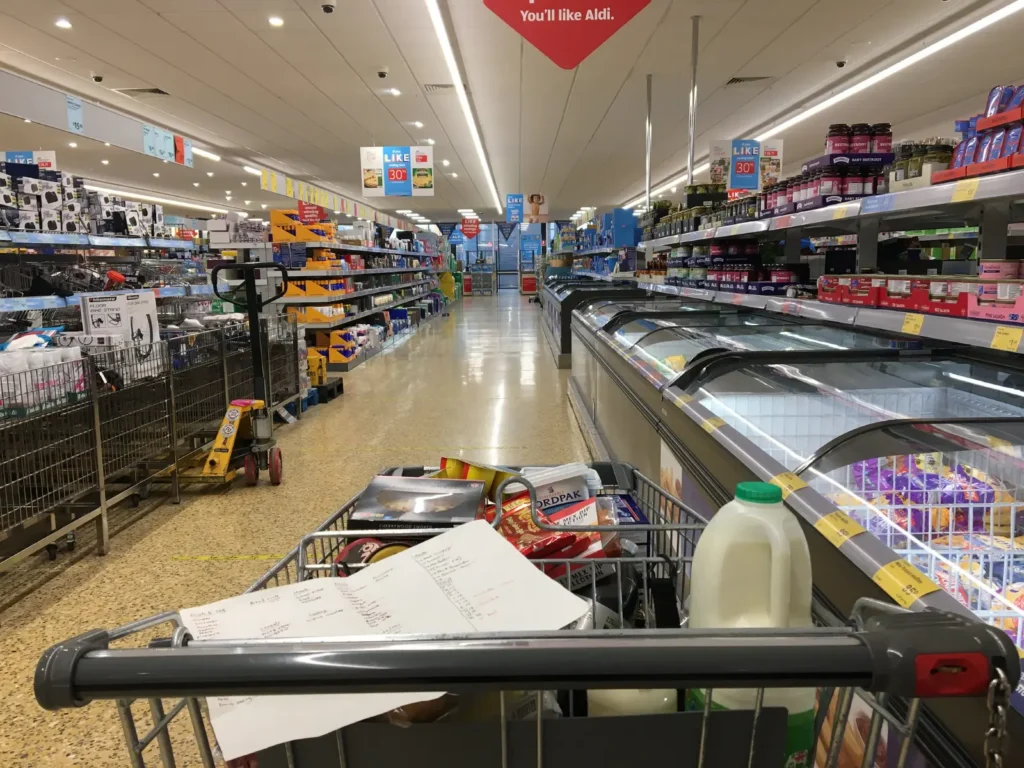
Aldi’s prices on store-brand basics are genuinely lower than most competitors in many markets.
Their model is simple: small stores, fewer products, no name-brand alternatives, no frills.
Less overhead, lower prices.
Where Aldi shines:
- Dairy and eggs. Aldi’s eggs, butter, shredded cheese, and milk are consistently priced below national grocery averages in many areas.
- Pantry staples. Flour, sugar, canned tomatoes, pasta, olive oil, canned beans — Aldi keeps these inexpensive, and the quality is solid.
- Produce. Hit or miss depending on the week and season, but fresh produce at Aldi is often priced lower than Kroger or Walmart, especially for basics like bananas, apples, carrots, and broccoli.
- Frozen foods. Aldi’s frozen vegetables, frozen meals, and frozen breakfast items are a budget-friendly staple for busy families.
- Snacks. Their private-label chips, crackers, and cookies are comparable to name brands for a fraction of the cost.
What Aldi can’t do:
Aldi doesn’t carry many name brands. If your kids will only eat Goldfish crackers and not the Aldi version, you’ll need to supplement elsewhere. Their selection is also limited — they may not carry every ingredient in a recipe, which can mean a second store trip. That extra trip costs time and gas, so factor it in.
Mom budget tip: Make Aldi your base run for the week. Grab your dairy, eggs, produce, pantry staples, and frozen basics. Then fill in name-brand gaps at Walmart or Kroger. Many budget-focused families find this split approach saves more than shopping at any single store.
When Walmart Is Really the Cheapest Grocery Store

Walmart’s grocery section doesn’t always get enough credit.
Their Great Value store brand is competitive with Aldi on many items, and for name-brand products, Walmart’s everyday low prices are usually better than Kroger’s regular (non-sale) shelf price.
Where Walmart wins:
- Name brands at everyday prices. Walmart prices on brands like Kellogg’s, Kraft, Campbell’s, and Tide tend to be lower than Kroger’s regular price. You don’t need a coupon to get a fair deal.
- One-stop shopping. This is huge for busy moms. Diapers, laundry detergent, school supplies, pet food, and groceries in one stop save real time and gas money.
- Great Value store brand. Walmart’s in-house brand is genuinely good on products like bread, canned goods, condiments, and paper products.
- Grocery pickup. Walmart’s free curbside pickup (on orders over a minimum amount) means no impulse buys, no wrestling kids out of car seats in a parking lot, and no time wasted walking the store.
- Price matching. Walmart doesn’t technically price match competitors anymore, but its everyday pricing on high-volume items is competitive enough that it often isn’t necessary.
What Walmart doesn’t always win:
Fresh meat and produce at Walmart can be inconsistent depending on the store.
Their deli and bakery sections vary widely by location. And if you’re a dedicated couponer or sale-stacker, Kroger’s loyalty program will often beat Walmart’s straight shelf price.
Mom budget tip: Use Walmart for your non-grocery household run — cleaning supplies, health and beauty, baby products, and name-brand pantry items you buy regularly. Curbside pickup makes this even more efficient.
When Kroger Is Really the Cheapest Grocery Store
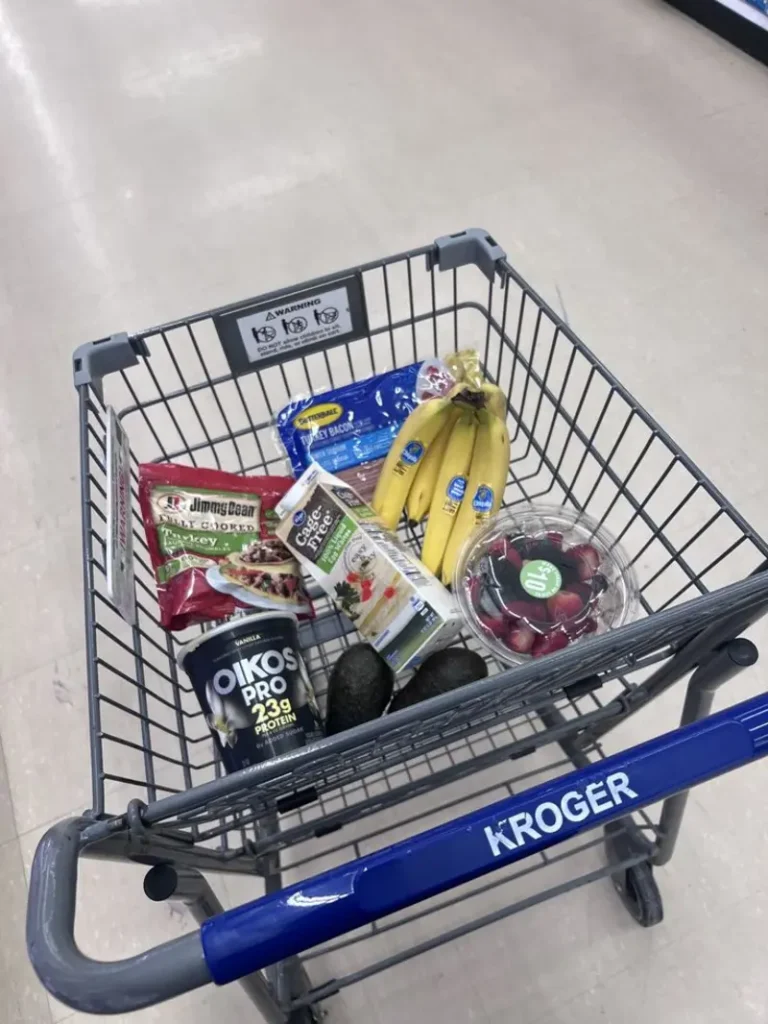
At regular shelf prices, Kroger often looks more expensive than both Aldi and Walmart.
But Kroger is built for shoppers who are willing to work the system — and if you do, you can come out ahead.
Where Kroger wins:
- Weekly ad sales. Kroger’s weekly specials can take a $6 item down to $2. Meat sales, especially. If you meal plan around the weekly ad, your grocery bill can drop significantly.
- Digital coupons. Kroger’s app lets you clip digital coupons that stack with sale prices. It’s common to find items 40–60% off when a sale price and a digital coupon combine.
- Kroger Plus Card. Free to sign up. Without it, you pay the higher regular price on almost everything.
- Fuel points. Kroger gives you fuel points on groceries and gift cards. Families who buy a lot of groceries or purchase gift cards can accumulate fuel discounts fast. In some areas, this effectively lowers your grocery cost by a few percent over time.
- Mega events and buy-more-save-more deals. Kroger runs periodic promotions where buying 5 or 10 items drops the price significantly per item. If you stock up on things your family always uses, these events are worth planning around.
What Kroger requires:
Time and planning. If you don’t check the app before you shop and clip coupons in advance, Kroger can be the most expensive of the three on a regular trip.
It rewards preparation.
Mom budget tip: Check the Kroger app every Wednesday when the new weekly ad drops. Build your meal plan around the meat and produce deals, clip every relevant digital coupon, and add items to your list directly in the app. Done right, Kroger can shave $30–$50 off a typical family’s weekly grocery bill compared to shopping without any planning.
Aldi vs Walmart vs Kroger by Grocery Category
| Category | Best Option | Why |
|---|---|---|
| Eggs & Dairy | Aldi | Consistently low everyday prices |
| Produce | Aldi (seasonal), Kroger (on sale) | Aldi is often cheapest at base price; Kroger sales can match |
| Fresh Meat | Kroger (weekly sale) | Weekly meat deals are hard to beat when stacked with coupons |
| Bread & Bakery | Aldi | Private-label bread is excellent quality at low prices |
| Pantry Staples | Aldi or Walmart | Aldi for store-brand, Walmart for name-brand basics |
| Frozen Foods | Aldi | Strong quality and low prices on frozen veggies and meals |
| Snacks | Aldi (store brand) or Walmart (name brand) | Depends on brand loyalty |
| Household Essentials | Walmart | One-stop convenience and competitive pricing |
| Name Brands | Walmart | Everyday low prices without needing coupons |
| Couponing/Stock-Up | Kroger | Loyalty rewards, digital coupons, fuel points |
Store Brands vs Name Brands: The Biggest Factor in Which Store Is Cheapest
This is the question that determines more about your grocery bill than anything else.
If your family is flexible on brands — meaning they’ll eat the store-brand cereal, drink the store-brand juice, and use the store-brand peanut butter — Aldi will almost always win.
Their private-label products are designed to compete directly with national brands on taste, and many families genuinely can’t tell the difference in products like pasta, yogurt, olive oil, and snack crackers.
If your family has hard opinions about specific brands — if it’s Jif or nothing, if the kids won’t touch store-brand mac and cheese, if your husband only does Tide — then Walmart is usually your best bet for keeping name-brand costs down without couponing.
Kroger’s private-label products (their Simple Truth organic line and the Kroger store brand) are solid but generally priced between Aldi and name brands.
They’re worth checking, especially when a Kroger coupon drops the price further.
Common items where brand flexibility saves the most money:
- Cereal (Aldi’s versions of classic cereals are genuinely close)
- Peanut butter and jelly
- Pasta and pasta sauce
- Laundry detergent and dish soap
- Crackers, chips, and cookies
- Frozen vegetables
- Canned goods (tomatoes, beans, broth)
If your family can flex on even half of these, switching to store brands at Aldi could save $30–$60 on a typical family grocery trip.
Pickup, Delivery, and Convenience Costs
The store with the lowest shelf price isn’t always the cheapest option once you factor in how you actually get there — and how you actually shop.
Walmart curbside pickup is free on qualifying orders and is one of the best deals in grocery shopping. No impulse buys, no time inside, and prices are the same as in-store. For busy moms, this is genuinely valuable.
Kroger pickup also offers free pickup on qualifying orders and lets you use digital coupons on your order. The app makes it easy to plan.
Aldi pickup and delivery is available in many areas through Instacart. Here’s the catch: Instacart typically marks up prices, adds a service fee, and expects a tip. A grocery trip that costs $80 in Aldi’s store might run $110 or more through delivery. If you’re using Aldi for delivery, you may lose the price advantage entirely.
If you can’t get into a store with kids and need delivery, Walmart or Kroger often makes more financial sense than Aldi via a third-party app.
Mom budget tip: Pickup is your friend. It eliminates impulse buys, which for most families adds 10–20% to the bill. Even if Walmart isn’t your absolute cheapest option on every item, doing a disciplined pickup order often saves more than making an in-store trip somewhere “cheaper.”
Best Shopping Strategy for Moms on a Tight Budget
You don’t have to choose just one store.
The moms who stretch their grocery budget the furthest usually split their shopping across two or three stores in a simple routine they can actually stick to.
Here’s a realistic weekly strategy:
Monday or Tuesday: Check Kroger’s weekly ad (it changes on Wednesday). Note what meat, produce, and pantry items are deeply discounted. Clip digital coupons in the app.
Wednesday or Thursday: Do your main Aldi run. Pick up eggs, dairy, fresh produce, bread, pantry staples, frozen vegetables, and snacks. This covers 60–70% of a typical family’s basic grocery needs at the lowest base prices.
Same trip or separate: Hit Walmart for household supplies (paper towels, laundry soap, diapers, toiletries) and any name-brand items your family needs that Aldi doesn’t carry.
Kroger as needed: Go to Kroger specifically for the sale items you planned around. Especially meat. If chicken is $1.49/lb this week, buy enough to freeze. If a canned good is buy-5-for-$5, stock up if it’s something you use regularly.
This isn’t complicated — it just takes a little planning up front. Families who do this consistently often find their weekly bill drops noticeably without cutting out anything their family actually wants to eat.
Final Verdict
Here’s the bottom line on Aldi vs Walmart vs Kroger for budget-conscious families:
Choose Aldi if you want the lowest total on a basic, store-brand family grocery basket. Their prices on everyday staples are hard to beat, and you don’t need coupons, apps, or loyalty cards to get them.
Choose Walmart if you need everything in one trip, you’re brand-loyal on several items, or you just want consistent, fair prices without any homework. Walmart’s Great Value brand and name-brand everyday pricing are both solid.
Choose Kroger if you’re willing to spend 10 extra minutes planning your trip. The weekly ads, digital coupons, and fuel rewards can make Kroger the cheapest option on specific items — especially meat — in any given week.
The best store is whichever one helps you stay on budget without making your week harder.
For most families, a simple Aldi + Walmart routine covers 80% of needs, with a Kroger run added in when the deals are worth it.
Grocery prices vary by location, season, store availability, and whether you shop online or in-store, so always check your local store’s pricing.
But the approach above holds up in most parts of the country, for most family sizes.
FAQs About Aldi vs Walmart vs Kroger
Is Aldi cheaper than Walmart?
On store-brand basics, yes — in many markets, Aldi’s private-label prices undercut Walmart’s Great Value line on items like eggs, dairy, pasta, and frozen vegetables. For name brands, Walmart wins. For one-stop shopping convenience, Walmart wins. Your overall bill depends heavily on what’s actually in the cart.
Is Aldi cheaper than Kroger?
Aldi is almost always cheaper than Kroger at regular shelf prices. The gap closes when Kroger runs weekly specials and digital coupon deals. A well-planned Kroger trip can match or beat Aldi on specific items, but Aldi wins without any planning or loyalty programs required.
Is Kroger cheaper than Walmart?
At regular prices, Kroger is often more expensive than Walmart on most items. Kroger can beat Walmart when you stack a weekly sale with a digital coupon — but that requires planning. Without coupons, Walmart’s everyday pricing is usually lower.
Which store is the cheapest for a family’s grocery budget?
For a typical family of four buying a mix of store-brand and name-brand items, many price comparisons find that Aldi wins on a full store-brand basket, Walmart wins on a mixed basket, and Kroger wins when you shop strategically around weekly sales. For most busy families, a combination of Aldi and Walmart tends to give the best bang for the buck with the least amount of effort.
Which store is the cheapest for meat?
Kroger frequently wins on meat when you shop the weekly ad. Meat sales at Kroger — especially chicken, pork, and ground beef — can undercut both Aldi and Walmart significantly. Stocking up and freezing during Kroger meat sales is one of the smartest moves a budget-minded family can make.
Which store is the cheapest for produce?
Aldi is often the cheapest on produce at everyday prices. Kroger can match or beat Aldi on produce during weekly sales. Walmart sits in the middle. Produce prices also change significantly by season and region, so this is one where local comparison shopping matters.
Is Walmart better than Aldi for name brands?
Yes. Aldi carries very few national brands. If your family uses specific name brands — particular cereals, condiments, snack foods, or cleaning products — Walmart will have a wider selection at lower everyday prices than Kroger’s regular shelf prices.
Are Kroger digital coupons worth it?
For most families, yes. Kroger’s digital coupons are free to clip and can stack with weekly sale prices. It takes a few minutes per week to go through them in the app, and the savings add up quickly, especially on items you buy regularly. The Kroger Plus Card is free to sign up for and is required to access most sale prices and coupons.
Is Aldi still cheaper if I use grocery delivery?
Usually not. Aldi delivery is typically handled through third-party apps like Instacart, which add markups, service fees, and delivery fees on top of grocery prices. For delivery, Walmart and Kroger tend to be better options because their pickup and delivery programs have lower fees and, in some cases, the same in-store prices.
What is the best way to save money when shopping at Aldi, Walmart, and Kroger?
Use Aldi for your core store-brand grocery run each week. Use Walmart for name brands and household products, ideally through free curbside pickup. Check Kroger’s weekly ad on Wednesdays, clip relevant digital coupons in the app, and make a Kroger run specifically around their best deals — especially meat. Stick to a list, use pickup when you can to avoid impulse purchases, and stock up on non-perishables when the price is right. Done consistently, this is how most families on a tight budget end up spending noticeably less without feeling like they’re giving anything up.
Grocery prices vary by location, season, and store. Always verify current pricing at your local store before shopping. For general food price trends, the USDA Economic Research Service Food Price Outlook and the Bureau of Labor Statistics Consumer Price Index for food at home are useful references.
