Grocery Shopping Tips to Save Money (Real Ones That Actually Work)
I used to walk out of Walmart spending $280 when I planned to spend $150. Every single week.
I’d have the best intentions, grab a cart, and somehow end up with three bags of chips, two random seasonings I’d never use, and a candle that smelled like “fresh linen”.
Here’s the thing — groceries are one of the few budget categories where you actually have real control.
Unlike your rent or your electric bill, what you spend at the store comes down to habits. And habits can change.
The average American family of four spends around $1,000–$1,300 a month on food, according to the USDA. That’s a lot.
But most families I know have cut that number a lot just by changing a few things about how they shop.
Not by eating sad food. Not by living off rice and beans (unless you want to).
Just smarter habits.
These are the things that actually made a difference for me — and for a lot of other moms I’ve talked to.
Plan Before You Ever Leave the House
This sounds obvious. It isn’t, because most of us skip it.
Build a Weekly Meal Plan
Before you write a single thing on your grocery list, open your fridge and pantry first.
Seriously — go look.
I guarantee you have half an onion, some chicken broth, a can of tomatoes, and three mystery cans of something. That’s the start of at least two meals.
Plan your week around what’s already there, then fill in the gaps. Pick 5–6 dinners (not seven — you’ll order pizza at least once, and that’s fine).
Keep lunches simple: leftovers, sandwiches, or a big batch of something on Sunday.
A weekly meal plan cuts waste and trips to the store.
Every extra trip you make costs you money because you never walk out with just the one thing you went for.
Write a Real List — and Actually Stick to It
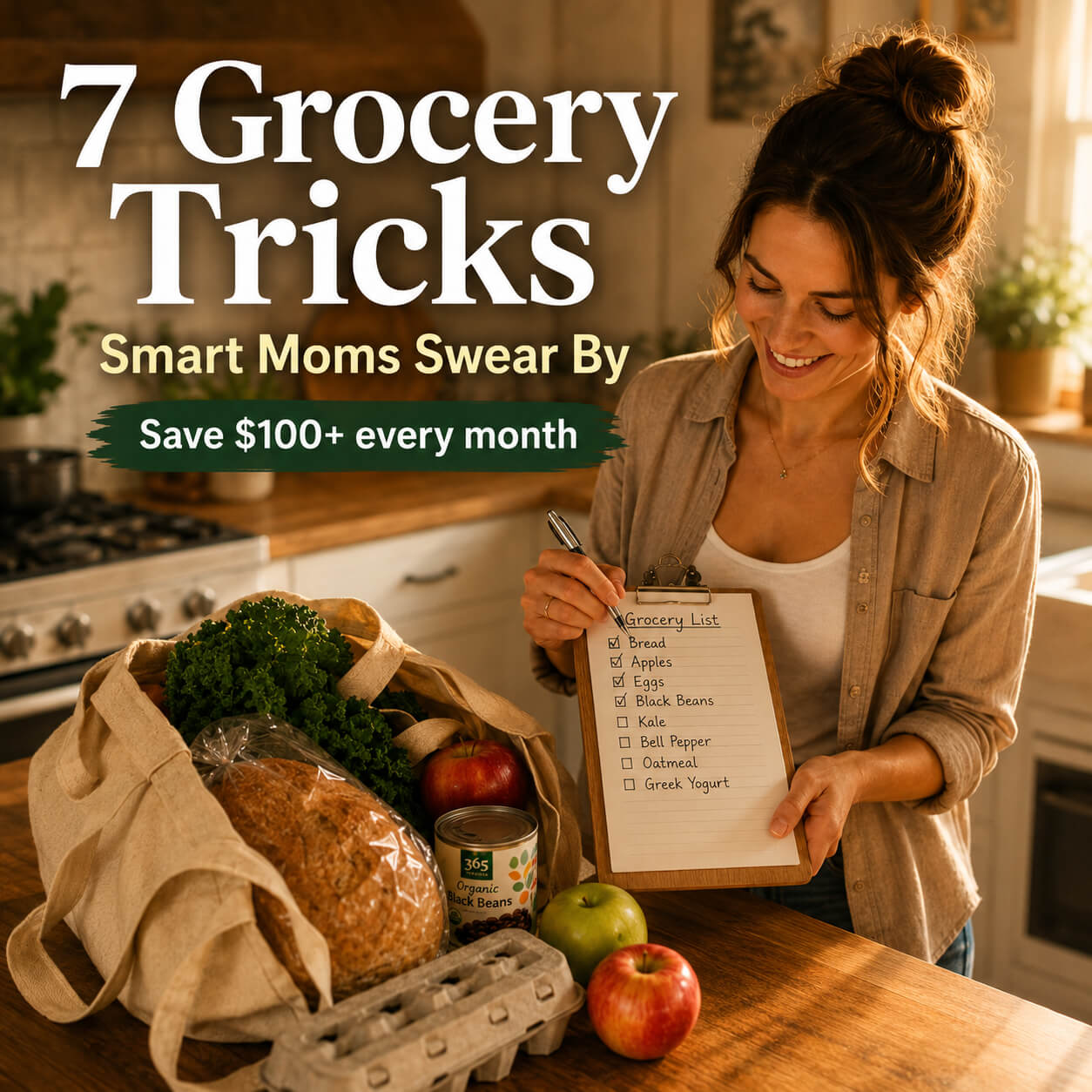
A list on your phone is fine.
But organize it by section: produce, meat, dairy, frozen, pantry. Why?
Because when you wander the store, you impulse buy.
When you have a list organized by aisle, you move with purpose and get out faster.
Some moms swear by the AnyList app. Others just use Notes. Either works. The key is writing it before you’re standing in front of the Oreos.
Eat Something Before You Go
This one sounds silly, but it’s real.
Studies from Cornell University found that shopping hungry leads people to buy more high-calorie, higher-cost items — even things they don’t normally eat.
A $1.50 granola bar before you leave the house can save you $20 in unnecessary snacks at the checkout.
Coupons and Digital Deals (Without the Binder)
Extreme couponing with a three-ring binder full of inserts is not the goal here.
The goal is easy digital savings that take 3 minutes a week.
Use Store Apps Before Every Trip
Kroger, Safeway, Publix, Albertsons, Target — they all have apps, and they all have digital coupons you clip before checkout.
These aren’t small savings either.
A typical Kroger app week might have:
- Boneless chicken breasts: $1.99/lb (vs. $4.99 regular price)
- Tide pods: $8.99 (vs. $14.99)
- Organic milk: $3.50 (vs. $5.99)
You’re doing nothing except tapping “clip” from your couch. Spend 3 minutes before each trip.
That’s it.
Loyalty programs also rack up points over time.
My neighbor got $40 in free groceries last December just from Kroger Fuel Points she’d been collecting since summer.
Cashback Apps That Pay Real Money
Use all three together — store sale, digital coupon, and cashback app — and you’re saving from every angle on the same item.
Ibotta is the most popular, and it actually delivers. You link your loyalty account or just scan your receipt, and cash goes straight to PayPal or Venmo.
Lots of items pay $0.25–$1.00 back, and the “Any Brand” offers (like $0.50 back on any fresh produce) add up faster than you’d expect.
Ibotta says active users earn around $20–$30/month on average.
Fetch Rewards is even easier — just scan any receipt for points, then redeem for gift cards. Less cash, more passive.
If you only use one, use Ibotta.
Don’t Sleep on Manufacturer Coupons
Brand websites still post printable coupons. Coupons.com has them too.
If you’re already buying Huggies or Cheerios, there’s no reason not to spend 2 minutes checking if there’s a coupon first.
Buy Smarter, Not Just Cheaper
Saving money at the grocery store doesn’t mean buying the cheapest version of everything.
It means buying the right version.
Store Brands Are Good Now
I know some of us grew up on the powdery store-brand mac and cheese that tasted like cardboard. Things have changed.
Aldi, Trader Joe’s, Costco’s Kirkland line, and most major grocery store brands have genuinely improved.
Store brands are typically 20–30% cheaper than name brands.
On a $200 cart, that’s $40–$60 back in your pocket for the same quality — on things like canned tomatoes, pasta, frozen vegetables, butter, shredded cheese, cereal, and spices.
The categories where store brand shines: pantry staples, dairy, canned goods, cleaning supplies, and snacks.
The categories where name-brand sometimes wins: specialty sauces, certain candies, and anything where your kid will 100% notice and stage a small protest.
Buy in Bulk — But Only for the Right Stuff
Costco membership runs $65/year; Sam’s Club is $50. Worth it if you use them right.
Best things to buy in bulk: paper towels, toilet paper, laundry detergent, diapers (if you have little ones), olive oil, rice, oats, nuts, shredded cheese (it freezes!), and meat.
Where bulk buying goes wrong: fresh produce (unless you have a big family or a plan), anything with a short shelf life, and items you’re buying just because the unit price looks good.
Read the Unit Price Label, Not the Shelf Price
The small print on the shelf label — “$0.12 per oz” — is the number that matters, not the big price.
A 10 oz jar of pasta sauce for $1.89 might sound like a deal, but if the 24-oz jar is $3.49, the bigger one is cheaper per ounce.
A bigger package isn’t always the better deal. Always check.
Shop the Store Like You Know What You’re Doing
Stick to the Perimeter
The outside edges of most grocery stores are where the real food lives: produce, meat, dairy, eggs, bread.
The inner aisles are where the processed stuff is — which isn’t bad, but it’s where the impulse buys live too.
When you’re in a rush or running on a tight budget, shop the perimeter first.
You’ll fill your cart with actual meals before you hit the snack aisle.
Know When to Shop
Most grocery stores mark down meat in the morning or late evening — that’s when the sell-by date is close, and the store wants to move product.
You can grab chicken thighs or ground beef at half price, take it home, and freeze it that day.
I once got a $14 pork loin for $5 this way.
Avoid shopping on Sundays if you can. It’s the most crowded day, and crowded = distracted = more stuff in your cart.
Look Down
Name brands pay grocery stores for eye-level shelf placement.
Store brands and budget options are almost always on the lower shelves. It takes about four extra seconds to squat down and look.
Worth it.
Cut Waste — Because Thrown-Away Food Is Thrown-Away Money
The USDA estimates American families throw away between $1,500 and $3,000 worth of food every year.
That’s not a typo.
Store Food So It Actually Lasts
A few things that actually work:
- Fresh herbs last way longer stored upright in a glass of water in the fridge, like flowers.
- Leafy greens stay crisp for a week when wrapped in a dry paper towel inside a container.
- Berries last longer if you wash them in a mix of water and a little white vinegar (1:3 ratio), then dry completely before refrigerating.
- Store cheese in wax paper or parchment, not plastic wrap — it lets it breathe without drying out.
Freeze Everything You Won’t Use in 2 Days
Your freezer is your best money-saving tool, and most people don’t use it enough.
Bread going stale? Freeze it.
Bananas getting spotty? Freeze them (great for smoothies).
Chicken is on sale, but you can’t cook it today? Freeze it now.
Leftover pasta sauce, soups, cooked rice — all freeze fine.
Label things with masking tape and a Sharpie. “FIFO” — first in, first out — means you use older frozen stuff before the new stuff. A simple rule, but it prevents the frozen mystery bag situation we’ve all experienced.
Try Imperfect or “Ugly” Produce
Services like Misfits Market and Imperfect Foods deliver produce that grocery stores reject for looking weird — odd-shaped apples, small potatoes, slightly curved cucumbers.
The food is completely fine. It’s just not pretty.
Boxes start around $25–$35 and can take a real chunk out of your produce bill.
Many stores also have a discounted produce section near the back, sometimes called “Manager’s Specials”.
Same idea.
Smart Swaps That Cut Costs Without Feeling Like a Sacrifice
Go Meatless Twice a Week
Meat is the most expensive item in most grocery carts. Ground beef is running about $5–$6/lb right now.
Boneless chicken breasts hover around $3–$5/lb, depending on the sale.
Beans cost about $1.00–$1.50 per can and have more protein than most people realize. Lentils, eggs, canned chickpeas, tofu — all way cheaper per serving.
Two meatless dinners a week — black bean tacos, egg fried rice, bean and pasta soup, lentil soup — can easily knock $30–$50/month off your grocery bill without anyone feeling deprived.
My kids don’t even notice when I do black bean tacos vs. ground beef. The seasoning does the heavy lifting.
Buy Produce That’s In Season
Strawberries in January cost $5–$6/pint. In June, $1.99. Same berry.
In-season produce is cheaper, tastes better, and doesn’t have to travel as far. A rough cheat sheet for US seasons:
- Spring (Mar–May): asparagus, peas, lettuce, radishes
- Summer (Jun–Aug): tomatoes, corn, zucchini, peaches, berries, cucumbers
- Fall (Sep–Nov): butternut squash, apples, sweet potatoes, Brussels sprouts
- Winter (Dec–Feb): citrus, cabbage, kale, root vegetables
When your favorite fruit is out of season, just buy it frozen.
Frozen and Canned Vegetables Are Not a Downgrade
Frozen vegetables get picked and frozen right away, so they’re often just as nutritious as fresh — sometimes more, because that “fresh” broccoli at the store may have been traveling for a week before it landed in the produce section.
A 12 oz bag of frozen broccoli runs about $1.50–$2.00. A fresh head costs $2.50–$3.50 and goes bad in 4 days.
Canned tomatoes, canned beans, canned corn — all totally fine.
All cheap. Use them.
A Few Extra Things Worth Knowing
Price matching: Walmart and Target both price-match competitors. At Walmart, you can show a competitor’s lower price in-store or through their app. Not everyone knows how to ask.
Shop at Aldi once a month: Aldi’s prices on pantry staples are hard to beat.
A big stock-up trip there for canned goods, pasta, olive oil, butter, and snacks can set you up for weeks at about 30–40% less than a typical grocery store.
Set a firm budget before you go: Know your number — say, $150 for the week — and keep a running tally on your phone as you shop. It sounds tedious the first time.
After a few weeks, it becomes automatic, and you stop putting things in your cart that you don’t actually need.
Track your grocery spending for one month: Just once. Most people are surprised — and honestly a little horrified — by the real number.
Apps like Mint, YNAB, or even a simple Notes list work fine. Once you see the number, it’s hard to unsee.
Start With Two Things, Not Twenty
Honestly? Pick the two tips here that sound the least annoying to you, and try them for a month. Don’t overhaul everything at once.
That never sticks.
The meal plan + the store app is a good starting combo. So is store brand swaps + Ibotta. Either pairing can save $40–$60 without feeling like a chore.
If I had to guess, the single change that makes the biggest difference for most families is just writing a list and eating before you go.
It sounds embarrassingly small. But not wandering a grocery store hungry with no plan is honestly half the battle.
The math isn’t complicated. Saving $50/month is $600 a year.
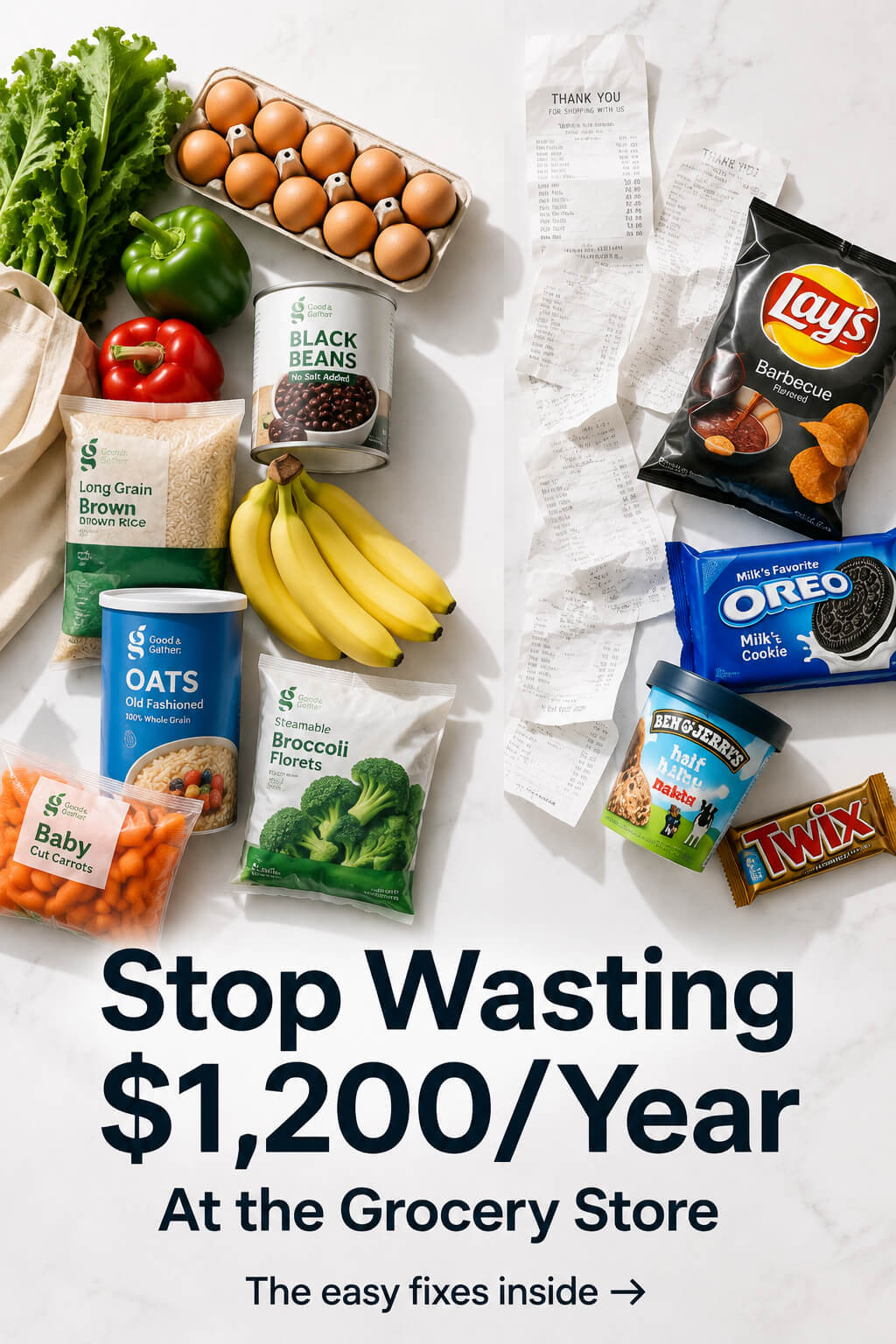
Saving $100/month is $1,200. That money doesn’t disappear — it just gets spent at the store on stuff nobody remembers buying.
What’s the one grocery trick that actually works for your family?
Leave it in the comments — I’m always looking for things to steal.