
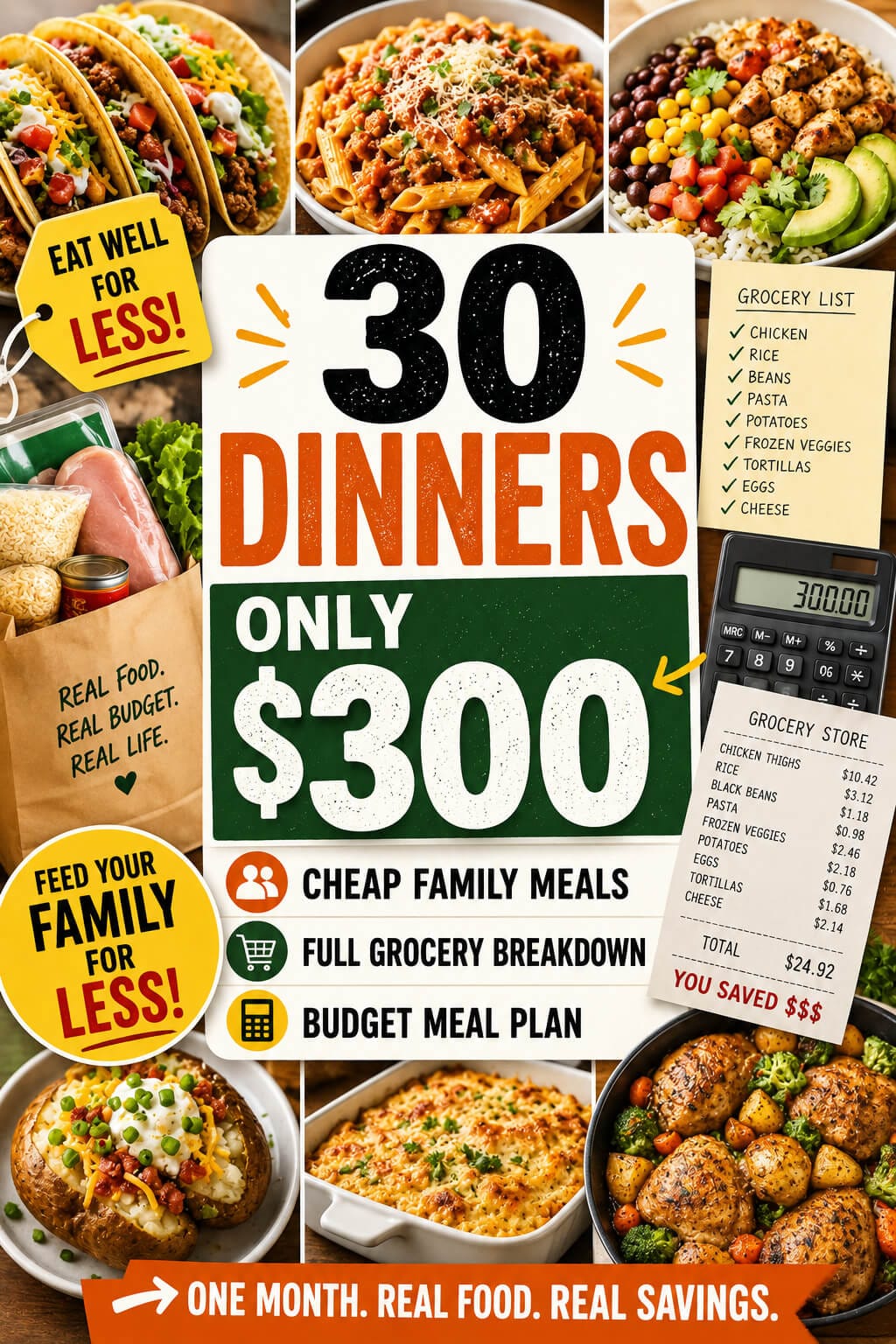
One Month of Dinners for $300 — Full Breakdown
Grocery prices in the US have been creeping up for a few years now, and if you’ve been to a supermarket lately, you’ve felt it. A quick trip for “a few things” somehow turns into an $80 receipt. Meat alone can wreck a weekly budget before you’ve even thought about produce or snacks.
Dinner tends to be where most of that money goes. Breakfast is usually cereal or eggs. Lunch is leftovers or a sandwich.
But dinner? That’s where the rotisserie chicken, the pasta with sausage, and the taco night ingredients all add up.
Here’s the thing, though: it doesn’t have to be that way — and more importantly, cutting your dinner spending doesn’t mean eating sad meals for a month. This plan covers one month of dinners for $300, broken into four weeks with real grocery lists, realistic US pricing, and actual meals people want to eat.
The strategy behind it is pretty simple. You buy ingredients that overlap between recipes, so nothing goes to waste. You use leftovers on purpose, not by accident.
You keep a short list of pantry staples stocked and build dinners around them. And you lean on store brands and frozen vegetables instead of assuming fresh and name-brand are always better.
Let’s get into it.
How This $300 Dinner Plan Works

The math breaks down to about $75 per week on dinners, which works out to roughly $10–$11 per meal for a family of four. For a couple, that’s closer to $5–6 per person. Neither number is unreachable at Walmart, Aldi, or Kroger — especially if you’re shopping with a list.
A few things this plan assumes:
- You have basic pantry staples already: salt, pepper, olive oil, garlic powder, onion powder, cumin, soy sauce, and flour.
- You have access to a freezer and aren’t afraid to use it.
- You’re okay with eating the same ingredient prepared two different ways in the same week.
That last one matters a lot. One of the easiest ways to save money on groceries is to buy a larger quantity of one ingredient and use it across multiple meals. A 5-pound bag of chicken thighs, for example, can handle three or four completely different dinners. Same goes for a big bag of rice, a can of black beans, or a block of shredded cheese.
Low-cost staples this plan leans on heavily:
- Rice (white or brown, big bags)
- Pasta (spaghetti, penne, rotini — any shape works)
- Potatoes (russet or gold)
- Dried or canned beans (black, pinto, kidney)
- Flour tortillas
- Eggs
- Frozen vegetables (peas, corn, broccoli, mixed bags)
- Chicken thighs (bone-in for cheaper, boneless when on sale)
- Shredded cheese (store-brand bags)
Week 1 Dinner Plan
Total week 1 grocery estimate: ~$72
Monday — Sheet Pan Chicken Thighs and Potatoes
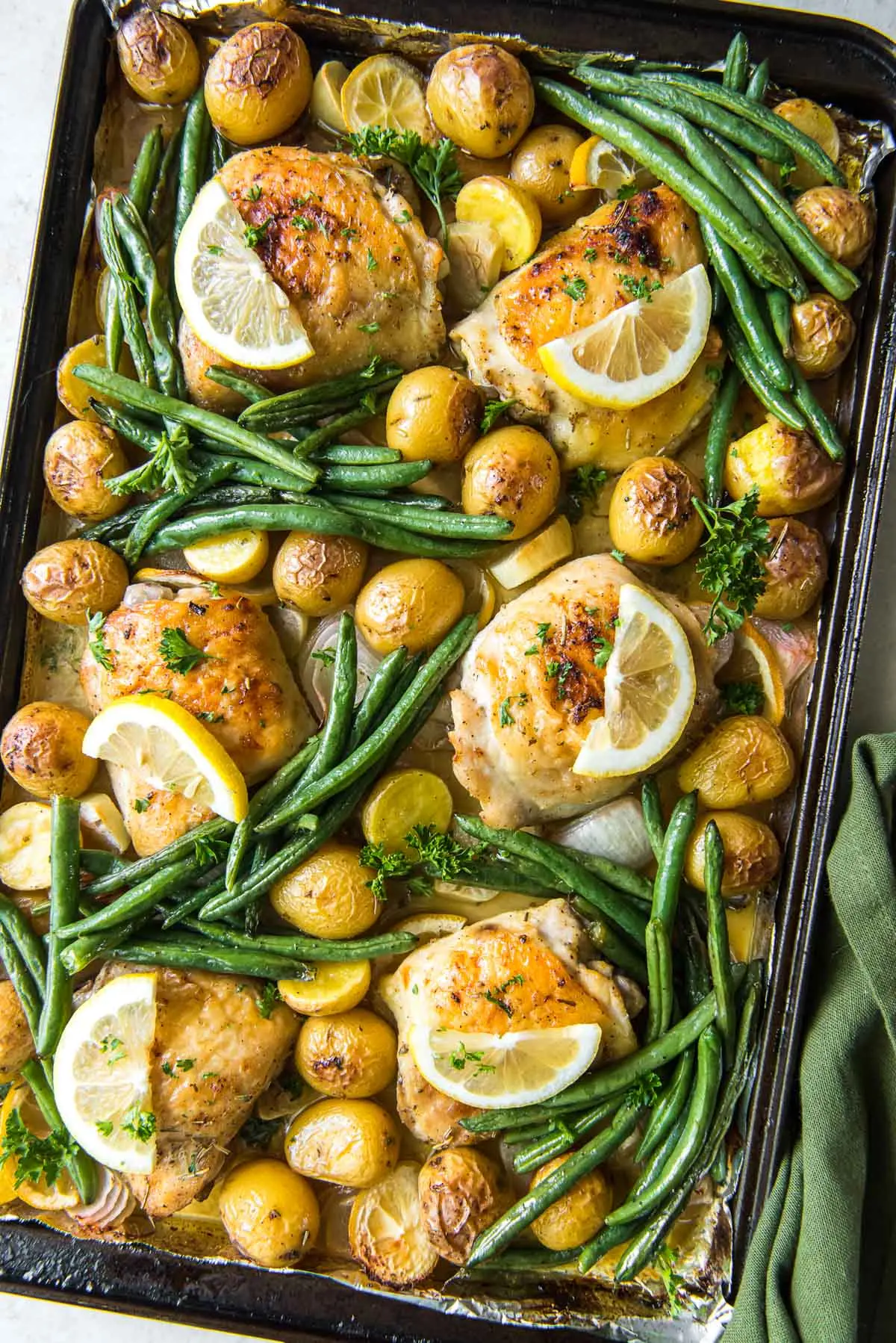
Toss bone-in chicken thighs with olive oil, garlic powder, and paprika. Add cubed potatoes to the same pan. Roast at 400°F for about 45 minutes.
That’s it. Honestly, this meal is perfect for busy nights — one pan, minimal cleanup, and the whole thing costs around $8–9 for a family of four.
Leftover tip: Shred leftover chicken and save it for Wednesday’s tacos.
Tuesday — Spaghetti with Meat Sauce
Ground beef (or turkey if it’s cheaper that week) mixed with a jar of pasta sauce over spaghetti. Add a little garlic and Italian seasoning.
Costs about $7–8. Make a big pot because leftovers reheat well for lunch the next day.
Wednesday — Chicken Tacos
Use the leftover shredded chicken from Monday. Warm tortillas, shredded cheese, salsa from a jar, and a little sour cream if you have it.
This is where ingredient overlap really helps — the “cooking” is mostly reheating, and the meal costs almost nothing extra beyond the tortillas and toppings (~$4–5 incremental).
Thursday — Black Bean and Rice Bowls
Cook a big pot of rice. Open two cans of black beans, season with cumin and garlic powder, and heat on the stove.
Top with cheese, salsa, and whatever else is around. If you’re feeding kids, this one is usually a hit. Cost: $5–6.
Friday — Egg Fried Rice
Leftover rice from Thursday fried in a pan with eggs, frozen peas and carrots, soy sauce, and a little sesame oil if you have it.
This is one of those meals that tastes much better than it should for the price. About $4–5 total.
Saturday — Baked Pasta
Penne or rotini mixed with pasta sauce, ricotta (or cottage cheese if that’s cheaper), and shredded mozzarella. Bake covered, then uncovered to brown the cheese.
Around $8–9 and usually enough for leftovers.
Sunday — Rotisserie Chicken (store-bought) + Veggie Sides
A $6–8 rotisserie chicken from Walmart or Costco with a frozen vegetable side and some bread.
It’s a real dinner that saves you cooking time on a Sunday, and you’ll have chicken left over to use in Monday’s next week. ~$10–12 total.
Week 1 Grocery List (main items):
- Bone-in chicken thighs (3–4 lbs)
- Rotisserie chicken (1, for Sunday)
- Ground beef or turkey (1 lb)
- Russet potatoes (5 lb bag)
- Spaghetti and penne pasta
- Jar of pasta sauce (×2)
- Canned black beans (×3)
- White rice (large bag, use throughout the month)
- Flour tortillas
- Shredded mozzarella and shredded Mexican blend cheese
- Eggs (dozen)
- Ricotta or cottage cheese
- Frozen peas and carrots (bag)
- Salsa (jar)
Week 2 Dinner Plan

Total week 2 grocery estimate: ~$70
Monday — Chicken and Rice Soup
Use the leftover rotisserie chicken carcass (or just the meat) and simmer it with chicken broth, rice, carrots, and celery. Comforting, filling, cheap.
Total cost including fresh veggies: $7–8.
Tuesday — Loaded Baked Potatoes
Bake large russet potatoes in the oven (or microwave if you’re short on time). Top with butter, shredded cheese, sour cream, canned chili, or whatever you have around. A 5-lb bag of potatoes goes far.
Cost: $6–7.
Wednesday — Beef and Vegetable Stir-Fry
A pound of ground beef or thinly sliced budget steak (like flank or sirloin tip) stir-fried with frozen mixed vegetables and soy sauce over rice.
Fast, protein-heavy, and about $9–10 total.
Thursday — Bean and Cheese Quesadillas
Flour tortillas filled with refried beans and shredded cheese, cooked in a pan until crispy. Add salsa and sour cream for dipping. Kids demolish these.
Cost: $5–6.
Meal prep shortcut: Make a double batch and refrigerate them. They reheat in a pan in two minutes.
Friday — Pasta with Olive Oil and Garlic (Aglio e Olio)
This one sounds fancy but it’s just pasta tossed with olive oil, garlic, red pepper flakes, and parmesan.
Takes 20 minutes and costs under $4. Add canned tuna or a fried egg on top if you want more protein.
Saturday — Homemade Pizza on Flour Tortillas
Spread pizza sauce on large flour tortillas, top with shredded mozzarella and whatever toppings are in the fridge (leftover veggies, a little sausage, pepperoni if it’s cheap). Bake at 400°F for 10 minutes.
The good news is this always tastes better than it sounds, especially to kids. ~$7–8.
Sunday — Slow Cooker Pinto Beans and Rice
Soak pinto beans overnight, then throw them in a slow cooker with onion, garlic, cumin, and a smoked ham hock (optional but cheap and adds a ton of flavor). Serve over rice.
Cost: $6–7 and it makes enough for two dinners.
Week 2 Grocery List (main items):
- Chicken broth (cartons ×2)
- Carrots and celery (fresh)
- Budget beef cut or more ground beef
- Refried beans (cans ×2)
- Pinto beans (dried bag)
- Parmesan (small wedge or shaker)
- Pizza sauce (small jar)
- Sour cream
- Flour tortillas (refill)
- Frozen mixed vegetables
Week 3 Dinner Plan
Total week 3 grocery estimate: ~$74
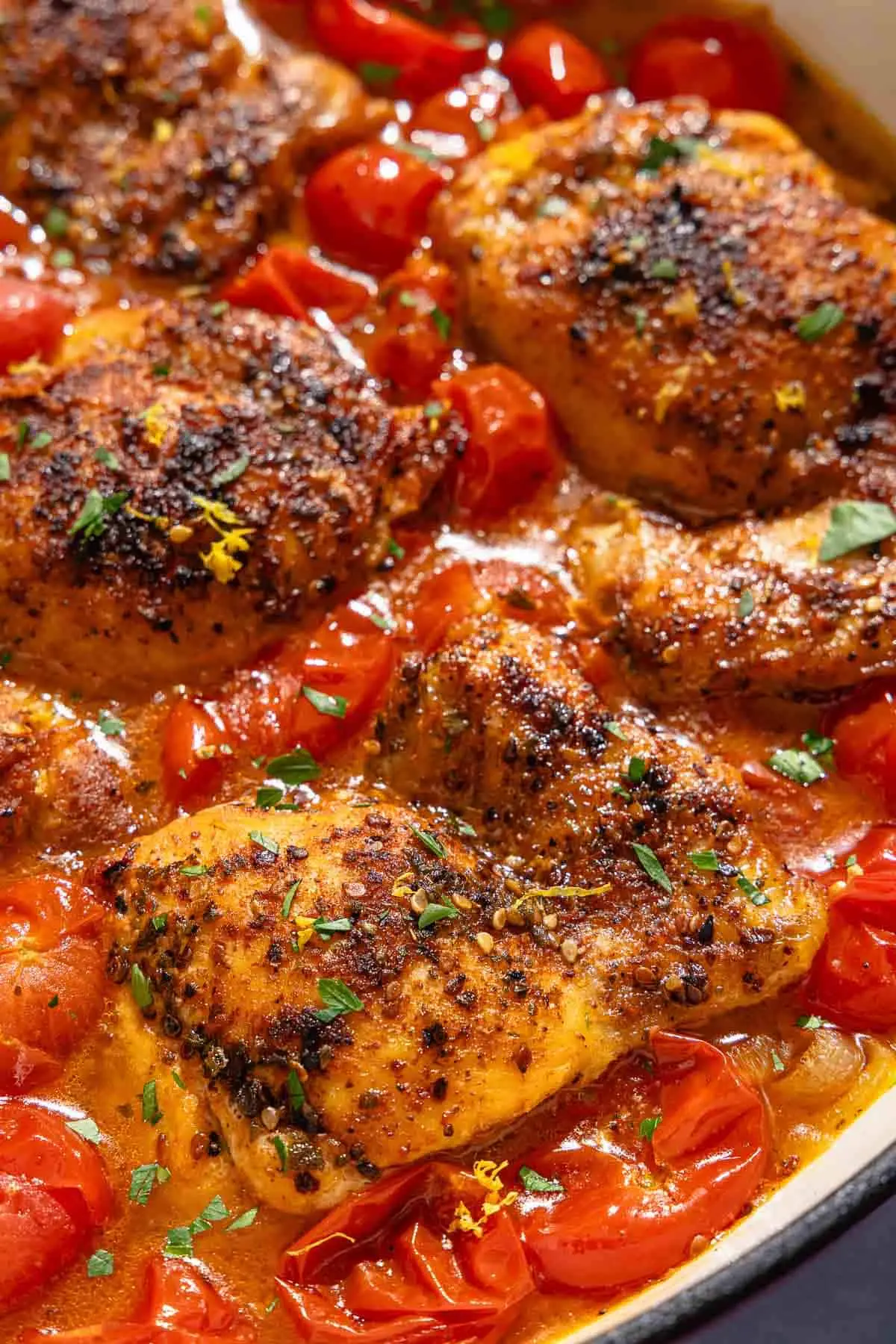
Monday — Chicken Thighs with Canned Tomatoes and Herbs
Brown chicken thighs in a skillet, then simmer in canned diced tomatoes with Italian seasoning, garlic, and a little sugar to cut the acid. Serve over rice or with bread.
Cost: $8–9.
Tuesday — Lentil Soup
Red or green lentils simmered with chicken or vegetable broth, diced tomatoes, carrots, onion, garlic, and cumin. Lentils are one of the cheapest protein sources you can buy — a bag costs around $2 and makes a huge pot.
Total cost: $5–6. Serve with bread.
Wednesday — Cheesy Scrambled Eggs and Hash Browns
Frozen hash browns cooked in a skillet until crispy, with scrambled eggs and shredded cheese on top. Add hot sauce if you like.
This is a legitimately good dinner and costs around $4–5. No shame in breakfast for dinner.
Thursday — One-Pan Sausage and Potatoes
Slice smoked sausage (kielbasa or andouille) and cook it with diced potatoes and frozen peppers and onions in a cast iron or large skillet.
Everything cooks in one pan in about 25 minutes.
Cost: $8–9.
Friday — Meatless Pasta with Marinara and Veggies
Cook pasta and toss with jarred marinara. Add sautéed zucchini, canned mushrooms, or frozen broccoli — whatever you have. Finish with parmesan.
Cost: $5–6.
Saturday — Chicken Tortilla Soup
This is a freezer-friendly recipe. Use canned chicken (or shredded cooked chicken thighs), canned tomatoes, canned corn, canned black beans, chicken broth, cumin, and chili powder. Simmer together for 20 minutes.
Serve with shredded cheese and crushed tortilla chips on top. Costs about $9–10 but easily feeds 6.
Freezer tip: Double the batch and freeze half for a night in week 4 when you don’t feel like cooking.
Sunday — Baked Mac and Cheese
Make a simple stovetop cheese sauce (butter, flour, milk, shredded cheddar), mix with cooked macaroni, and bake. Comfort food at its best.
About $6–7 and almost everyone loves it.
Week 3 Grocery List (main items):
- Chicken thighs (refill if needed)
- Canned diced tomatoes (×4)
- Dried lentils
- Frozen hash browns
- Smoked sausage (kielbasa or similar)
- Frozen peppers and onions
- Canned chicken (×2)
- Canned corn (×2)
- Chili powder
- Macaroni (box)
- Cheddar cheese (block)
- Milk
- Zucchini or frozen broccoli
Week 4 Dinner Plan

Total week 4 grocery estimate: ~$84 (slightly higher due to restocking a few pantry items)
Monday — Frozen Tortilla Soup (from Week 3)
Pull the batch you froze last Saturday out of the freezer.
Total cost for tonight: essentially free. This is the payoff for the double batch strategy.
Tuesday — Fried Rice with Whatever’s in the Fridge
Leftover rice, eggs, any vegetables that are starting to look tired, a little soy sauce. This is a clean-out-the-fridge dinner that genuinely tastes good.
Cost: $2–3 incremental.
Wednesday — Bean Burritos
Warm flour tortillas filled with seasoned black beans, rice, shredded cheese, and salsa. Roll them up tight and toast in a pan.
Cost: $5–6 and completely filling.
Thursday — Ground Beef Tacos
A classic. Brown ground beef with taco seasoning (store-brand packet), serve in hard or soft shells with shredded lettuce, cheese, and salsa. If you’re feeding kids, this one is usually a hit.
Cost: $8–9 for a family.
Friday — Egg and Potato Skillet
Dice potatoes and fry them until golden, then crack eggs over the top, cover the pan, and let them steam until set. Season well. Simple, filling, cheap.
Cost: $4–5.
Saturday — Chicken Thighs with Honey Garlic Sauce
This is a good end-of-month meal that feels a little more special. Cook chicken thighs in a skillet, then make a quick sauce with soy sauce, honey, garlic, and a little cornstarch to thicken it. Serve over rice.
Cost: $9–10.
Sunday — Pasta Primavera
Pasta tossed with sautéed frozen vegetables, olive oil, garlic, and parmesan. Use whatever vegetables are left in the freezer.
Cost: $5–6.
Monday — Lentil and Potato Stew
Dice a few potatoes and cook them with lentils, canned tomatoes, and vegetable broth. Season with cumin and smoked paprika.
This is filling and costs almost nothing. $4–5.
Tuesday — Chicken Quesadillas
Use any leftover cooked chicken, warm it up with some cheese in a flour tortilla, and toast in a pan. Done in 10 minutes.
Cost: $4–5 incremental.
Week 4 Grocery List (main items):
- Ground beef (1–2 lbs)
- Taco shells (hard or soft)
- Honey (small bottle)
- Cornstarch
- Taco seasoning packets
- Chicken thighs (small pack)
- Shredded lettuce
- Any restocked pantry staples
Full Monthly Grocery Cost Breakdown

| Category | Estimated Monthly Spend |
|---|---|
| Protein (chicken, beef, eggs, sausage) | $95–105 |
| Pantry staples (rice, pasta, beans, oil, spices) | $40–50 |
| Produce (potatoes, carrots, celery, onions) | $25–30 |
| Dairy (cheese, sour cream, milk, butter) | $30–35 |
| Frozen foods (vegetables, hash browns) | $20–25 |
| Canned goods (tomatoes, beans, corn, broth) | $20–25 |
| Miscellaneous (tortillas, salsa, condiments) | $15–20 |
| Total | ~$245–290 |
These ranges reflect realistic pricing at stores like Walmart, Aldi, Kroger, and similar budget-friendly grocers in 2026.
Costco members can often do better on protein and pantry items bought in bulk, which can push the total closer to $240 for the month.
Best Ways to Keep Dinner Costs Low
Buy store brands. The quality gap between store-brand canned tomatoes and the name-brand version is basically zero. Same with pasta, rice, frozen vegetables, and shredded cheese. Switching to store brands across the board is one of the easiest ways to trim $20–30 off a monthly grocery bill without changing what you eat.
Cook in larger portions. If a recipe works for four, make it for eight. Freeze half or eat leftovers for lunch. You’ve already spent the time cooking — you might as well get two meals out of it.
Use frozen vegetables freely. Frozen broccoli, peas, corn, and mixed vegetable bags are nutritious, cheap, and don’t go bad. They’re not a downgrade from fresh — in many cases they’re picked and frozen at peak ripeness. They also save money on food waste, since nothing wilts in the back of the drawer.
Plan around grocery sales. If chicken is on sale this week, build two or three dinners around it. If ground beef is cheap, stock up and freeze some. Shopping to a rigid recipe list without checking the weekly ad is a missed opportunity.
Freeze leftovers before they go bad. Most soups, stews, and casseroles freeze well. If you’re not going to eat the leftover soup by Thursday, put it in a labeled zip bag and freeze it now. Future-you will be grateful.
Choose cheaper protein cuts. Bone-in chicken thighs are almost always cheaper than boneless, and they taste better when roasted or braised. Chicken leg quarters are even cheaper. Ground beef stretches further than steak. Eggs, canned beans, and lentils are the most affordable protein sources in any grocery store.
Tips for Successful Meal Planning on a Budget
Shop your pantry first. Before you write any grocery list, check what you already have. A lot of budget meals start with something you forgot was in the cabinet. Rice, pasta, canned beans, and frozen chicken are probably already there.
Write the list and stick to it. Impulse purchases are the silent killer of a grocery budget. If it’s not on the list, put it back. One exception: if something is genuinely on a great sale and you’ll actually use it, grab it. But “on sale” doesn’t mean it belongs in your cart if it wasn’t part of the plan.
Keep two or three emergency dinners ready. These are the nights you come home exhausted and the plan falls apart. Having a box of pasta, a jar of sauce, and some canned beans means you can still cook dinner for under $5 without ordering takeout.
Rotate your cheap family favorites. If your household loves a particular meal — whether that’s tacos, pasta bake, or loaded baked potatoes — build it into the rotation every week or two. Familiar meals cut down on decision fatigue and usually go over better than something new that nobody ends up liking.
Don’t try to make every meal exciting. Some nights dinner is rice, chicken, and frozen broccoli. That’s fine. Budget cooking isn’t about making every meal a restaurant experience. It’s about feeding people well, spending less money, and getting through the week without stress.
Final Thoughts
Feeding a family well on a budget is genuinely doable. It takes a little planning, a willingness to repeat ingredients across the week, and some patience with the process — but none of it is complicated.
The $300 a month figure is realistic for most US households eating dinners at home. Some weeks you’ll come in under, some weeks a little over. That’s normal. The goal isn’t perfection; it’s getting your average spend down over time.
Small changes add up faster than you’d expect. Switching to store brands. Making soup instead of buying canned. Freezing leftovers instead of tossing them. Using a rotisserie chicken across three meals instead of one. Each thing saves $5 here, $10 there — and over a year, that’s a few hundred dollars back in your pocket.
Budget meals done right aren’t sad meals. A pot of chicken and rice soup, a pan of baked mac and cheese, a plate of honey garlic chicken thighs — those are good dinners. Start simple, repeat what works, and let the savings take care of themselves.
