
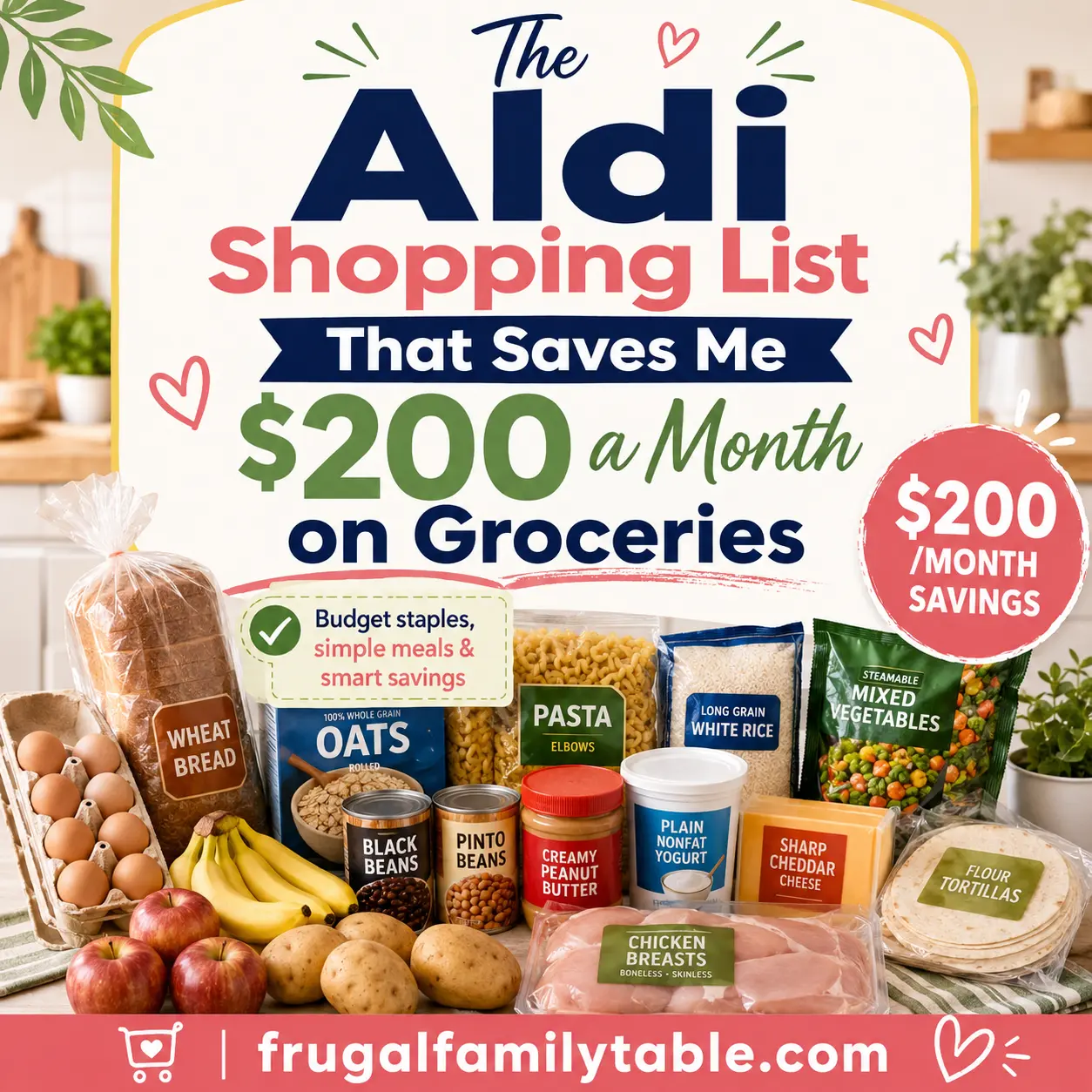
The Aldi Shopping List That Saves Me $200 a Month on Groceries
Most grocery trips don’t feel expensive until you get to the register. You went in for a few things. You came out with two bags of stuff you didn’t plan for and a receipt that somehow says $187.
That used to be me every single week.
Switching to Aldi didn’t automatically fix it. What fixed it was going into Aldi with a specific list, the same core list, week after week, built around ingredients my family actually eats.
Not trending recipes. Not fancy sauces. Food that turns into dinner without a lot of drama.
This Aldi shopping list saves our family around $200 a month compared to what we used to spend. That’s not magic math.
It comes from fewer unplanned trips, less takeout, switching from name brands to Aldi’s store brands, and buying ingredients that work across multiple meals instead of just one.
Your number will depend on where you live, how many people you’re feeding, and what you were spending before.
But if you’re spending $150–$175 a week on groceries right now, this list can realistically get you to $95–$125.
That’s worth trying.
Who This Aldi Shopping List Is For

This list works best if you’re:
- Feeding a family of 3–5
- Trying to get weekly grocery spending under $125
- Looking for simple, repeatable meals (not Pinterest-level dinners every night)
- Dealing with takeout creep, those $40 pizza nights that “just happen.”
- Sick of buying groceries and then throwing half of them away
It might not be the right fit if:
- You have multiple family members on strict specialty diets that require specific ingredients, but Aldi doesn’t always carry them
- Your nearest Aldi charges higher prices than average (this varies a lot by region; prices in some areas are noticeably higher)
- You’re already spending $75 a week or less on groceries, because you’ve already figured something out
- Nobody in your house will eat leftovers (this list relies on leftovers)
The Savings Assumption: Where the $200 Comes From

Let me be straight about this.
The $200 figure isn’t a guarantee.
It’s what happens when you combine a few changes at once, and it adds up faster than you’d think.
| Before | With This List | |
| Weekly grocery spending | $150–$175 | $95–$125 |
| Weekly savings | — | $40–$55 |
| Monthly savings (approx.) | — | $160–$220 |
Prices vary by store location, region, and season. These are estimates based on typical Aldi pricing, not a promise.
The savings don’t come from one thing. They stack:
- Fewer impulse buys. Aldi moves you through the store fast, but a focused list keeps you from grabbing things you didn’t come in for.
- Store brands instead of name brands. Aldi runs almost entirely on their own store brands. For everyday stuff, pasta, oats, canned beans, and cereal, the quality is usually the same, and the price is noticeably lower.
- Repeat ingredients across multiple meals. When you buy a bag of rice, it doesn’t go into one dish; it goes into four.
- Less takeout. This is the quiet budget killer. Even two fewer pizza nights a month saves $60–$80.
- Planned leftovers. Dinner becomes tomorrow’s lunch. That’s one fewer meal you have to think about.
- Fewer convenience foods. Individually packaged snacks, frozen dinners you just throw in the microwave, fancy dips, all of it costs two or three times what the actual ingredients would.
The Core Aldi Shopping List
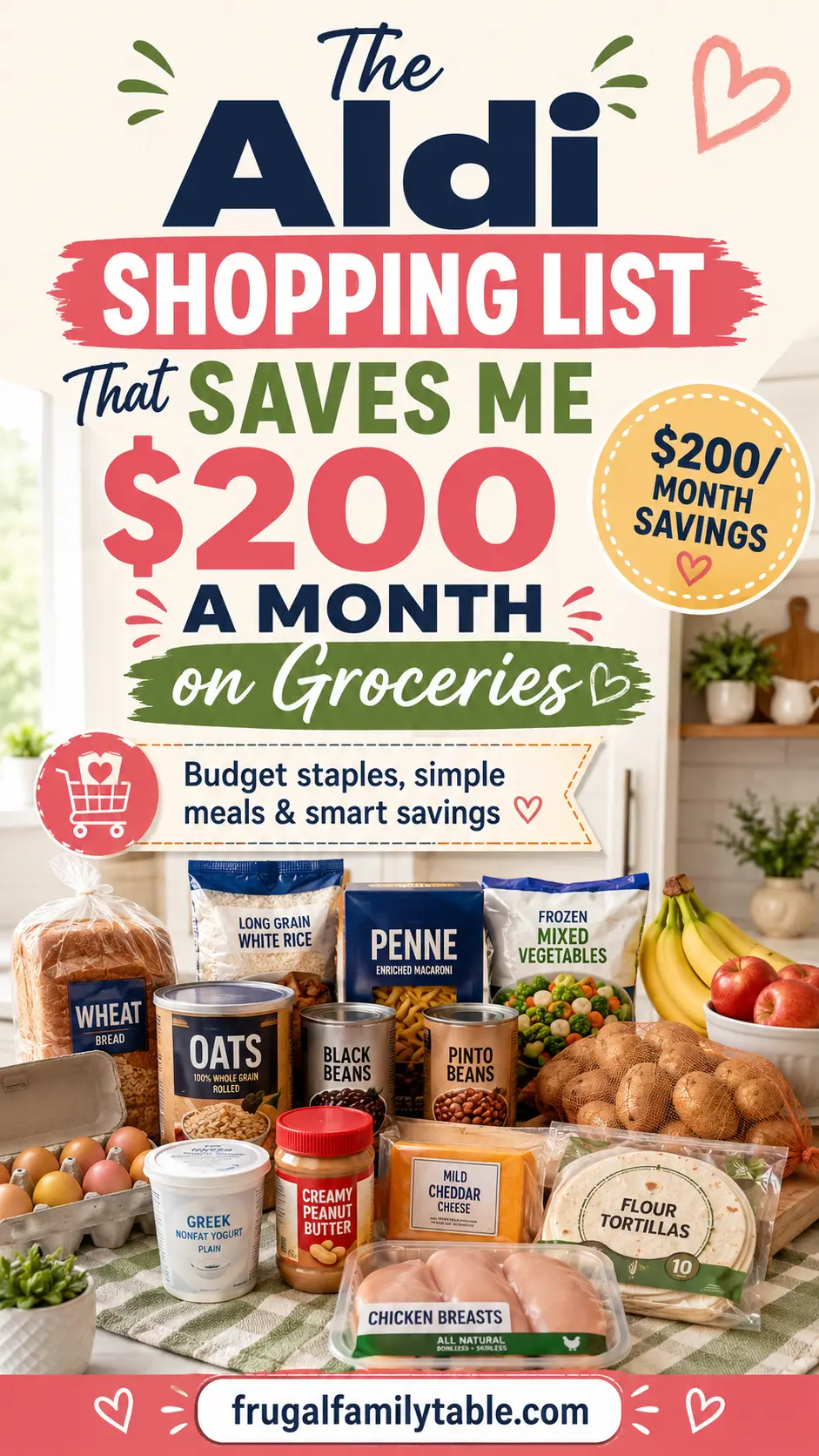
These are the items I come back to every week or every other week.
They’re not exciting. They’re reliable.
Proteins
| Item | Est. Price | Why It Saves | Meal Uses |
|---|---|---|---|
| Eggs (dozen) | $2–$5 | One of the cheapest proteins per serving — egg prices have been all over the place lately, so check before assuming | Scrambled, fried, omelets, breakfast burritos, fried rice |
| Chicken thighs (family pack) | $6–$10 | Cheaper than breasts, stays moist, hard to mess up | Sheet pan dinner, soup, tacos, rice bowls |
| Ground turkey or ground beef | $4–$7/lb | Stretches across multiple meals | Tacos, pasta, stuffed peppers, meatballs |
| Canned tuna (2-pack) | $2–$4 | Fast protein, no cooking needed | Tuna melts, pasta, salad, crackers |
| Black beans (canned) | $0.79–$1.29 | Dirt cheap, high protein, goes with everything | Burritos, rice bowls, soup, tacos |
| Pinto beans (canned) | $0.79–$1.29 | Same as above, slightly different texture | Refried beans at home, bean soup, tacos |
Dairy and Eggs
| Item | Est. Price | Why It Saves | Meal Uses |
|---|---|---|---|
| Milk (gallon) | $3–$5 | Cheaper than most stores | Cereal, oatmeal, pancakes, baking |
| Shredded cheese (2-cup bag) | $2–$3.50 | Goes on everything; buy block to save more | Tacos, quesadillas, pasta, eggs |
| Greek yogurt or plain yogurt (large tub) | $3–$5 | Way cheaper per serving than individual cups | Breakfast bowls, snacks, smoothies |
| Butter | $3–$5 | For cooking and baking | Basically everything |
Pantry Staples
| Item | Est. Price | Why It Saves | Meal Uses |
|---|---|---|---|
| White rice (2 lb bag) | $1.50–$2.50 | Base for dozens of meals | Rice bowls, fried rice, side dish, soup |
| Pasta (1 lb box) | $0.99–$1.50 | One box feeds a family of four | Marinara pasta, pasta salad, mac and cheese |
| Rolled oats | $2–$3.50 | Cheap breakfast that actually fills kids up | Oatmeal, overnight oats, granola bars |
| Peanut butter | $2–$4 | High protein, long shelf life | PB toast, sandwiches, smoothies, dipping sauce |
| Marinara sauce (jar) | $1.50–$2.50 | Better than making it from scratch on a weeknight | Pasta, dipping sauce, pizza base |
| Canned tomatoes (diced) | $0.89–$1.50 | Building block for soups, chili, sauces | Soup, chili, shakshuka, taco filling |
| Olive oil or vegetable oil | $3–$6 | Lasts weeks | Cooking, roasting, dressings |
| Salt, pepper, garlic powder, cumin | Under $2 each | Makes simple food taste like you tried | Everything |
Grains and Bread
| Item | Est. Price | Why It Saves | Meal Uses |
|---|---|---|---|
| Sandwich bread (loaf) | $1.50–$2.50 | Cheapest carb on the list | Toast, sandwiches, French toast |
| Flour tortillas (pack) | $2–$3.50 | More versatile than bread | Quesadillas, wraps, burritos, pizza base |
| Aldi-brand cereal | $2–$3.50 | Half the price of name-brand cereal | Breakfast, quick snack |
Produce
| Item | Est. Price | Why It Saves | Meal Uses |
|---|---|---|---|
| Bananas (bunch) | $0.39–$0.59/lb | Cheapest fruit in the store | Oatmeal topping, snacks, smoothies |
| Apples (bag) | $3–$5 | Long shelf life, kids eat them | Snacks, oatmeal, peanut butter dipping |
| Carrots (2 lb bag) | $1–$2 | They last a long time and work in many dishes | Snacks, soups, roasted sides, stir fry |
| Potatoes (5 lb bag) | $3–$5 | One of the best budget vegetables | Baked potatoes, roasted potatoes, soup, hash |
| Onions (3 lb bag) | $2–$4 | Flavor base for almost every dinner | Soups, tacos, stir fry, roasted dishes |
| Salad kit or romaine | $2–$4 | Keeps lunches interesting | Side salads, wraps, taco topping |
| Seasonal vegetable (broccoli, zucchini, etc.) | $1.50–$3 | Buy whatever’s cheapest that week | Roasted sides, stir fry, pasta add-in |
Frozen Foods
| Item | Est. Price | Why It Saves | Meal Uses |
|---|---|---|---|
| Frozen mixed vegetables | $1.50–$2.50 | Never go bad, cheaper than fresh | Stir fry, soup, pasta, rice bowls |
| Frozen broccoli | $1.50–$2.50 | Same as above | Sheet pan dinners, pasta, sides |
| Frozen fruit (mixed berries or strawberries) | $3–$5 | Great for breakfast without spoilage | Oatmeal, yogurt, smoothies |
Snacks
| Item | Est. Price | Why It Saves | Meal Uses |
|---|---|---|---|
| Crackers or pretzels | $1.50–$3 | Much cheaper than individual snack packs | Snack with peanut butter, hummus, or cheese |
| Aldi-brand granola bars | $2–$3.50 | Good for on-the-go without paying for name brands | Lunchbox, after-school snack |
Sample One-Week Aldi Grocery List (Family of 4)
This is roughly what one week’s shop looks like.
Budget target: $95–$125, depending on your region and whether you’re restocking pantry staples.
| Item | Estimated Cost |
|---|---|
| Eggs (dozen) | $3–$5 |
| Chicken thighs (family pack) | $8 |
| Ground turkey (1 lb) | $5 |
| Canned tuna (2-pack) | $3 |
| Black beans (2 cans) | $2 |
| Milk (gallon) | $4 |
| Shredded cheese (bag) | $3 |
| Greek yogurt (large tub) | $4 |
| Butter | $4 |
| Pasta (2 boxes) | $2.50 |
| Rolled oats | $3 |
| Sandwich bread | $2 |
| Flour tortillas | $3 |
| Rice (2 lb) | $2 |
| Peanut butter | $3 |
| Marinara sauce (2 jars) | $4 |
| Canned diced tomatoes | $1.50 |
| Bananas | $1.50 |
| Apples (bag) | $4 |
| Carrots | $1.50 |
| Potatoes (5 lb) | $4 |
| Onions | $3 |
| Salad kit | $3 |
| Frozen mixed vegetables | $2.50 |
| Frozen fruit (berries) | $4 |
| Crackers | $2.50 |
| Cereal | $3 |
| Total (estimated) | $90–$110 |
Prices change by location, season, and year. These are estimated ranges, not guaranteed prices.
In some higher-cost areas or during price spikes, this list might run $110–$130. Always check your local store.
What This Aldi List Can Make: A 7-Day Meal Plan
Here’s one week of meals built entirely from that list.
| Day | Breakfast | Lunch | Dinner | Leftover Plan |
|---|---|---|---|---|
| Monday | Oatmeal with bananas and peanut butter | PB and apple on toast | Pasta with marinara, frozen broccoli | Leftover pasta for Tuesday lunch |
| Tuesday | Scrambled eggs and toast | Leftover pasta | Chicken thighs, roasted potatoes, carrots | Shred chicken for Wednesday |
| Wednesday | Yogurt with frozen berries | Chicken and rice bowl with shredded leftover chicken | Turkey taco bowls with black beans | Leftover taco filling for Thursday |
| Thursday | Cereal and milk | Leftover taco bowls | Bean and cheese burritos | Any extras wrapped for next day |
| Friday | Oatmeal | Tuna melts on toast | Scrambled eggs, potatoes, leftover vegetables (breakfast for dinner) | None — clean out the fridge |
| Saturday | Peanut butter toast with banana | Grilled cheese and canned tomato soup | Ground turkey pasta with vegetables | Leftover pasta for Sunday |
| Sunday | Eggs any style, toast | Leftover turkey pasta | Sheet pan chicken with potatoes and carrots | Shred chicken for Monday soup or bowls |
Snacks all week: crackers with peanut butter, apple slices, carrots, granola bars, yogurt, frozen fruit mixed into oatmeal
Why This Aldi Shopping List Works
The list isn’t built around recipes.
It’s built around ingredients that show up in multiple meals, so nothing gets wasted.
Repeat ingredients. Rice, beans, eggs, chicken, and cheese show up in a dozen different meals. When you buy them, they don’t go to waste.
Low-cost proteins that aren’t boring. Chicken thighs are cheaper than breasts and more forgiving to cook. Ground turkey is mild enough for tacos, pasta, and stuffed peppers. Eggs cover breakfast, dinner, and anywhere you’re short on protein.
Frozen vegetables instead of fresh for everything. Fresh broccoli sounds better. Frozen broccoli actually gets eaten because it doesn’t go slimy in the back of the crisper drawer before you get to it. Buy one or two fresh vegetables and fill in with frozen.
Simple breakfasts you rotate. Oatmeal one day, eggs the next. Nobody needs a breakfast rotation of seven. Two or three is enough.
Dinners that become lunches. If you’re not doing this, you’re essentially cooking lunch separately every single day. Cook once, eat twice. It doesn’t need to be a philosophy — just double the pasta.
No specialty ingredients. Every item on this list works across at least two or three meals. The moment you buy something that only goes in one dish, it’ll probably go bad before you use it again.
The Items I Don’t Buy at Aldi Every Time
Aldi is not automatically the cheapest on everything.
A few things to watch:
Seasonal specialty foods. Aldi rotates seasonal items constantly. Some are great deals. Some are not. Don’t buy the $7 imported jam just because you’re already there.
Small convenience packs. Individual snack pouches, single-serve dips, and mini anything cost more per ounce than the larger version. Compare before you grab.
Pre-made meals. The frozen meal section has some decent stuff, but the price per serving is usually worse than making the same thing from the pantry staples on this list.
Produce without a plan. Aldi’s produce prices are often good. But buying strawberries without knowing when you’ll eat them is how you spend $3 on mush. Only buy fresh produce if you know exactly what meal it’s going in.
Aldi Finds (the middle aisle). This is the danger zone. The deals are real. But a $14 waffle iron isn’t a grocery savings; it’s a separate purchase dressed up in a grocery store. Skip it unless you went in needing that exact item.
Name-brand items. Aldi stocks some name brands. They’re usually more expensive than the Aldi store brand. If you’re there for savings, stick to the Aldi label.
How to Shop This List Without Overspending
- Check the fridge and pantry before you leave. If you have half a bag of rice, you don’t need rice.
- Pick 4–5 dinners, not 7. Trying to plan seven unique dinners leads to over-buying. Pick five and let leftovers cover the gaps.
- Plan lunches from dinner leftovers. It sounds obvious, but you have to actually decide it before you shop.
- Pick two breakfasts and rotate them. Oatmeal and eggs cover the week for most families.
- Set a snack limit. Two or three snack items max. Kids don’t need seven different snack options.
- Use the same ingredients across meals. Before adding something to your cart, ask: Does this do more than one job this week?
- Skip the middle aisle unless it’s on the list. Aldi Finds are genuinely fun and genuinely dangerous for the budget.
- Bring a quarter and your bags. Aldi charges for bags and requires a quarter deposit for carts. Not a big deal, but it’s annoying if you forget.
- Check price per ounce when sizes vary. Bigger isn’t always cheaper.
- Keep a running total. You can do it in your head or on your phone. It keeps you from getting surprised at checkout.
Substitutions When Aldi Is Out of Something
Aldi doesn’t always have everything in stock.
Here’s what to grab instead:
| If Aldi Is Out Of This | Buy This Instead | Meal Impact |
|---|---|---|
| Chicken breast | Chicken thighs or drumsticks | Slightly different texture, usually cheaper, works in the same recipes |
| Ground beef | Ground turkey or lentils | Slightly leaner, very similar in tacos and pasta |
| Fresh berries | Frozen fruit or bananas | Better for oatmeal and yogurt bowls, zero waste |
| Salad kit | Head of romaine, cabbage, or bag of carrots | More prep, same result |
| Shredded cheese | Block of cheese (usually cheaper per oz) | Takes 2 minutes to grate, noticeably less expensive |
| Flour tortillas | Bread, rice, or pasta | Different meal format but same ingredients |
| Fresh vegetables | Frozen mixed vegetables | No flavor difference in cooked dishes |
| Individual yogurt cups | Large tub of plain or Greek yogurt | Cheaper per serving, add your own fruit |
How to Stretch This List Even Further
These aren’t complicated tricks. They’re just habits.
- Cook a big pot of rice at the start of the week. It goes in bowls, sides, soups, and fried rice. Takes 20 minutes and lasts five days in the fridge.
- Use beans to stretch meat. One pound of ground turkey plus one can of black beans makes enough taco filling for six people. The beans cost about a dollar.
- Make your own snack boxes. Crackers, a chunk of cheese, some apple slices, maybe a spoonful of peanut butter. Takes three minutes and beats any packaged snack in cost.
- Freeze bread before it goes stale. If you’re not getting through a loaf in a week, freeze half of it the day you buy it. Toast it straight from frozen.
- Plan one meatless dinner per week. Bean burritos, pasta with marinara, baked potato with cheese and beans — these cost under $2 to feed a family of four.
- Don’t buy drinks. Juice, soda, flavored water, sports drinks — these add $15–$25 to a grocery bill and don’t feed anyone. Milk, coffee, tea, and water cover it.
- Use up pantry items before restocking. Before buying another box of pasta, check if you already have one.
Common Mistakes That Ruin Aldi Savings
Shopping without a list. This is the biggest one. Aldi is easy to browse — the store is small, and the prices look good everywhere you look. Without a list, you’ll spend $130 on things that don’t form a single coherent meal.
Getting sucked into Aldi Finds. The middle aisle has genuinely good stuff sometimes. But if you go in for groceries and come out with a garden hose and a Dutch oven, you didn’t save money — you just shopped at a cheaper store.
Buying produce without a plan. Everything looks good in the store. If you can’t name the exact meal the zucchini is going into, put it back.
Assuming every Aldi item is the best deal. It usually is. But not always. Check the price per ounce on bigger purchases.
Filling the cart with snacks instead of meals. A cart full of crackers, cookies, and granola bars will not feed your family dinner. Snacks have a role, but they’re not the plan.
Not checking the fridge before shopping. You’ll buy a second thing of shredded cheese when there’s still half a bag at home.
Planning meals that need too many specialty ingredients. One meal that requires tahini, pomegranate molasses, and fresh herbs is fine. But if half your meals need that kind of thing, the savings fall apart fast.
Realistic Monthly Aldi Savings Example
Here’s how the $200 could actually break down for a family of 4.
This is a realistic illustration; your numbers will be different.
| Change | Est. Monthly Savings |
|---|---|
| Two fewer takeout orders per week | ~$50 |
| Switching to Aldi store-brand snacks and breakfast items | ~$40 |
| Replacing name-brand pantry staples (pasta, oats, canned goods, oil) | ~$45 |
| Using dinner leftovers for lunches | ~$35 |
| Reducing food waste (less fresh produce thrown out) | ~$30 |
| Total estimated monthly savings | ~$200 |
This assumes you were spending around $150–$175 a week before.
If you were spending $200 a week, the savings could be higher. If you were already at $100, there’s less room to move.
Printable-Style Aldi Shopping List
Copy this into your notes app or print it out.
Protein:
- [ ] Eggs (dozen)
- [ ] Chicken thighs (family pack)
- [ ] Ground turkey or ground beef (1 lb)
- [ ] Canned tuna
- [ ] Black beans (2 cans)
- [ ] Pinto beans (optional)
Dairy:
- [ ] Milk (gallon)
- [ ] Shredded cheese
- [ ] Greek yogurt (large tub)
- [ ] Butter
Grains and Bread:
- [ ] Sandwich bread
- [ ] Flour tortillas
- [ ] Rice (2 lb)
- [ ] Pasta (2 boxes)
- [ ] Rolled oats
- [ ] Cereal (1 box)
Pantry:
- [ ] Peanut butter
- [ ] Marinara sauce (2 jars)
- [ ] Canned diced tomatoes
- [ ] Olive oil or vegetable oil
Produce:
- [ ] Bananas
- [ ] Apples (bag)
- [ ] Carrots (2 lb bag)
- [ ] Potatoes (5 lb bag)
- [ ] Onions (3 lb bag)
- [ ] Salad kit or romaine
- [ ] One seasonal vegetable (whatever’s cheapest)
Frozen:
- [ ] Frozen mixed vegetables
- [ ] Frozen broccoli
- [ ] Frozen fruit (berries)
Snacks:
- [ ] Crackers or pretzels
- [ ] Granola bars (Aldi brand)
FAQ
Can Aldi really save me $200 a month?
It depends on what you’re spending now and how you use the list. If you’re currently spending $150–$175 a week on groceries plus a few takeout nights, getting to $95–$125 a week at Aldi is realistic. That math adds up to roughly $160–$220 in monthly savings. But if you’re already a disciplined shopper spending $90 a week, there’s less room to move.
Is Aldi cheaper than Walmart or Kroger?
For most pantry staples, Aldi is generally cheaper than both. Their store brand prices tend to beat even Walmart’s Great Value line on things like canned goods, pasta, eggs, and oats. Fresh produce and meat are competitive but vary a lot by region and week. If you want to be sure, grab your most-purchased items from each store one week and actually compare the receipts — that’s the only way to know for your specific location.
What are the best things to buy at Aldi on a budget?
Eggs, canned beans, pasta, rice, oats, frozen vegetables, frozen fruit, chicken thighs, peanut butter, and Aldi’s store-brand cereals. These stretch furthest per dollar and show up in the most meals.
What should I avoid buying at Aldi?
Watch the Aldi Finds aisle (only buy what you specifically need), individual-serving convenience packs, pre-made meals if you’re tracking price per serving, and any fresh produce you don’t have a plan for. Also, compare name-brand items — Aldi stocks some national brands that are more expensive than the Aldi label.
How much should a family of 4 spend at Aldi per week?
On this list, somewhere in the $95–$125 range is realistic for most families of four, depending on your region, whether you’re restocking pantry items, and what sales are running. Some weeks will be lower if your pantry is stocked. Some will be higher if you’re also buying cleaning supplies or household items.
Can this Aldi shopping list work for picky kids?
Honestly, the pickier the kids, the more this list might help — because it focuses on plain, familiar foods. Eggs, pasta, chicken, quesadillas, peanut butter toast, and rice bowls are things most kids will actually eat. You might need to adjust a few items for specific pickiness, but the core structure holds.
How do I keep Aldi produce from going bad?
Buy only what you have a specific plan to use. If you’re not sure when you’ll eat the strawberries, buy frozen instead. For things like carrots, potatoes, onions, and apples, shelf life is long and not much of an issue. For salad kits and greens, use them early in the week. Freeze bread before it gets close to going stale.
Is this list good for meal prep?
Yes, with a few adjustments. Rice and beans can be cooked in big batches on Sunday. Chicken thighs roast in about 35 minutes and keep in the fridge for four days. Oatmeal and overnight oats can be prepped ahead. The list isn’t specifically a meal prep list, but everything on it is meal-prep friendly.
Conclusion
The goal was never to eat as cheaply as possible. It was to stop throwing money at groceries that turn into garbage and takeout bags that shouldn’t have happened.
That’s where most of the $200 actually lives, not in finding the perfect budget, but in just being less random about it.
This Aldi shopping list isn’t a system or a method or a lifestyle change. It’s just a list of food that actually gets eaten, the kind of stuff that’s already in your house on a Wednesday night when nobody has a plan.
Rice, eggs, chicken, pasta, beans. Boring, useful, cheap.
Try it for two weeks. Write down what you spend before and after. See what you actually eat versus what you throw away.
Adjust from there, swap in different proteins if your family won’t touch ground turkey, add a fresh vegetable your kids like, drop whatever you bought twice and never used.
The $200 figure is real for a lot of families.
But the more important number is whatever it becomes for you.
