
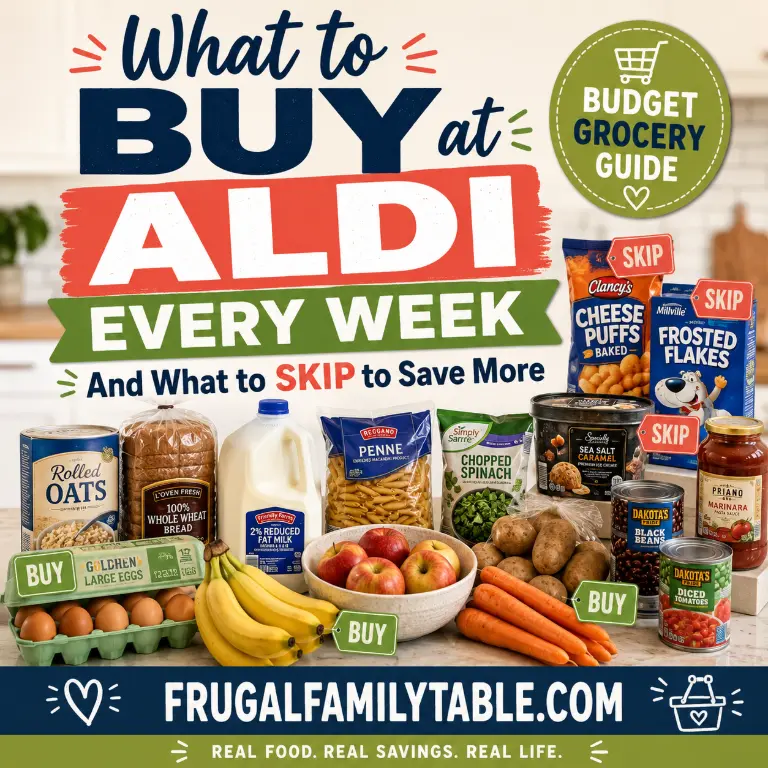
What to Buy (and What to Skip) at Aldi Every Single Week
I used to walk into Aldi and just toss things in the cart, figuring everything in there had to be cheap. That’s how Aldi gets you.
Some of it really is the best price in town. Some of it isn’t, and a few things are honestly a worse deal than what’s on sale at a regular grocery store that same week.
After years of doing the weekly Aldi run for my family, I’ve landed on a pretty solid rhythm. There’s a short list of stuff I buy without thinking twice, and another list of things I either skip completely or only grab when the price is right.
This guide walks through exactly that: what to buy at Aldi every week, what to skip most weeks, and how to build a simple Aldi grocery list that actually keeps your budget in check.
None of this is about being perfect. It’s about knowing where Aldi earns its reputation and where it doesn’t.
Why Aldi works for tight budgets (and where it falls short)

Aldi keeps prices low by sticking to a smaller selection, mostly its own store brands, and skipping a lot of the extras that drive up costs at bigger chains.
No loyalty app, fewer brand names, simpler packaging. That adds up.
For a family trying to lower their weekly grocery bill, that’s a big deal. A lot of pantry staples, dairy, and produce at Aldi run noticeably less than the same items at Kroger, Safeway, or similar stores.
But Aldi isn’t magic.
Prices, sizes, and what’s even in stock can vary a lot depending on your store, the season, and that week’s ad.
A bag of clementines might be a steal in December and a letdown in July. A package of chicken thighs might be the best price around one week and just average the next.
So the smartest way to shop for Aldi groceries on a budget is to know your “always buy” list, know your “check first” list, and stay flexible based on what’s actually in your store that day.
That’s really what this whole guide comes down to.
What to buy at Aldi every single week
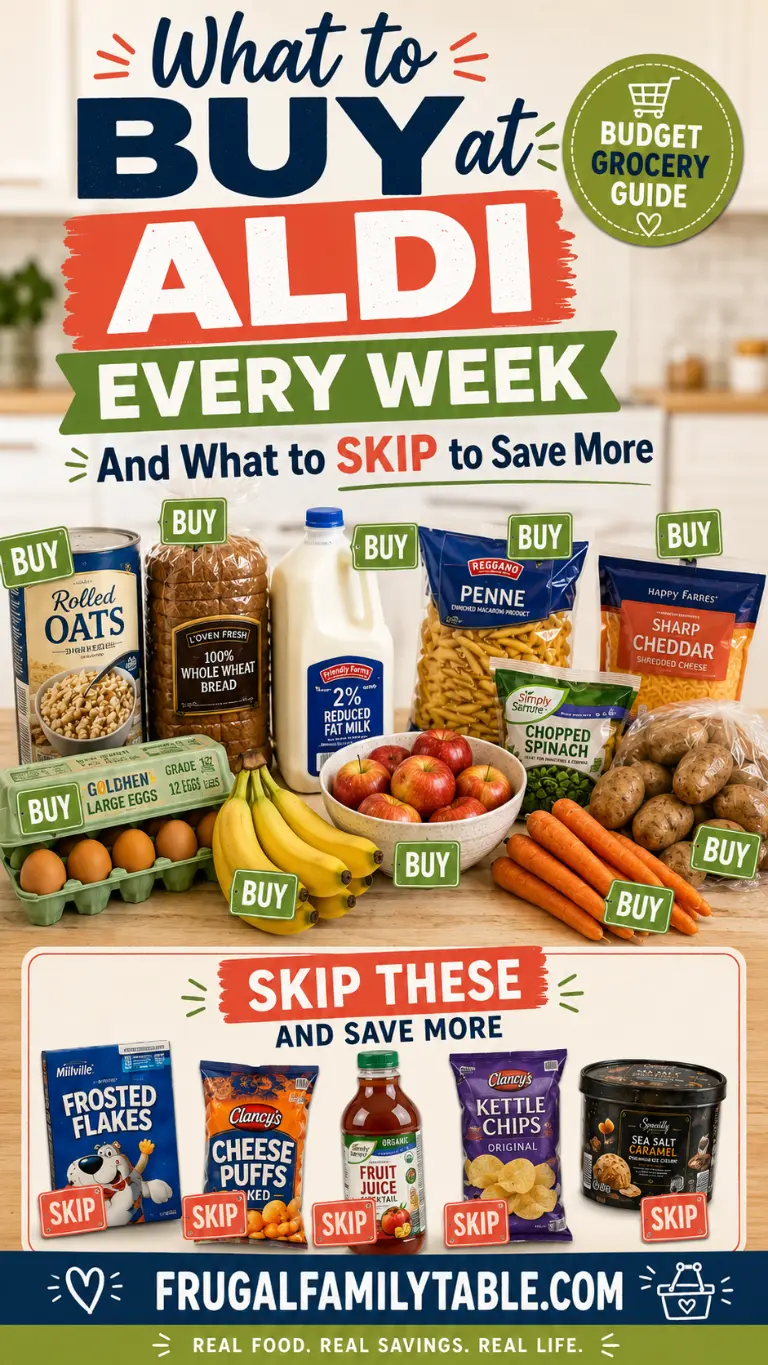
These are the items that show up in my cart almost every time, because they’re consistently priced well and they get used no matter what.
Eggs
Eggs are one of Aldi’s most reliable buys. They’re a cheap source of protein, and they work for every meal of the day, not just breakfast.
Use them for scrambled eggs, hard-boiled snacks, fried rice, egg sandwiches, or stir-frying when you need to stretch a meal.
Budget tip: Buy a flat or two if your family goes through eggs fast. They keep for weeks in the fridge, so there’s no rush to use them up.
Double-check the price if egg prices have been in the news lately. Egg costs swing more than almost anything else in the store, so what was a great deal last month might not be this month.
Milk
Milk at Aldi is usually priced right around (and often below) what you’ll find at other major grocery stores, and it’s something most families buy weekly anyway.
It works for cereal, coffee, baking, sauces, smoothies, and just plain drinking.
Budget tip: Don’t grab a bigger size than your family will finish before it expires. A gallon that goes sour halfway through isn’t actually saving you anything.
Double-check the price when comparing whole, 2%, and skim. The price difference between sizes and types can shift slightly week to week.
Yogurt
Plain and Greek yogurt tubs at Aldi are usually a solid deal, especially compared to name-brand versions at other stores.
Use it for breakfast, smoothies, a base for dips and dressings, or as a substitute for sour cream in recipes.
Budget tip: A large tub of plain yogurt is almost always cheaper per ounce than individual flavored cups, and you can add your own fruit or honey at home.
Double-check the price on flavored single-serve cups. Those small containers tend to cost more per ounce than the big tubs.
Cheese blocks and shredded cheese
Block cheese and shredded cheese at Aldi are some of the best dairy deals in the store, week in and week out.
Use shredded cheese for tacos, quesadillas, pasta, casseroles, and topping baked potatoes. Block cheese is great for sandwiches, snacking, or shredding yourself if you want a better price per ounce.
Budget tip: Buying a block and shredding it at home, even with a basic box grater, usually costs less per ounce than pre-shredded bags.
Double-check the price on specialty cheeses like smoked Gouda or imported varieties. Those are priced more like a treat than a staple.
Bread, tortillas, and buns
Aldi’s bread, tortillas, and hamburger or hot dog buns are reliably cheap and work for almost every meal.
Tortillas alone can carry you through breakfast burritos, lunch wraps, quesadillas, and taco night. Bread covers sandwiches, toast, and French toast when it’s getting close to its expiration date.
Budget tip: Keep an extra loaf or pack of tortillas in the freezer. Bread and tortillas both freeze well, so you’re never caught without them.
Double-check the price on specialty breads like sourdough, artisan loaves, or anything labeled “bakery fresh.” Those run closer to regular grocery store prices.
Rice, pasta, and dry beans
These three pantry basics are some of the cheapest sources of calories and protein you can buy anywhere, and Aldi prices them well.
A bag of rice or pasta and a bag of dry beans can stretch into multiple meals: rice bowls, pasta with sauce, bean and rice burritos, soups, and side dishes.
Budget tip: Dry beans cost a fraction of canned beans per serving once you factor in how much they expand when cooked. A slow cooker or instant pot makes cooking them from dry pretty hands-off.
Double-check the price on flavored rice mixes or specialty pasta shapes. Plain rice and basic pasta shapes are almost always the better deal.
Canned beans, tomatoes, and vegetables
Canned goods are where Aldi really shines for convenience without paying a convenience price. Beans, diced tomatoes, tomato sauce, and canned veggies are staples for a reason.
These go into chili, soups, pasta sauces, casseroles, and quick side dishes when fresh produce isn’t in the budget that week.
Budget tip: Stock up when canned goods are part of a sale, since they don’t expire quickly. A few extra cans of beans or tomatoes in the pantry can save a meal on a tight week.
Double-check the price per ounce between sizes. Sometimes the larger can is a better deal, and sometimes the smaller one actually works out cheaper per ounce.
Frozen vegetables
Frozen vegetables at Aldi are cheap, last a long time, and are just as nutritious as fresh in most cases.
Toss them into stir-fries, soups, pasta, casseroles, or just steam a bag as a quick side dish when you’re short on time.
Budget tip: Frozen veggies don’t go bad before you get to them, so they’re a safer buy than fresh produce on weeks when your meal plan is loose.
Double-check the price on specialty blends with sauces or seasoning packets included. Plain frozen vegetables are almost always the better value.
Basic produce: bananas, potatoes, onions, carrots, apples, and salad greens
This group of produce tends to be both cheap and durable at Aldi, which makes it a foundation for a lot of weekly meals.
Bananas and apples cover snacks and breakfast. Potatoes, onions, and carrots are the backbone of soups, roasted veggie sides, and sheet pan dinners. Salad greens round out lunches and dinners.
Budget tip: Buy potatoes, onions, and carrots in bulk bags. They store well in a cool, dark spot and rarely go to waste if you’re using them throughout the week.
Double-check the price on salad greens specifically. Bagged greens spoil fast, so only buy what you’ll actually use in the next few days.
Chicken, ground beef, ground turkey, or weekly meat specials
Meat is usually the biggest line item on a grocery bill, so this is where Aldi’s weekly specials really matter.
Build your meals around whatever meat is on sale that week, whether that’s chicken thighs, ground beef, or ground turkey. A few pounds can stretch across tacos, a casserole, a sheet pan dinner, and leftovers for lunch.
Budget tip: Buy a larger pack when meat is on sale and split it into meal-sized portions in the freezer the day you get home.
Double-check the price every single week. Meat prices at Aldi can swing quite a bit depending on the weekly ad, so this is one category where it really pays to compare before you commit.
Oats, cereal, and breakfast basics
Plain oats and basic cereals at Aldi are some of the cheapest breakfast options out there, and they keep kids full longer than a lot of pricier alternatives.
A canister of oats can become oatmeal, overnight oats, baked oatmeal bars, or even a binder for homemade meatballs.
Budget tip: A big container of plain oats works out to pennies per serving and can be dressed up differently every day with whatever fruit, peanut butter, or cinnamon you have on hand.
Double-check the price on name-brand cereal boxes versus Aldi’s own cereal lines. The store brand versions are usually a noticeably better deal for a very similar taste.
Peanut butter, jelly, and pantry staples
These shelf-stable basics rarely go bad, get used constantly, and are priced well at Aldi compared to brand names.
Peanut butter and jelly cover sandwiches, but also work as a quick protein add-in for oatmeal, smoothies, or apple slices as an after-school snack.
Budget tip: Buy the largest size that fits your pantry space and your family’s pace of eating. Pantry staples like these are some of the safest “buy more when it’s cheap” items.
Double-check the price if you have a strong brand preference. Some name-brand peanut butters go on sale elsewhere for close to Aldi’s everyday price.
Aldi private-label snacks for kids
Aldi’s own snack lines, things like crackers, fruit snacks, granola bars, and pretzels, are usually a good bit cheaper than name-brand versions at other stores.
These work for lunchboxes, after-school snacks, and car rides, without blowing through your snack budget in a week.
Budget tip: Buy the bigger box or bag and portion snacks into reusable containers at home instead of buying individually wrapped multipacks.
Double-check the price on anything with a licensed character or movie tie-in on the box. Those tend to cost more for the same snack inside.
Baking basics
Flour, sugar, baking soda, baking powder, and basic spices are consistently cheap at Aldi and last a long time in the pantry.
Even if you’re not a big baker, these get used for things like pancakes, muffins, breading for chicken, or thickening a sauce.
Budget tip: Buy these in normal sizes rather than the smallest option. Baking staples don’t expire quickly, so a slightly larger bag of flour or sugar is almost always the better per-pound price.
Double-check the price on specialty flours, like almond or gluten-free blends. Those run much higher and aren’t always stocked consistently.
Lunchbox staples
Things like cheese sticks, applesauce cups, crackers, and small yogurt tubs are handy for packed lunches, and Aldi’s versions are usually priced fairly compared to name brands.
These help you build a packed lunch without scrambling every morning, since you can prep several days at once.
Budget tip: Buy a block of cheese and a sleeve of crackers instead of pre-packaged cheese and cracker kits. You’ll get more servings for less money with just a little extra prep.
Double-check the price on individually portioned items versus buying in bulk and portioning yourself. The bulk option is almost always cheaper per serving.
What to skip at Aldi most weeks
Now for the other side of the list. None of these items is “bad,” they just usually aren’t where Aldi’s savings show up. Here’s what I tend to pass on, and why.
Name-brand products
Aldi does carry a handful of name-brand items, but they’re often priced closer to a regular grocery store than to Aldi’s own store-brand prices.
Instead, go with Aldi’s private-label version of the same product. In most cases, it’s made in the same types of facilities and tastes very similar, just without the brand markup.
It might still be worth buying the name brand if there’s a specific recipe or dietary need where the store brand just doesn’t work the same way, or if you have a coupon that makes it cheaper.
Seasonal specialty foods
Holiday-themed items, seasonal candies, and limited-time specialty foods often carry a higher markup than everyday staples, even at Aldi.
Stick with your regular staples and basic seasonal produce instead, like pumpkins in fall or watermelon in summer when prices actually drop.
These can be worth it occasionally for a special occasion or holiday meal, just don’t build your weekly grocery list around them.
Small convenience packs
Single-serve chip bags, mini cracker packs, and other small “grab and go” portions cost more per ounce than buying a regular size and portioning it yourself.
Buy the regular or family-size version and divide it into reusable containers or snack bags at home.
These can still make sense occasionally for school lunches on a week when you’re truly out of time to portion things yourself, but they shouldn’t be a weekly habit.
Pre-cut produce
Pre-cut fruit, veggie trays, and salad kits cost more for the convenience of someone else doing the chopping.
Buy whole produce instead. Whole carrots, melons, and heads of lettuce cost less per pound and often stay fresh longer than pre-cut versions.
Pre-cut produce can be worth it on a genuinely busy week where the alternative is no vegetables at all, or for a party tray you’d otherwise have to prep yourself.
Prepared frozen meals
Frozen entrees and meal kits are convenient, but they cost more per serving than building a similar meal from basic ingredients like rice, frozen veggies, and a protein.
A sheet pan dinner or a big pot of pasta with frozen veggies and ground turkey covers more people for less money than a stack of frozen boxed meals.
These are still useful to keep a few on hand for nights when cooking just isn’t happening, but they shouldn’t replace your regular meal plan.
Fresh berries and delicate produce when prices are high
Berries, in particular, can swing wildly in price depending on the season. When they’re expensive, they’re one of the first things I skip.
Frozen berries, bananas, or apples cover the same need for fruit in smoothies, oatmeal, or snacks at a more consistent price.
When berries are in season and the price drops, they’re absolutely worth grabbing, just don’t count on them being cheap every week of the year.
Specialty cheeses if the budget is tight
Soft cheeses, imported cheeses, and specialty blends are priced more like an occasional treat than a weekly staple, even at Aldi.
A block of cheddar, mozzarella, or a basic Mexican blend covers most weekly meals for a fraction of the cost.
Specialty cheeses are worth it for a special dinner or when they’re marked down, just not as a regular weekly buy on a tight budget.
Individually packaged snacks
Similar to small convenience packs, individually wrapped granola bars, cookies, or snack cakes cost more per item than buying a box and splitting it up.
A box of the same snack, portioned at home into reusable containers, gets you more servings for less money.
These can be handy for situations where portion control really matters, and you know you won’t divide things up yourself, but for everyday snacking, buying in bulk wins.
Organic items that aren’t competitively priced
Aldi does carry some organic options, but they aren’t automatically cheaper than organic items elsewhere, and they’re almost always pricier than the non-organic version right next to them.
If organic isn’t a strict requirement for your family, the regular version of the same item usually does the job for less.
If organic is a priority for certain items, like specific produce, it can be worth comparing Aldi’s price to other stores rather than assuming it’s automatically the best deal.
Household goods that may be cheaper elsewhere
Things like paper towels, cleaning supplies, and toiletries at Aldi are sometimes a good price, but not always the best around.
Dollar stores, warehouse clubs, or sales at other stores can sometimes beat Aldi on these items, especially with a coupon or store sale stacked on top.
If Aldi’s price on a household item happens to match or beat what you’d pay elsewhere that week, there’s no harm in grabbing it while you’re there. Just don’t assume it’s automatically the cheapest option.
Aldi Finds that are tempting but not part of your plan
Aldi’s rotating “Finds” aisle is full of seasonal, unusual, or trendy items, and it’s designed to catch your eye on the way through the store.
Stick to your grocery list and only browse the Finds aisle after you’ve gotten everything you actually came for.
If something in the Finds aisle genuinely fits your meal plan or is a good price on something you’d buy anyway, go for it. Just be honest with yourself about whether it’s a need or an impulse buy.
Weekly Aldi buy vs. skip table
| Item or category | Buy or skip? | Why | Budget-friendly alternative |
|---|---|---|---|
| Eggs | Buy | Reliable price, works for every meal | N/A |
| Milk | Buy | Usually at or below other stores | N/A |
| Plain/Greek yogurt (tubs) | Buy | Cheaper per ounce than single cups | N/A |
| Block and shredded cheese | Buy | Solid weekly value | Shred your own block to save more |
| Bread, tortillas, buns | Buy | Cheap and freezer-friendly | N/A |
| Rice, pasta, dry beans | Buy | Some of the cheapest calories around | N/A |
| Canned beans, tomatoes, veggies | Buy | Affordable pantry backbone | N/A |
| Frozen vegetables | Buy | Cheap, long shelf life, no waste | N/A |
| Bananas, potatoes, onions, carrots, apples | Buy | Durable, versatile produce | N/A |
| Weekly meat specials | Buy | Best protein value when on sale | Eggs, beans, canned tuna |
| Plain oats and basic cereal | Buy | Very low cost per serving | N/A |
| Peanut butter, jelly, pantry staples | Buy | Long shelf life, daily use | N/A |
| Aldi private-label kid snacks | Buy | Cheaper than name-brand snacks | N/A |
| Baking basics (flour, sugar, spices) | Buy | Cheap and long-lasting | N/A |
| Lunchbox staples | Buy | Affordable when bought in bulk | Buy block cheese plus crackers |
| Name-brand products | Skip | Priced closer to regular stores | Aldi private-label version |
| Seasonal specialty foods | Skip | Higher markup than staples | Regular seasonal produce |
| Small convenience packs | Skip | More per ounce than family size | Family size, portioned at home |
| Pre-cut produce | Skip | Pay extra for prep work | Whole produce, cut at home |
| Prepared frozen meals | Skip | Costs more per serving | Homemade rice, veggie, protein meals |
| Fresh berries (when pricey) | Skip | Prices spike often | Frozen berries, bananas, apples |
| Specialty cheeses | Skip | Treat pricing, not staple pricing | Cheddar, mozzarella, Mexican blend |
| Individually packaged snacks | Skip | More per item than bulk | Buy a box, portion at home |
| Non-competitive organic items | Skip | Not always Aldi’s best price | Regular version of same item |
| Household goods | Compare first | Sometimes cheaper elsewhere | Dollar store, warehouse club, sales |
| Aldi Finds (off-list) | Skip | Designed for impulse buying | Stick to your written list |
A sample Aldi weekly grocery list for a family

Here’s an example of what a week’s worth of groceries might look like for a family of four, with rough price ranges based on typical U.S. Aldi pricing.
Your store’s actual prices will vary by location, season, and that week’s ad, so use this as a starting point, not a guarantee.
Produce
- Bananas (bunch): $1.50–$2.00
- Apples (3 lb bag): $3.00–$4.00
- Potatoes (5 lb bag): $2.50–$3.50
- Onions (3 lb bag): $2.00–$2.50
- Carrots (2 lb bag): $1.50–$2.00
- Salad greens (bag): $1.50–$2.50
Dairy
- Eggs (1 dozen, large): $2.00–$4.00
- Milk (1 gallon): $2.50–$3.50
- Plain yogurt (32 oz tub): $2.50–$3.50
- Shredded cheese (16 oz bag): $3.00–$4.00
Protein
- Chicken thighs or breasts (family pack, on sale): $5.00–$9.00
- Ground beef or turkey (1 lb): $3.00–$5.00
- Canned tuna (4-pack): $3.00–$4.00
Pantry
- Rice (5 lb bag): $3.00–$4.00
- Pasta (2 boxes): $2.00–$3.00
- Canned beans (3 cans): $2.00–$3.00
- Canned diced tomatoes (2 cans): $1.50–$2.50
- Peanut butter (16 oz jar): $2.00–$3.00
- Bread (1 loaf): $1.50–$2.50
- Tortillas (1 pack): $1.50–$2.50
Frozen
- Mixed frozen vegetables (2 bags): $2.00–$4.00
- Frozen fruit (1 bag): $2.50–$3.50
Breakfast and lunch items
- Oats (canister): $2.00–$3.00
- Cereal (1 box): $2.00–$3.50
- Crackers (1 box): $1.50–$2.50
Snacks
- Pretzels or chips (family size): $2.00–$3.00
- Granola bars (box): $2.50–$3.50
- Fruit snacks or applesauce cups (multipack): $2.50–$3.50
Add it all up, and you’re generally looking at somewhere in the $80 to $110 range for a week’s worth of groceries for a family of four, depending heavily on what’s on sale and how much meat your family eats.
Again, prices vary by location and season, so use this list as a framework you can adjust.
Simple weekly meal ideas using these Aldi buys
Breakfast: Oatmeal with bananas and peanut butter, scrambled eggs with toast, or yogurt with frozen fruit and granola.
Lunch: Egg sandwiches, quesadillas with shredded cheese, or a simple rice bowl with beans and frozen veggies.
Dinner: A sheet pan chicken dinner with potatoes and carrots, taco bowls using ground beef or turkey, a pasta bake with canned tomatoes and cheese, or a pot of soup using canned beans, frozen veggies, and whatever protein is on hand.
Snacks: Apple slices with peanut butter, cheese and crackers, or a homemade snack plate with pretzels, fruit, and a few crackers.
Leftovers: Turn extra chicken into a quesadilla filling, leftover rice into a fried rice dinner with eggs and frozen veggies, or extra taco meat into a baked potato topping.
The idea is that almost everything on your Aldi list can be reused across two or three meals, which is really where the savings add up over a week.
Smart Aldi shopping tips for tight budgets
- Check the weekly ad before you shop. This is where Aldi’s best deals actually show up, especially on meat and produce.
- Build your meals around whatever protein is on sale, rather than deciding on meals first and hoping the right meat is cheap that week.
- Compare price per ounce or per pound, not just the price on the front of the package. A bigger size isn’t automatically a better deal.
- Lean on Aldi’s private-label products for pantry basics, dairy, and snacks. That’s where most of the savings live.
- Walk past the Aldi Finds aisle without stopping until you’ve gotten everything on your list. Browse it last, if at all.
- Buy ingredients that work in multiple meals, like rice, eggs, tortillas, and frozen vegetables, instead of single-use ingredients for one recipe.
- Choose frozen vegetables when fresh prices are high. They’re just as useful in most recipes and won’t go bad before you use them.
- Don’t assume every item at Aldi is the cheapest option. Some things, especially household goods and specialty items, can be matched or beaten elsewhere.
- Plan your leftovers before you shop, so you’re buying enough of a protein or starch to stretch across two meals on purpose.
- Keep a running price list on your phone for the items you buy most often. After a few weeks, you’ll know exactly what’s a good price and what’s not.
Substitutions if prices are higher or items are out of stock
Aldi’s inventory isn’t always consistent, and prices shift from week to week. Here’s how to adjust without blowing your budget.
- If chicken is expensive that week, fall back on eggs, canned tuna, dry beans, or ground turkey for your protein.
- If berries are too pricey, use bananas, apples, or a bag of frozen fruit instead.
- If salad greens are wilting too fast or costing too much, swap in cabbage, carrots, or a bag of frozen vegetables.
- If bread prices are higher than usual, lean on tortillas, rice, potatoes, or oats to round out meals.
- If snack packs feel too expensive, portion out homemade snack bags from a larger box of crackers, pretzels, or cereal.
Common Aldi shopping mistakes to avoid
- Filling your cart with Aldi Finds before you’ve grabbed your actual list items, then running short on budget for the basics.
- Buying produce without a meal plan, which often ends with half of it going bad before you use it.
- Ignoring package sizes, especially on meat, cheese, and pantry items, where the larger size is sometimes a better per-unit price and sometimes isn’t.
- Forgetting to check expiration dates, particularly on dairy and meat, since Aldi’s prices are good, but the dates still matter.
- Buying specialty or seasonal items before covering your basics, which can leave you short on staples by the end of the week.
- Not comparing meat and household goods to other stores, since these are the categories where Aldi isn’t always the automatic winner.
- Shopping hungry or without a list, which is a fast way to end up with a cart full of things that weren’t part of the plan.
FAQ
Is Aldi really cheaper for weekly groceries? For most staples, yes. Pantry basics, dairy, frozen vegetables, and Aldi’s own snack and breakfast items are usually priced below what you’d pay at a typical grocery store. Meat, produce, and household goods are more of a mixed bag and worth comparing.
What are the best things to buy at Aldi every week? Eggs, milk, yogurt, cheese, bread and tortillas, rice and pasta, canned beans and tomatoes, frozen vegetables, basic produce like potatoes and bananas, and whatever meat is part of that week’s special are consistently good buys.
What should I not buy at Aldi? Name-brand products, small convenience packs, pre-cut produce, prepared frozen meals, and items from the Aldi Finds aisle that aren’t part of your plan are the most common things worth skipping.
Is Aldi good for a family grocery budget? Yes, especially if you build your weekly list around the staples, Aldi prices well, and stay flexible with meals based on what’s actually on sale. Families who shop with a list tend to see the biggest savings.
Are Aldi private-label products good? Most families find Aldi’s private-label products to be a close match in quality to name brands, especially for things like cheese, pasta, canned goods, and basic snacks. Taste preferences can vary by item, so it’s worth trying a few before committing to a full switch.
How can I avoid overspending at Aldi? Shop with a list, check the weekly ad ahead of time, compare price per ounce instead of just the sticker price, and save the Aldi Finds aisle for last, if you go through it at all.
What is the best day to shop at Aldi? Aldi’s weekly ad typically starts on Wednesdays, so shopping early in the ad cycle gives you the best chance at fully stocked sale items before they sell out. Exact timing can vary by store, so it’s worth checking your local Aldi’s schedule.
Final thoughts
Aldi can genuinely be one of the most useful tools for keeping a family grocery budget under control, but it works best when you go in with a plan.
Start with the weekly basics that are almost always a good price: eggs, milk, cheese, bread, rice, beans, frozen veggies, and basic produce.
Then build your meals around whatever protein is on sale that week.
Skip the impulse buys in the Finds aisle, double-check prices on meat, household goods, and anything specialty, and adjust your list based on what your family actually eats and what your local store has that week.
That’s really the whole strategy behind knowing what to buy and what to skip at Aldi every single week, and it’s flexible enough to work no matter what’s in season or on sale near you.
