
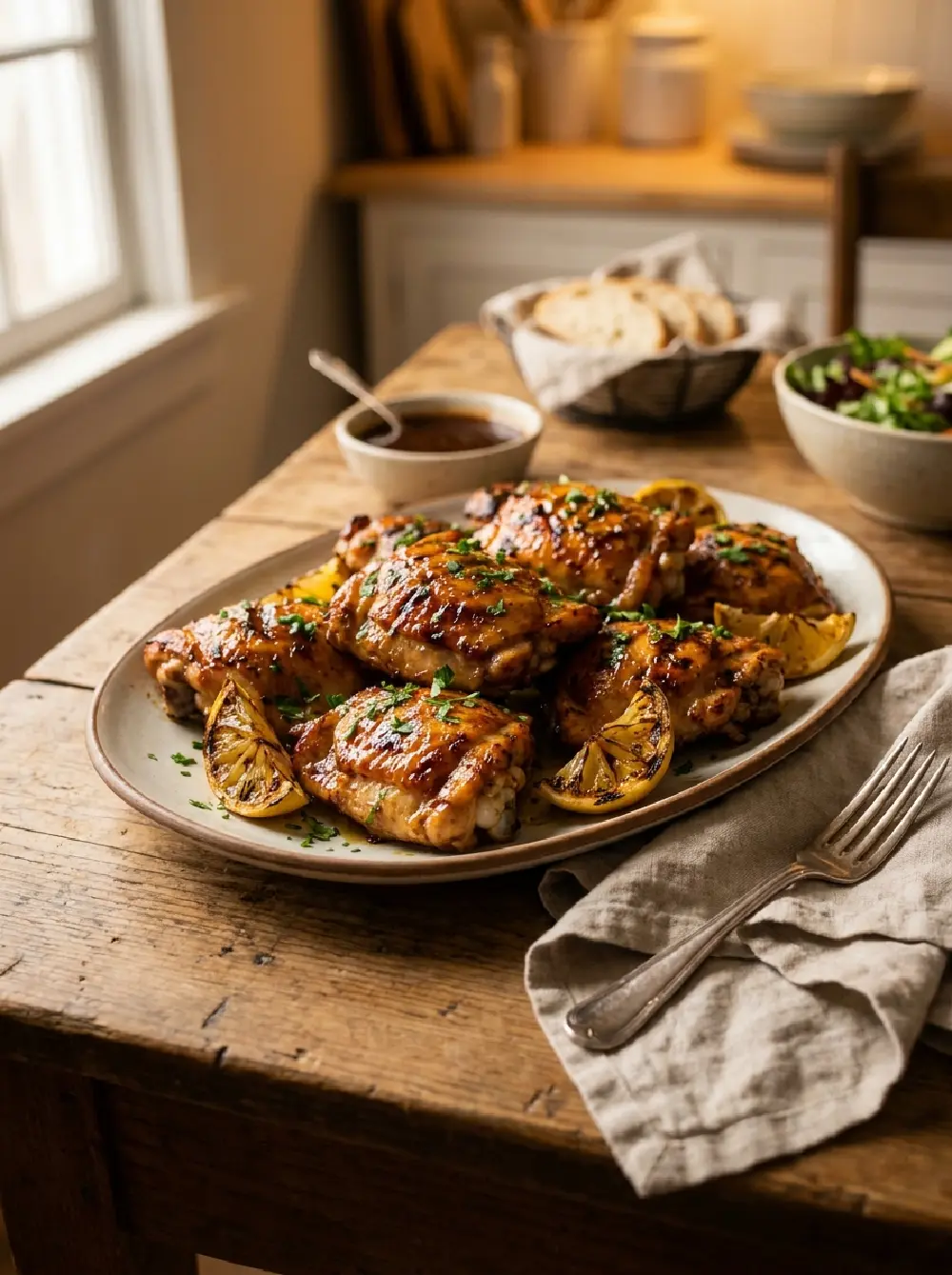
The Best Chicken Marinade Recipe (5 Easy Flavors)
I used to think dry chicken was just something you had to live with.
Weeknight after weeknight, I’d season plain chicken breasts, throw them in a pan, and end up with something rubbery and sad.
Then a coworker handed me her marinade formula on a sticky note, and it changed how I cook chicken for good.

This recipe works because it’s built on a ratio, not a rigid list. Once you know the ratio of acid, oil, and salt, you can swap in almost any flavor you’re craving.
Most marinade recipes online give you one flavor and stop there.
This one gives you a formula plus five ready-to-use variations, so you’re never stuck.
Why You’ll Love This Recipe
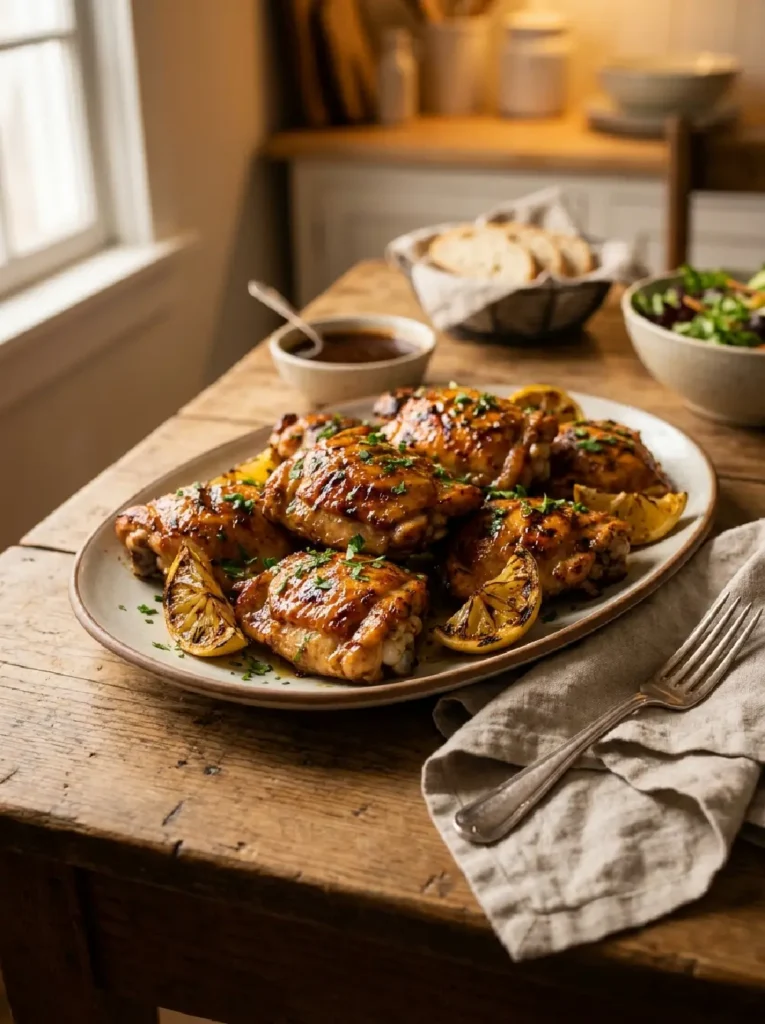
- One base ratio, endless flavors. Learn the formula once and you can build your own marinades without a recipe.
- Ready in 10 minutes of prep. Whisk it together while your chicken sits out to lose its chill.
- Works for breasts or thighs. The acid level is gentle enough not to turn meat mushy, even with a longer marinate time.
- Freezer-friendly. Marinate and freeze in one bag, so dinner is basically done before you even start cooking.
- No fancy ingredients. Everything comes from a regular grocery store, no specialty aisle required.
Ingredients
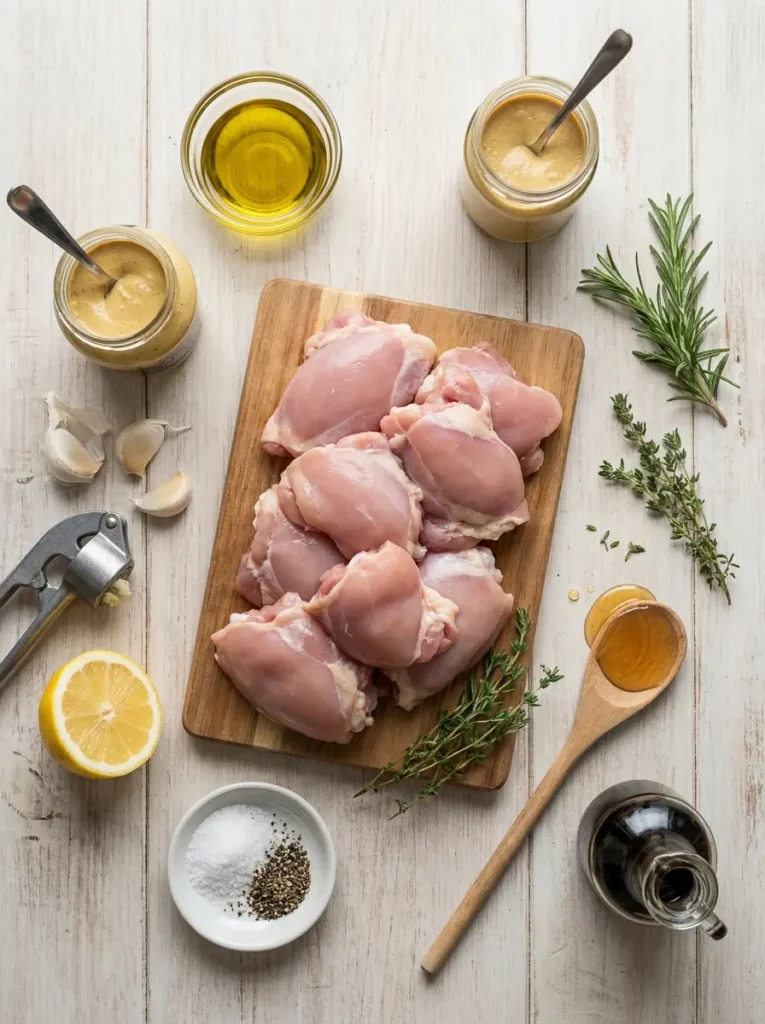
Base Marinade (makes enough for 1.5–2 lbs chicken)
- 1/3 cup olive oil (80 ml)
- 3 tbsp acid of choice: lemon juice, lime juice, or vinegar (45 ml)
- 1 tbsp Dijon mustard (15 ml)
- 2 garlic cloves, minced
- 1 tsp kosher salt
- 1/2 tsp black pepper
- 1 tsp dried herbs of choice (oregano, thyme, or Italian blend)
Flavor Add-Ins (pick one)
Garlic Herb: add 1 extra minced garlic clove, 1 tsp fresh rosemary, 1 tsp fresh thyme
Honey Mustard: add 2 tbsp honey (30 ml), 1 extra tbsp Dijon mustard (15 ml)
Teriyaki: replace the acid with 3 tbsp soy sauce (45 ml), add 2 tbsp brown sugar and 1 tsp grated ginger
Lemon Pepper: use lemon juice as your acid, add 1 tsp lemon zest and 1/2 tsp extra black pepper
Spicy Chili Lime: use lime juice as your acid, add 1 tsp chili powder, 1/2 tsp smoked paprika, and 1/4 tsp cayenne
Instructions
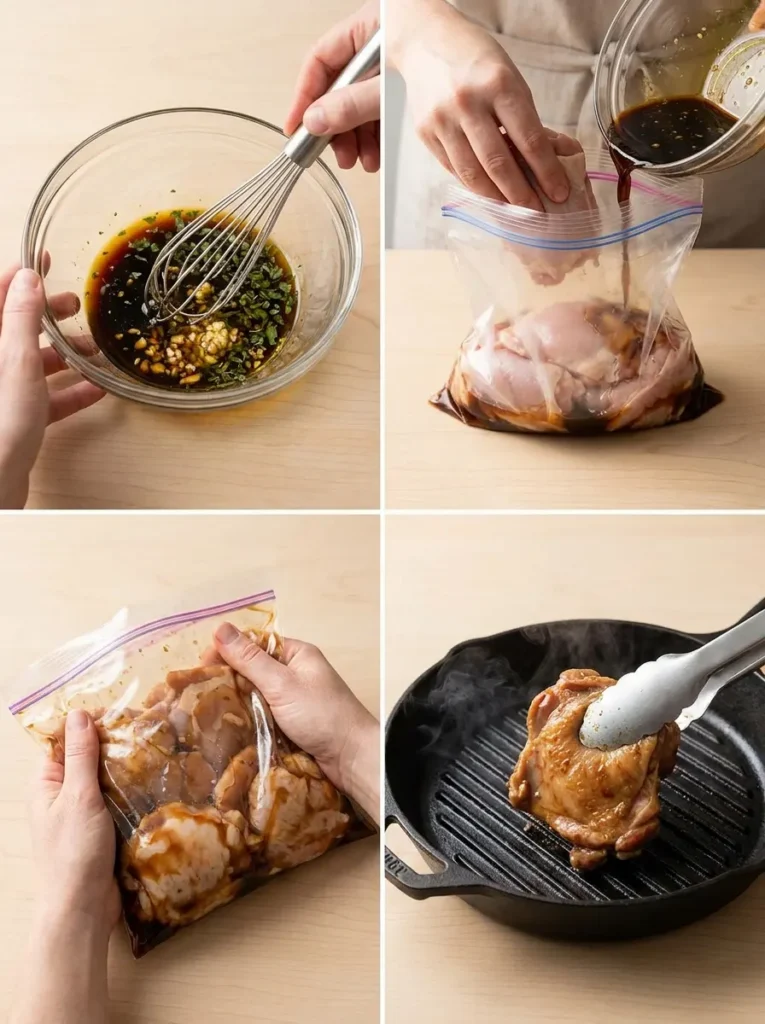
- Whisk the base marinade. In a medium bowl, whisk together the olive oil, acid, Dijon mustard, minced garlic, salt, pepper, and dried herbs until combined. The mixture should look slightly thickened and no longer separated.
- Stir in your chosen flavor add-ins. Whisk until fully blended into the base. Taste a small drop on a spoon; it should taste bold, since it will mellow once it coats the chicken.
- Pat the chicken dry. Use paper towels to dry 1.5 to 2 pounds of boneless chicken breasts or thighs. Dry chicken absorbs marinade better than wet chicken.
- Combine chicken and marinade. Place the chicken in a large zip-top bag or shallow dish. Pour the marinade over the top and turn the chicken a few times to coat every piece.
- Marinate in the refrigerator. Let chicken breasts marinate for at least 30 minutes and up to 4 hours. Let thighs marinate up to 8 hours, since they can handle more acid without turning mushy. Do not marinate longer than 8 hours or the texture can turn stringy.
- Remove chicken and let excess marinade drip off. Discard the used marinade; do not reuse it unless you boiled it first (see Notes).
- Cook using your preferred method:
- Grill: Preheat grill to medium-high (about 400°F). Grill chicken breasts 5 to 7 minutes per side, or thighs 6 to 8 minutes per side, until a meat thermometer inserted in the thickest part reads 165°F.
- Bake: Preheat oven to 425°F. Bake chicken breasts 20 to 25 minutes, or thighs 25 to 30 minutes, until internal temperature reaches 165°F.
- Pan-sear: Heat 1 tablespoon of oil in a skillet over medium-high heat. Sear chicken breasts 5 to 6 minutes per side, until golden brown and internal temperature reaches 165°F.
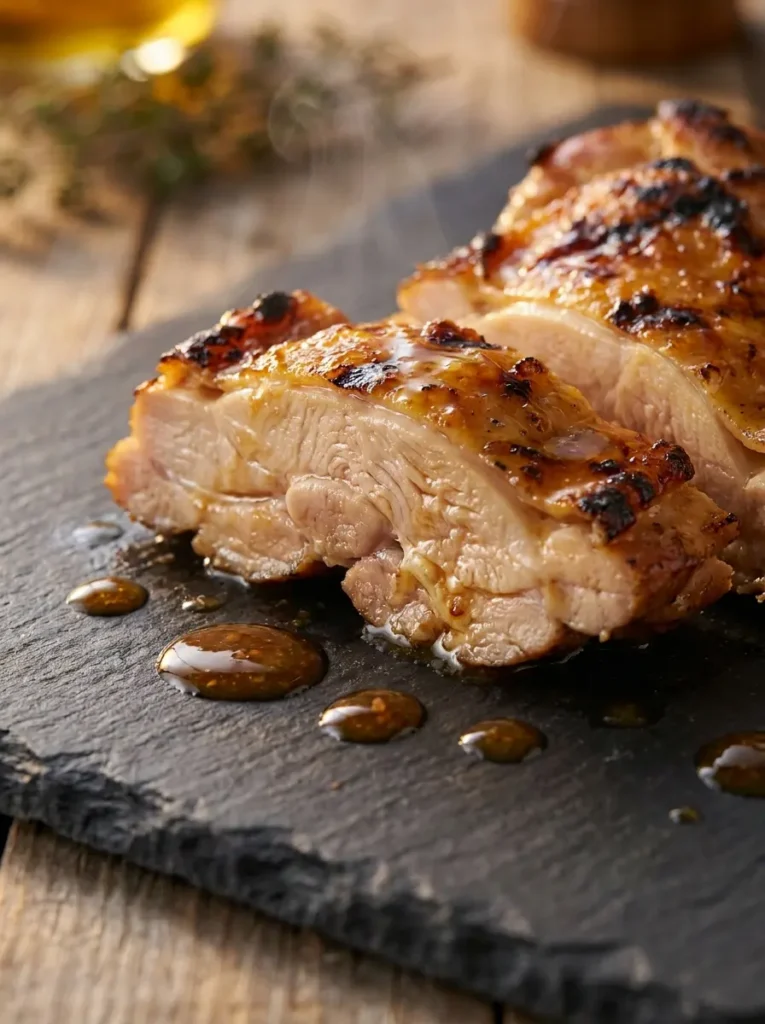
- Rest before slicing. Let the chicken rest for 5 minutes on a cutting board before cutting into it. This keeps the juices inside instead of running out onto the board.
Recipe Notes
Substitutions: No Dijon mustard? Plain yellow mustard works in a pinch, though the flavor will be milder. Any neutral oil, like avocado or vegetable oil, can replace olive oil.
Storage: Store cooked, cooled chicken in an airtight container in the refrigerator for up to 4 days.
Make-ahead: Combine chicken and marinade in a freezer bag, then freeze flat for up to 3 months. Thaw in the refrigerator overnight; the chicken will finish marinating as it thaws.
Reusing marinade: If you want to use leftover marinade as a sauce, bring it to a full boil for at least 5 minutes first to make it safe, since it touched raw chicken.
Common mistakes to avoid:
- Marinating too long with a high-acid mix can make the chicken mushy instead of tender.
- Skipping the pat-dry step means the marinade slides off instead of clinging to the meat.
- Cooking straight from the fridge leads to uneven cooking; let chicken sit out for about 15 minutes before cooking if time allows.
- Guessing doneness by color instead of using a meat thermometer is the most common reason for dry or undercooked chicken.
Nutrition information will vary based on which flavor variation and cooking method you choose. If you need exact nutrition facts, calculate them using your specific ingredients and portion sizes, since this needs verification and isn’t provided here as a fixed number.
