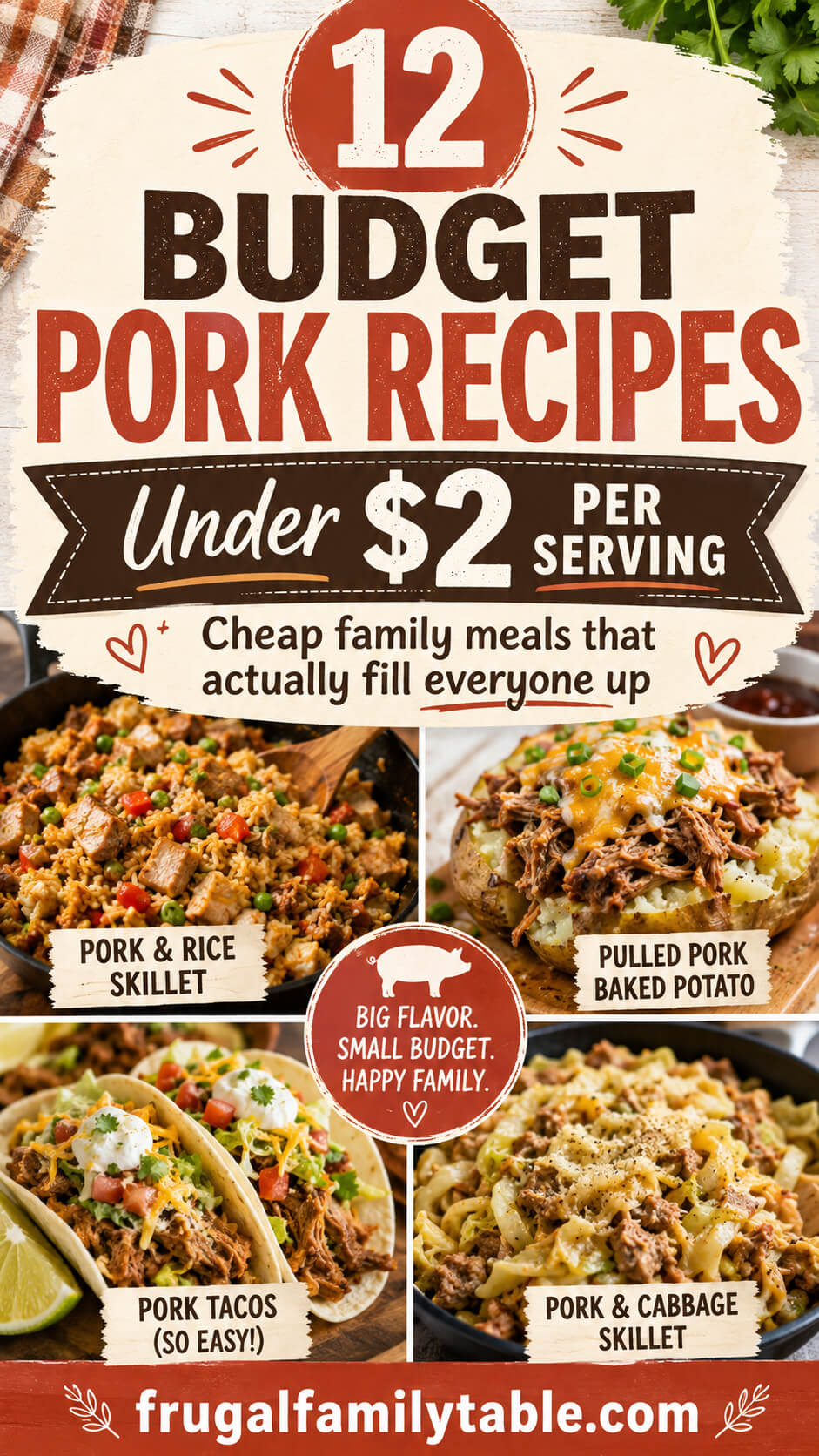
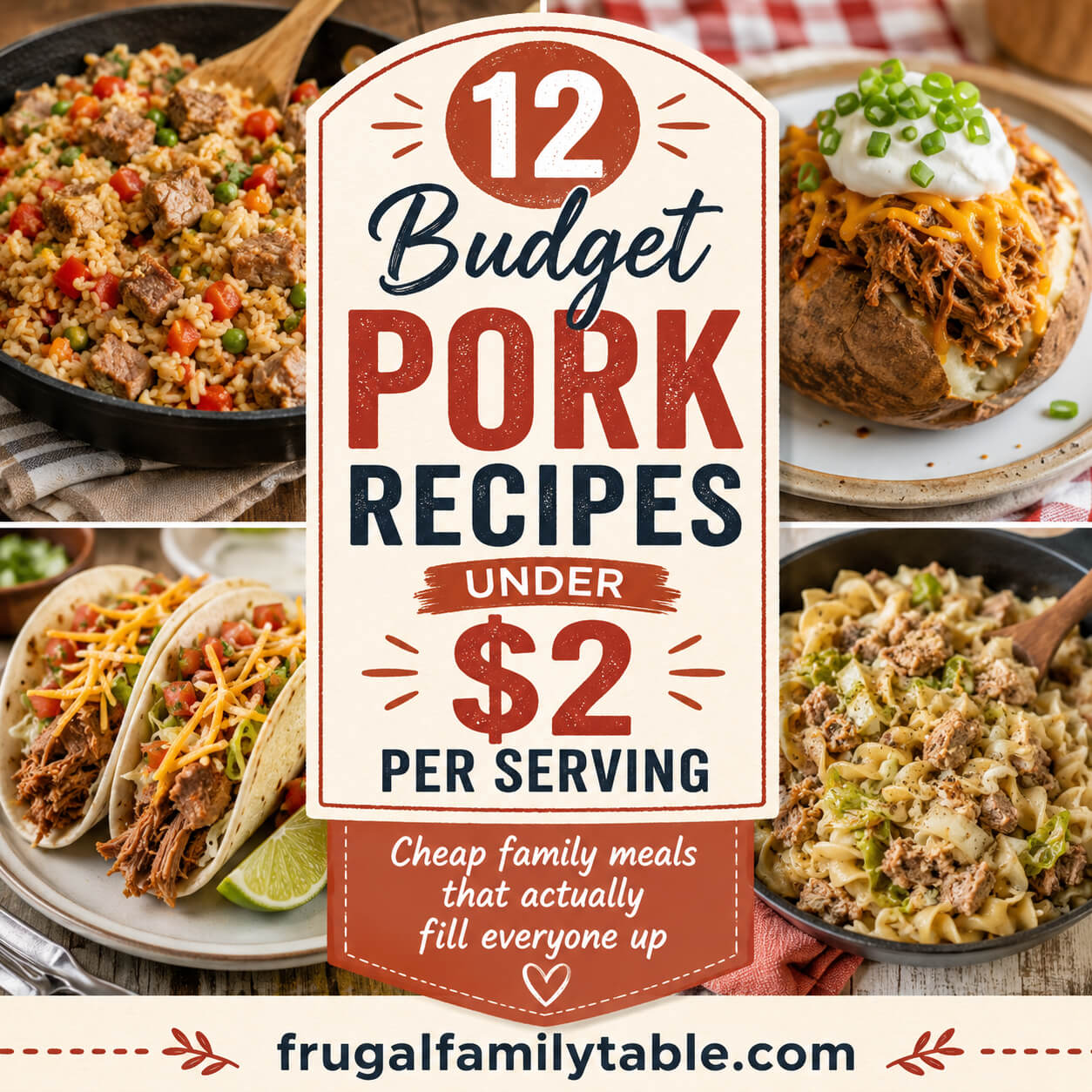
Budget Pork Recipes: 12 Meals Under $2 Per Serving
Pork has a reputation for being a cheap protein, and it can be, but only if you know which cuts to actually buy. Walk past the center-cut boneless chops at full price, and nothing about pork feels affordable.
Buy a pork shoulder on sale or grab a family pack of ground pork, and suddenly dinner costs less than a drive-through coffee.
These budget pork recipes are built around cuts that stay under $2–$3 per pound when you shop smart: pork shoulder, ground pork, smoked sausage, leftover ham pieces, and bone-in chops on sale.
Every recipe here serves a real family, not two people splitting a “serving” the size of your palm, and almost all of them stretch the pork with pantry staples you probably already have: rice, beans, potatoes, pasta, cabbage, and canned tomatoes.
If you’ve been relying on chicken to keep grocery costs down, pork deserves a spot back in your rotation.
Here’s how to make it work.
Why Pork Can Still Work on a Tight Grocery Budget

Pork is one of the more forgiving proteins when it comes to budget cooking, but only if you stop buying the wrong cuts.
A few things worth knowing before you shop:
The cheapest cuts are the fattier, tougher ones
Pork shoulder (also sold as Boston butt or pork butt) is almost always the best deal per pound.
It’s fatty and tough raw, which is exactly what makes it soft and flavorful after a few hours in a slow cooker.
Ground pork and bone-in pork chops are usually the next cheapest. Smoked sausage and ham pieces (often sold as “ham steak” or in value packs) round out the list.
Pork tenderloin and center-cut boneless chops are at the expensive end; skip them unless they’re on clearance.
Pork stretches well because it’s flavorful
You don’t need a full pound of pork per person to make a satisfying dinner.
Half a pound of seasoned ground pork goes a long way in tacos when you add rice or beans. A cup of pulled pork can top baked potatoes for six people.
The fat in most cheap cuts renders into the dish as it cooks, which means every bite tastes like pork even when there isn’t that much of it.
Pairing matters as much as the cut
Rice, dried beans, pasta, potatoes, cabbage, and frozen mixed vegetables all cost well under $1 per serving, and they turn a small amount of pork into a filling meal.
A pound of pork shoulder paired with rice and beans can realistically feed six people.
Without those fillers, that same pound feeds maybe three.
Sales shopping is the whole game
Pork shoulder regularly goes on sale for $1.50–$2.50/lb at most large grocery stores, sometimes lower at warehouse stores or during holiday weekends.
A 5–7 pound pork shoulder at that price costs $8–$15 and produces enough meat for two or three different meals.
Buying it at full price ($4–$5/lb) still works if you’re planning multiple meals from it, but watching for sales drops the cost significantly.
Quick Budget Rules Before You Start
- Use ½ pound of pork per serving as your ceiling, not your floor. In most of these recipes, ¼ to ⅓ pound of pork per person is plenty when there’s a filler involved.
- Buy family packs only if you’ll freeze what you don’t use that day. A 4-pound pack of ground pork is a great deal until half of it goes bad in your fridge.
- Cook once, eat twice (or three times). Pulled pork made on Sunday can become tacos on Monday and quesadillas on Tuesday without anyone complaining.
- Pork is the flavor, not the whole plate. The goal is for every bite to taste like pork, not for every bite to be pork.
- Skip boneless premium cuts unless they’re marked down. Bone-in adds flavor anyway. Boneless center-cut is convenient, not economical.
- Compare price per pound, not package price. A $6 package that’s 3 pounds is a better deal than a $4 package that’s 1.2 pounds.
- Don’t skip the meat thermometer. Cooking pork to safe temperatures is easy when you have one. Without one, you’re guessing.
12 Budget Pork Recipes Under $2 Per Serving
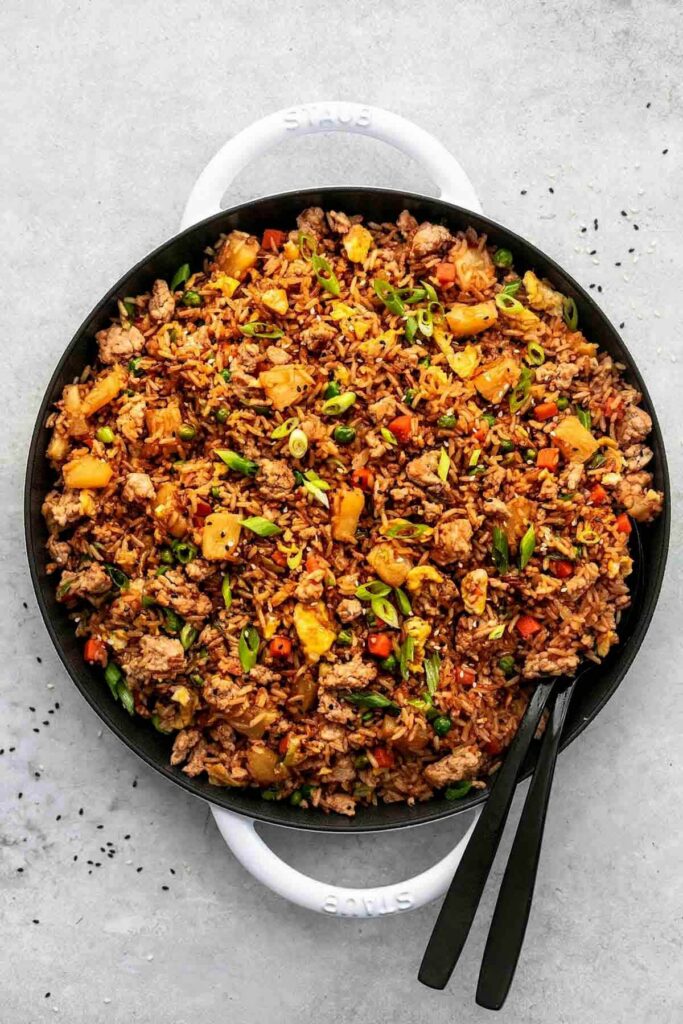
1. One-Pan Pork and Rice Skillet
Estimated cost: $4–$5 total
Serves: 6
Estimated cost per serving: $0.75–$0.85
Best pork cut to use: Ground pork
Why it works on a budget: Ground pork typically runs $3–$5 per pound, and one pound feeds six people when cooked into seasoned rice. This is one of the cheapest meals on the list.
How to make it: Brown 1 pound of ground pork in a large skillet with a diced onion, salt, pepper, and garlic powder. Drain excess fat. Add 1½ cups of long-grain rice, 3 cups of chicken broth (or water with a bouillon cube), and a can of diced tomatoes. Bring to a boil, then reduce the heat, cover, and simmer 18–20 minutes until the rice is cooked through. Season with cumin or chili powder if you have it.
Stretch it further: Stir in a drained can of black beans during the last 5 minutes of cooking. Adds fiber, protein, and makes the whole dish go even further.
Leftover idea: Reheat with a splash of water or broth and stuff into tortillas with shredded cheese for quick burritos the next day.
2. Loaded Pulled Pork Baked Potatoes

Estimated cost: $8–$10 total for toppings and potatoes; the pork shoulder (cooked separately) adds $8–$12 but yields enough meat for 2–3 meals
Serves: 6
Estimated cost per serving: $1.40–$1.65
Best pork cut to use: Pork shoulder (slow-cooked)
Why it works on a budget: A 5-pound pork shoulder cooked down and shredded gives you enough meat for this meal, plus at least one more dinner. The baked potato is the filler, and it’s one of the cheapest foods you can buy.
How to make it: Season a pork shoulder with salt, pepper, garlic powder, and smoked paprika. Cook in a slow cooker on low 8 hours (or high 4–5 hours) until it shreds easily. Shred the meat and mix with a little of the cooking liquid to keep it moist. Bake large russet potatoes at 400°F for about an hour. Split and top each potato with pulled pork, shredded cheese, and whatever else you have, sour cream, green onions, or a spoonful of salsa all work.
Stretch it further: Use medium potatoes instead of large ones and serve with a simple cabbage slaw on the side. Fills the plate for almost nothing extra.
Leftover idea: Use remaining pulled pork in recipe #5 (slow cooker tacos) or #12 (quesadillas) the next night.
3. Crispy Ground Pork Taco Bowls
Estimated cost: $5–$7 total
Serves: 5–6
Estimated cost per serving: $0.90–$1.20
Best pork cut to use: Ground pork
Why it works on a budget: Ground pork seasons well with basic spices you already have, and it goes twice as far when served over rice instead of just stuffed into a shell.
How to make it: Brown 1 pound of ground pork in a skillet over medium-high heat. Season with 1 tsp cumin, 1 tsp chili powder, ½ tsp garlic powder, salt, and pepper. Once the meat is cooked through, spread it in a single layer and let it sit undisturbed for 2–3 minutes — this is what gets you the crispy bits on the bottom. Cook rice separately. Build bowls: rice on the bottom, crispy pork on top, then whatever you have, canned corn, salsa, shredded cheese, sour cream, or diced onion.
Stretch it further: Add a can of drained pinto beans to the meat while it’s still in the pan. The beans take on the seasoning, and the bowl gets bigger without the cost going up much.
Leftover idea: Leftover taco bowl filling reheats perfectly in a flour tortilla for next-day burritos or rolled inside a scrambled egg wrap.
4. Pork Fried Rice
Estimated cost: $4–$6 total
Serves: 4–5
Estimated cost per serving: $0.90–$1.30
Best pork cut to use: Any leftover cooked pork, or ½ lb ground pork, or diced pork chop
Why it works on a budget: This recipe is designed around leftover rice and leftover pork. Both of those things cost almost nothing. The eggs add protein for a few cents per serving.
How to make it: Use day-old cooked rice if you have it (fresh rice gets mushy). Heat oil in a large skillet or wok over high heat. Add diced onion and frozen mixed vegetables, cook 3–4 minutes. Push to the side, scramble 3 eggs in the pan, then mix everything. Add the rice and stir-fry for a few minutes until it starts to get a little crispy at the edges. Add the cooked pork, a few tablespoons of soy sauce, and a little sesame oil if you have it. Stir until everything is hot.
Stretch it further: Use less pork and add an extra egg or more frozen vegetables. The soy sauce makes everything taste richer than it is.
Leftover idea: Fried rice is already a leftover meal; eat the rest cold the next day or reheat with a splash of water.
5. Slow Cooker Pork Shoulder Street Tacos
Estimated cost: $9–$12 total
Serves: 8–10
Estimated cost per serving: $1.10–$1.50
Best pork cut to use: Pork shoulder (bone-in or boneless)
Why it works on a budget: One large pork shoulder feeds a crowd, and the slow cooker does all the work. The tortillas are cheap, and you can use small flour or corn tortillas to keep portions modest.
How to make it: Rub a 4–5 pound pork shoulder with salt, cumin, chili powder, garlic powder, and oregano. Pour in ½ cup of orange juice or water. Cook on low for 8 hours. Shred the meat in the pot, stir it into the juices. Serve on warmed tortillas with diced white onion, cilantro (if your family likes it), and a squeeze of lime. Add salsa or hot sauce from the pantry.
Stretch it further: Use two small tortillas per taco, but keep the filling modest. Serve with a simple side of rice and beans.
Leftover idea: The shredded pork freezes perfectly in a zip bag. Pull it out the following week for another round of tacos, or use it on baked potatoes or in quesadillas.
6. Sausage and Cabbage Skillet
Estimated cost: $5–$7 total
Serves: 5–6
Estimated cost per serving: $0.90–$1.20
Best pork cut to use: Smoked sausage or kielbasa
Why it works on a budget: Smoked sausage is already cooked, so this is a 20-minute meal. Cabbage is one of the cheapest vegetables in any grocery store and holds up well in the pan without getting mushy.
How to make it: Slice a 14 oz package of smoked sausage into rounds. Brown it in a large skillet over medium heat. Remove and set aside. In the same pan, cook a diced onion with a little oil until soft. Add half a head of cabbage, sliced thin. Stir in salt, pepper, garlic powder, and a splash of apple cider vinegar if you have it. Cook until cabbage is tender, about 10–12 minutes. Add the sausage back in, stir together, and serve. Goes great with mashed potatoes or just a slice of bread.
Stretch it further: Add two sliced potatoes to the pan after the onion. They soak up the sausage drippings and make the whole meal more filling without adding much cost.
Leftover idea: Chop leftovers up and fry with eggs for a hearty breakfast hash the next morning.
7. White Bean and Pork Soup
Estimated cost: $5–$7 total
Serves: 6–8
Estimated cost per serving: $0.70–$1.15
Best pork cut to use: Ham pieces, ham hock, smoked sausage, or leftover pulled pork
Why it works on a budget: Beans are the real protein here. The pork adds flavor and a bit of substance, but two cans of white beans stretch this into a meal that feeds a big family for well under $1 per bowl.
How to make it: Sauté a diced onion and a few minced garlic cloves in a large pot. Add whatever pork you’re using — diced ham, sliced sausage, or shredded leftover pork — and cook for 2–3 minutes. Pour in 4–5 cups of chicken broth (or water with bouillon), two cans of drained white beans, and a can of diced tomatoes. Season with salt, pepper, Italian seasoning, and a pinch of red pepper flakes. Simmer 20–30 minutes. If it gets too thick, add more broth or water.
Stretch it further: Stir in a cup of dried pasta during the last 10 minutes of simmering. Turns it into a more substantial meal and uses up pasta that’s been sitting in the pantry.
Leftover idea: This soup is better the next day. Store in the fridge for up to 3 days or freeze in portions for a quick weeknight meal later.
8. Slow Cooker BBQ Pork Sandwiches
Estimated cost: $7–$9 total
Serves: 8
Estimated cost per serving: $0.90–$1.15
Best pork cut to use: Pork shoulder
Why it works on a budget: Hamburger buns are cheap, and a pulled pork sandwich is genuinely filling. This is one of the easiest meals to scale up when you’re feeding a bigger crowd.
How to make it: Cook a 3–4 pound pork shoulder in the slow cooker on low for 8 hours with salt, pepper, garlic powder, and onion powder. Shred the meat. For the sauce: mix ½ cup ketchup, 2 tbsp brown sugar, 1 tbsp apple cider vinegar, 1 tsp Worcestershire sauce, salt, and a pinch of cayenne. Stir the sauce into the shredded pork and let it sit in the slow cooker on warm for 30 minutes. Serve on buns with coleslaw if you have it.
Stretch it further: Use smaller amounts of pork per sandwich and load the sandwiches with coleslaw. It fills the bun and adds crunch for very little money.
Leftover idea: Leftover BBQ pork is excellent on baked potatoes, mixed into mac and cheese, or served over rice with extra sauce.
9. Pork Ramen Stir-Fry
Estimated cost: $4–$6 total
Serves: 4
Estimated cost per serving: $1.00–$1.50
Best pork cut to use: Ground pork, leftover pulled pork, or thinly sliced pork chop
Why it works on a budget: Ramen noodles are one of the cheapest pantry items you can buy. This recipe uses them as a real meal by adding vegetables and protein, and ditches most of the sodium packet.
How to make it: Cook 3–4 packs of ramen noodles according to package directions, discarding or using only half the seasoning packet. Drain and set aside. Cook pork in a large skillet or wok over high heat. Add frozen vegetables (stir-fry blend works great) and cook until tender. Mix 2 tbsp soy sauce, 1 tsp sesame oil (optional), 1 tsp garlic powder, and a drizzle of honey or a pinch of sugar. Add the noodles to the skillet, pour in the sauce, and toss everything together over high heat until heated through.
Stretch it further: Add a soft-boiled egg on top of each bowl. Adds protein and makes it look more substantial.
Leftover idea: Ramen stir-fry doesn’t reheat quite as well as other dishes (noodles absorb liquid overnight), so this one is best eaten fresh. Make a little less than you think you need.
10. Ham, Egg, and Potato Hash
Estimated cost: $4–$5 total
Serves: 4
Estimated cost per serving: $1.00–$1.25
Best pork cut to use: Diced ham steak or leftover ham
Why it works on a budget: This is a breakfast-for-dinner option that happens to be filling, fast, and cheap. Ham steak is often on sale near holidays; buying an extra one and freezing it gives you an easy future meal.
How to make it: Dice 3–4 medium potatoes (no need to peel) into small cubes. Heat oil in a skillet over medium-high heat, add the potatoes, and cover with a lid. Cook, stirring every few minutes, until golden and cooked through — about 15 minutes. Add diced ham and a sliced onion; cook 5 more minutes. Season with salt, pepper, and garlic powder. Make 4 wells in the hash and crack an egg into each one. Cover and cook until the eggs are set to your liking.
Stretch it further: Add a diced bell pepper if you have one, or stir in a handful of frozen spinach when you add the ham. Either one makes the dish more filling and adds color.
Leftover idea: Reheat the hash in a skillet the next morning and serve with toast. Faster than making breakfast from scratch.
11. Pork Pasta with Creamy Tomato Sauce
Estimated cost: $5–$7 total
Serves: 5–6
Estimated cost per serving: $0.85–$1.20
Best pork cut to use: Ground pork or smoked sausage
Why it works on a budget: Pasta is one of the cheapest foods on the planet, and a small amount of ground pork makes the sauce hearty enough to feel like a real dinner. The cream or cream cheese is optional — the dish works without it.
How to make it: Cook 12–16 oz pasta according to package directions. While it cooks, brown ground pork (or sliced sausage) in a saucepan. Add a can of crushed or diced tomatoes, a minced garlic clove (or garlic powder), Italian seasoning, salt, and pepper. Simmer 10 minutes. For the creamy version: stir in 2–3 tablespoons of cream cheese or a splash of heavy cream at the end. Drain the pasta and toss with the sauce.
Stretch it further: Use the pasta cooking water to thin the sauce — it’s starchy and helps the sauce cling to the noodles, so you use less sauce per serving.
Leftover idea: Store in the fridge and reheat with a small splash of water or broth. Add a little extra canned tomato if the sauce has dried out.
12. Leftover Pulled Pork Quesadillas
Estimated cost: $3–$5 total (uses leftover pork)
Serves: 4–5
Estimated cost per serving: $0.65–$1.00
Best pork cut to use: Leftover pulled pork from recipes #2, #5, or #8
Why it works on a budget: This one barely costs anything because you’re using meat you already cooked. Flour tortillas and shredded cheese are cheap, and the quesadilla is filling enough to satisfy kids and adults.
How to make it: Warm a large flour tortilla in a skillet over medium heat. Add shredded cheese on half the tortilla, then a spoonful of pulled pork, and fold the tortilla over. Cook 2–3 minutes per side until the cheese is melted and the outside is golden brown. Cut into wedges. Serve with salsa, sour cream, or guacamole if you have it.
Stretch it further: Add a spoonful of canned black beans inside each quesadilla. They add bulk, don’t change the flavor much, and lower the cost per serving even further.
Leftover idea: Quesadillas are best fresh but can be reheated in a skillet (not the microwave, which makes them soggy). Kids are usually fine eating them cold for lunch the next day.
Budget Pork Grocery List
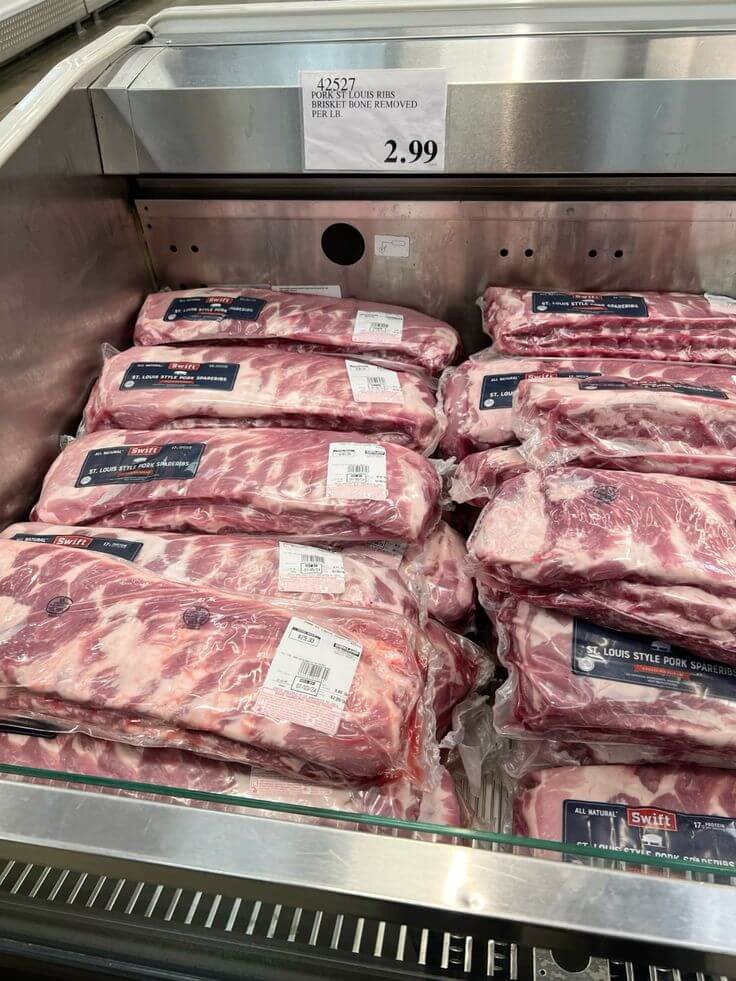
This list covers ingredients for several of the recipes above.
Prices vary by store, region, and whether items are on sale; treat these as rough estimates.
Pork and Protein
- Pork shoulder (4–5 lb) — approximately $8–$12 on sale
- Ground pork (2 lb family pack) — approximately $6–$10
- Smoked sausage/kielbasa (14 oz) — approximately $3–$4
- Ham steak (about 1 lb) — approximately $3–$5
- Eggs (1 dozen) — approximately $3–$6 (prices have been variable; check your store)
Grains and Starches
- Long-grain white rice (5 lb bag) — approximately $3–$5
- Dried pasta (1 lb) — approximately $1–$2
- Ramen noodle packs (6-pack) — approximately $2–$3
- Flour tortillas (10-pack) — approximately $2–$3
- Hamburger buns (8-pack) — approximately $2–$3
Beans and Canned Goods
- Canned black beans (2 cans) — approximately $1.50–$2.50
- Canned pinto beans (1 can) — approximately $0.75–$1.25
- Canned white beans (2 cans) — approximately $1.50–$2.50
- Canned diced tomatoes (3 cans) — approximately $2.50–$4
- Crushed tomatoes (1 can) — approximately $1–$1.50
- Chicken broth (32 oz carton) — approximately $2–$3
Produce
- Russet potatoes (5 lb bag) — approximately $3–$5
- Cabbage (1 head) — approximately $1–$2
- Onions (3 lb bag) — approximately $2–$3
- Garlic (1 head) — approximately $0.50–$1
Frozen Items
- Frozen mixed vegetables (16 oz bag) — approximately $1.50–$2.50
- Frozen stir-fry vegetable blend (12 oz) — approximately $2–$3
Dairy
- Shredded cheese (8 oz bag) — approximately $2.50–$4
- Sour cream (16 oz) — approximately $2–$3
- Cream cheese (8 oz) — approximately $2–$3
Pantry Staples
- Soy sauce (10 oz bottle) — approximately $2–$3
- Ketchup (24 oz) — approximately $2–$3
- Brown sugar — approximately $1.50 (if buying a small amount)
- Cumin, chili powder, garlic powder, smoked paprika, Italian seasoning — approximately $1–$2 each at discount stores; buy store brand
- Vegetable or canola oil (48 oz) — approximately $4–$6
- Salt and black pepper — if you don’t already have them
Price reminder: All estimates above can vary significantly depending on your store, state, and whether items are on sale. Store brand items are almost always cheaper than name brand for pantry staples and canned goods. The prices here are rough national averages — not guarantees.
Cheapest Ingredients to Pair with Pork
| Ingredient | Why It Works | Best Pork Meal Pairing |
|---|---|---|
| White rice | Fills plates fast, absorbs pork flavor, costs pennies per serving | Pork and rice skillet, taco bowls, fried rice |
| Russet potatoes | Cheap, filling, good raw or cooked; baked potatoes stretch pulled pork dramatically | Pulled pork baked potatoes, ham and potato hash, sausage skillet |
| Dried pasta | One of the cheapest foods per pound, pairs with any sauce that has pork in it | Pork pasta with creamy tomato sauce, pork and bean soup |
| Black beans | Add protein and bulk; canned is fast and cheap | Taco bowls, quesadillas, pork and rice skillet |
| Pinto beans | Creamy texture works well in soups and alongside seasoned pork | Pork and bean soup, slow cooker tacos as a side |
| Cabbage | Very cheap per head, cooks down significantly, absorbs sausage or pork fat well | Sausage and cabbage skillet, coleslaw for BBQ sandwiches |
| Frozen mixed vegetables | Cheap, no prep, add nutrition and color to rice or stir-fry dishes | Pork fried rice, pork ramen stir-fry |
| Flour tortillas | Cheap and filling; wrap almost anything to make it feel like a complete meal | Slow cooker tacos, quesadillas, pork burritos |
| Eggs | Cheap protein that pairs naturally with leftover pork in hashes and fried rice | Ham and potato hash, pork fried rice, breakfast burritos |
| Canned tomatoes | Add depth to soups and sauces without much cost; use crushed, diced, or whole | Pork and bean soup, pork pasta sauce, taco skillet |
How to Keep Each Serving Under $2
The math works if you stick to a few habits:
- Use meat as a flavoring, not the centerpiece. If pork is half the plate, you’re spending more than you need to. If it’s mixed into a rice dish or a soup and every bite tastes like pork, that’s the sweet spot.
- Always add a starch. Rice, potatoes, and pasta are the cheapest things in any grocery store. One cup of dry rice costs about 20–30 cents and feeds two people as a side. There’s no reason to serve pork without a filler.
- Add beans when the recipe allows it. A can of beans costs less than $1 and adds enough protein and bulk to cut the amount of pork you need per serving.
- Freeze pork in half-pound portions. Buy a 3-pound pack of ground pork, divide it into 6 half-pound bags, and freeze. Pull out exactly what a recipe calls for instead of using more because it’s already thawed.
- Plan for leftovers before you cook. The pulled pork shoulder becomes three dinners if you plan for it. If you don’t plan, half of it gets thrown away.
- Make your own seasonings. Taco seasoning packets, BBQ sauce, and “pork rub” spice blends all cost more than making your own from cumin, chili powder, garlic powder, salt, and pepper you already have in the pantry.
- Watch the weekly sales flyer. Pork shoulder and ground pork both go on significant sales regularly at most chain grocery stores. Buying at the sale price versus the regular price can cut the protein cost of a meal by half.
Pork Substitutions If Prices Are Too High
Even pork gets expensive sometimes, either the right cut isn’t on sale, or your store is just out.
Here are swaps that work in most of these recipes:
- Ground turkey — Works in any recipe that uses ground pork: taco bowls, pork and rice skillet, pasta sauce. It’s leaner, so add a drizzle of oil to the pan so it doesn’t dry out. Season the same way.
- Chicken thighs — The budget cut of chicken (not breasts) works for any slow cooker recipe or skillet recipe. Bone-in skin-on thighs are usually the cheapest and most flavorful. Use wherever pork shoulder is called for in slow cooker recipes.
- Canned beans — If meat is too expensive this week, double the beans in soup, taco bowls, or rice dishes and skip the meat entirely. Season well, and most people won’t complain.
- Lentils — Red or green lentils cook fast, are cheap per pound, and work in soups or as a ground-meat substitute when seasoned with cumin and chili powder. Good in taco bowls and pasta sauce.
- Eggs — For the hash recipe, especially, eggs can fully replace the ham and still make a filling meal. Scrambled eggs over potato hash with cheese is a legitimate dinner.
- Smoked sausage — Often cheaper than other pork cuts and already cooked. Works in soups, pasta dishes, fried rice, and rice skillets. The smoke flavor is strong, so use a little less than the recipe calls for.
- Leftover ham — If you have ham from a holiday dinner, it freezes well and can replace pulled pork in soups, hashes, fried rice, and quesadillas.
- Rotisserie chicken (when discounted) — Some stores mark down rotisserie chickens at the end of the day. A marked-down rotisserie chicken shredded into fried rice, quesadillas, or soup works exactly like leftover pulled pork and is sometimes cheaper.
Food Safety Note for Pork
A few things to know before you cook:
- Whole pork cuts (chops, roasts, shoulder) should reach an internal temperature of 145°F, followed by a 3-minute rest before cutting. This is the USDA’s current recommendation, and it’s safe to eat pork with a slight blush of pink at the center when this temperature is reached.
- Ground pork should be cooked to 160°F all the way through — no pink in the middle.
- Leftovers should go into the refrigerator within 2 hours of cooking (1 hour if your kitchen is warm). Use refrigerated cooked pork within 3–4 days or freeze it for up to 3 months.
- A meat thermometer is worth it. An inexpensive instant-read thermometer takes the guesswork out of pork safety and also prevents overcooking pork chops into shoe leather. You can find them for under $10 at most grocery stores or dollar stores.
Common Mistakes That Make Pork Recipes More Expensive
- Only buy center-cut boneless pork chops. They’re convenient but almost always the most expensive option per pound. Bone-in chops cost less, taste better when cooked right, and aren’t harder to eat.
- Using too much meat per serving. Many recipes designed for “4 servings” assume a fairly small meat portion. Using 6 oz of pork per person when a recipe works fine with 3–4 oz doubles your protein cost without doubling the satisfaction.
- Forgetting to freeze family packs. Family packs are cheaper per pound, but only if you actually use or freeze the meat. Pork sitting in the fridge for a week is money in the trash.
- Not planning for leftovers. Cooking a pork shoulder and eating it all as pulled pork sandwiches one night is fine. Cooking a pork shoulder and planning for three meals from it drops your cost per serving significantly.
- Buying seasoning packets and pre-made sauces. Taco seasoning packets, jarred BBQ sauce, and pre-marinated pork chops are all more expensive than making your own versions with basic spices. One bottle of cumin costs less than five taco seasoning packets and goes further.
- Serving pork without a cheap filler. A pork chop by itself is expensive per serving. A pork chop with rice, applesauce, and a vegetable is a complete meal that costs half as much per person.
FAQ
What is the cheapest cut of pork for family dinners?
Pork shoulder is usually the best value per pound, especially on sale. It’s tough and fatty raw, but it becomes tender and flavorful after slow cooking. Ground pork and bone-in pork chops are usually the next most affordable options. Pork tenderloin and center-cut boneless chops are at the expensive end and are worth avoiding when you’re trying to keep costs down.
Can pork recipes really be under $2 per serving?
Yes — but only if the pork is paired with cheap fillers like rice, beans, potatoes, or pasta. A pork chop by itself will cost $2–$3 per serving or more. The same amount of pork mixed into a rice skillet with beans can bring the cost down to under $1 per serving. The filler matters as much as the cut.
How do I stretch one pound of pork for a family?
Add a filler. One pound of ground pork with rice and canned beans can realistically feed 5–6 people in a taco bowl or rice skillet. One pound of pulled pork can top 6 baked potatoes. The trick is to make sure every bite has flavor. Seasoning the pork well means you need less of it per plate.
Is pork cheaper than chicken?
It depends. Pork shoulder is almost always cheaper than chicken breast per pound. Bone-in pork chops and chicken thighs are usually pretty close. Sometimes chicken thighs go on a better sale than anything in the pork section that week. It’s worth checking both before you decide.
What can I make with leftover pulled pork?
A lot, actually. Quesadillas, baked potato toppings, tacos, and fried rice are the most common. You can also stir it into mac and cheese, mix it into a soup, or use it as a pizza topping with BBQ sauce. Pulled pork freezes well, so it’s worth portioning leftovers into small freezer bags if you won’t use them within 3 days.
Can I freeze cooked pork?
Yes. Cooked pork freezes well for up to 2–3 months. Store it with a little cooking liquid to keep it from drying out. Let it thaw in the refrigerator overnight before reheating. Pulled pork, ground pork, and sausage-based dishes all freeze better than bone-in chops, which can get a little tough after freezing.
Conclusion
Budget pork recipes work best when pork does the flavoring and something cheap does the filling, such as rice, beans, potatoes, or pasta.
Trying to make pork the whole meal while spending under $2 per serving is hard. Making it the star ingredient in a dish that’s mostly built around a filler?
That’s actually easy.
Pick two or three recipes from this list that match what you already have in your pantry.
Buy pork on sale when you can; pork shoulder in particular goes on sale often enough that you can usually time it. Cook once, plan for leftovers, and freeze anything you won’t eat in the next few days.
These budget pork recipes are designed for real kitchens and real family dinners.
Start with whichever one uses ingredients you already have, and go from there.