
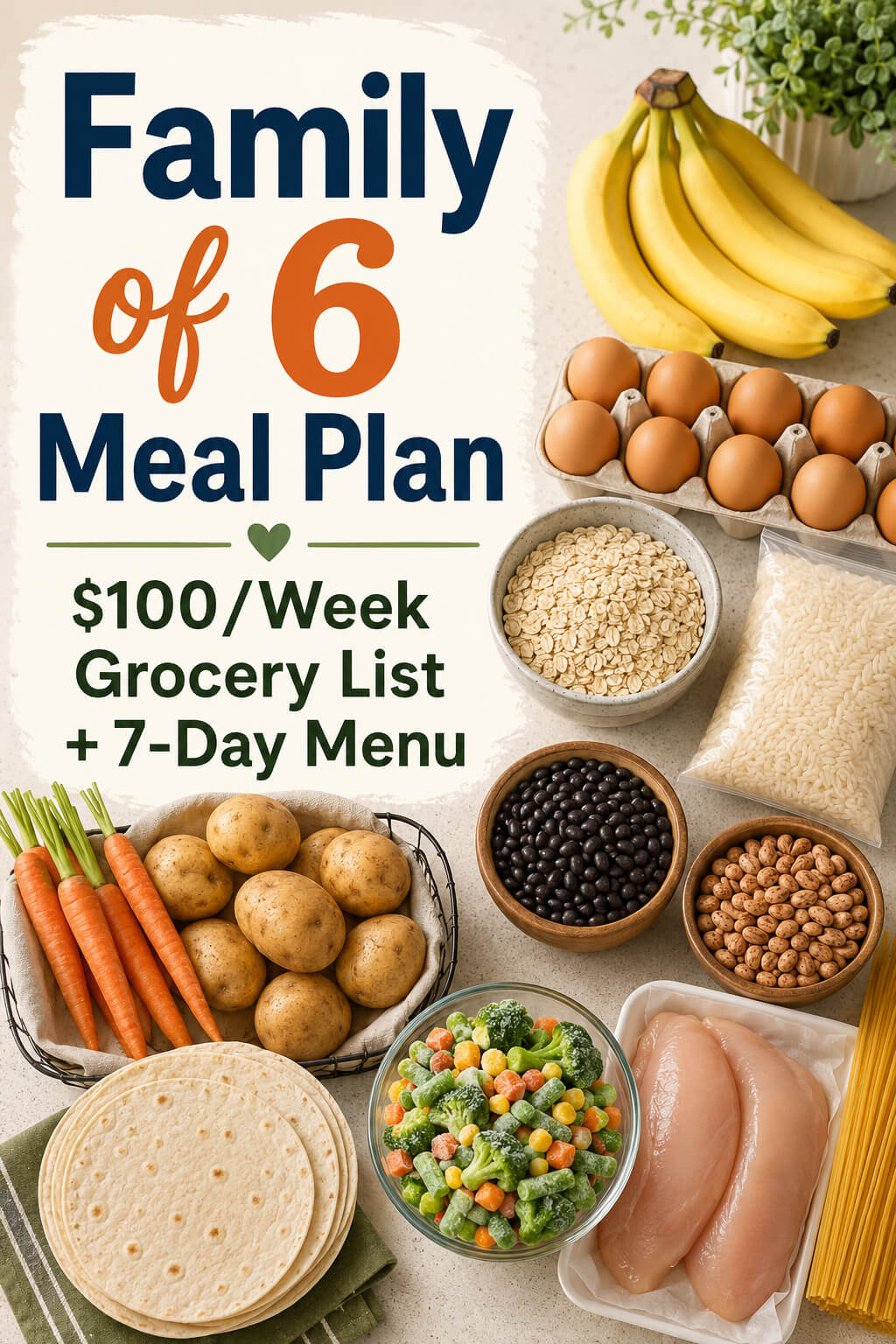
Budget Meal Plan for Family of 6: $100 Weekly Grocery List & Meals
Feeding a family of six on $100 a week is possible. It’s just not easy, and it’s worth being honest about that upfront.
This isn’t what most people think of as a normal grocery budget. It’s a bare-bones plan built around cheap staples, store brands, meat used sparingly, and almost everything cooked from scratch.
Grocery prices aren’t making this easier. As of April 2026, the food-at-home index rose 0.7% for the month and 2.9% over the past year. Fruits and vegetables jumped 6.1% year over year.
Cereals were up 2.6%, meats and eggs up 1.5%. A $100 budget used to go further. Now it requires real discipline, especially outside the Midwest.
For context: the USDA’s Thrifty Food Plan — already the lowest of their four tiers — estimated $230.80 per week for a reference family of four in January 2026. Six people cost more, not less, per person.
Is $100 a Week Realistic for a Family of 6?
At $100 a week for six people, you’re working with about $2.38 per person per day — for all three meals and snacks.
That number is survivable if you shop at a discount grocery store, buy store brands, skip convenience foods entirely, and limit meat to one or two cheap cuts for the whole week.
If your family has teenagers who eat constantly, athletes, adults with high-calorie needs, or anyone with dietary restrictions, $100 probably won’t hold.
A more realistic floor for most families of six is $125–$175 a week, especially in cities or high-cost states. But if $100 is the number you have, this plan is your starting point.
Current Realistic US Price Assumptions
All prices here are based on current low-cost grocery listings — think Walmart, Aldi, store brand equivalents. What you actually pay will depend on your city, your store, and what’s on sale that week.
A few current examples:
5 lb of white rice runs about $3.37, 4 lb of dried pinto beans around $3.76, a 16 oz box of pasta for $0.98, 20 flour tortillas for $2.12, 42 oz of oats for about $4.30, 40 oz of peanut butter for $4.18, two bags of frozen mixed vegetables for around $5.25, and 10 lb of russet potatoes for $4.24.
For protein: a 5-lb bag of chicken drumsticks runs about $5.46 (roughly $1.09/lb), and an 18-count carton of eggs can go as low as $2.47 at the lowest-priced stores.
Bananas are still one of the best deals in the produce section at around $0.50 per pound.
The Strategy: How to Feed 6 People on $100
Stop building dinners around a piece of meat. That’s the whole shift.
Rice, beans, pasta, oats, potatoes, tortillas, lentils, eggs, and frozen vegetables do the heavy lifting. Meat becomes a flavoring agent — something you add to the pan, not the centerpiece of the plate.
Five pounds of chicken drumsticks can stretch across a chicken-and-rice dinner, shredded chicken rice bowls, and broth for soup.
The second move is ingredient overlap. Rice goes in chicken bowls, chili, fried rice, and bean bowls. Pinto beans work in burritos, chili, quesadillas, and soup. Oats cover breakfast, baked oatmeal, and peanut-butter oat snacks.
The third move is to cook big and eat it twice. A pot of chili or soup made on Sunday handles two or three weeknight meals.
USDA says cooked leftovers stay safe in the fridge for 3–4 days, or up to 4 months in the freezer. Keep the fridge at or below 40°F.
$100 Grocery List for a Family of 6
Prices are rounded for regional flexibility. If you’re already stocked on oil, salt, or spices, redirect that buffer money to more eggs, extra fruit, or another bag of frozen vegetables.
| Category | Item | Estimated Cost |
|---|---|---|
| Grains & starches | 5 lb rice | $3.50 |
| 42 oz oats | $4.50 | |
| 4 boxes pasta | $4.00 | |
| 20-count tortillas | $2.25 | |
| 2 loaves sandwich bread | $3.50 | |
| Pancake mix or flour | $3.00 | |
| Proteins | 5 lb chicken drumsticks | $5.50 |
| 18 eggs | $2.50 | |
| 4 lb dried pinto beans | $4.00 | |
| 2 lb lentils | $3.00 | |
| 40 oz peanut butter | $4.25 | |
| 1 lb ground turkey, sausage, or sale meat | $4.00 | |
| Produce | 10 lb potatoes | $4.25 |
| 5 lb carrots | $4.75 | |
| 3 lb onions | $2.50 | |
| 1 head cabbage | $2.50 | |
| Bananas | $4.00 | |
| Apples or seasonal fruit | $5.00 | |
| Frozen & canned | 2 bags frozen vegetables | $5.25 |
| 4 cans diced tomatoes | $4.00 | |
| Tomato sauce or salsa | $3.00 | |
| Dairy & extras | 1 gallon milk | $3.50 |
| 16 oz shredded cheese | $3.50 | |
| Margarine or butter | $2.50 | |
| Pantry helpers | Bouillon, oil, popcorn, or seasoning buffer | $7.00 |
Estimated total: about $96–$102
If you already have oil, salt, pepper, garlic powder, chili powder, soy sauce, or bouillon, you can use the extra money for yogurt, more eggs, more fruit, or an additional bag of frozen vegetables.
7-Day Budget Meal Plan for a Family of 6
Day 1
Breakfast: Oatmeal with sliced bananas
Lunch: Peanut butter sandwiches, carrots, and apples
Dinner: Baked chicken drumsticks with rice and frozen vegetables
Cook extra rice tonight — you’ll need it the rest of the week. Pull any leftover chicken off the bones and refrigerate it.
If you have time, simmer those bones with onion scraps for a simple broth you can use in soup later.
Day 2
Breakfast: Scrambled eggs with toast or tortillas
Lunch: Leftover chicken rice bowls with vegetables
Dinner: Bean and cheese burritos with cabbage slaw
Use cooked pinto beans, rice, a little cheese, and shredded cabbage. Cabbage might be the most underrated budget vegetable — it lasts longer than lettuce, works raw or cooked, and costs almost nothing per head.
Day 3
Breakfast: Pancakes or oatmeal
Lunch: Leftover burritos or rice and beans
Dinner: Lentil soup with carrots, onions, potatoes, and bread
Unlike dried beans, lentils don’t need soaking and cook in about 25 minutes.
Add bouillon, onions, carrots, and diced tomatoes. Make a big pot — you’ll want leftovers.
Day 4
Breakfast: Oatmeal with peanut butter
Lunch: Peanut butter sandwiches, bananas, and carrots
Dinner: Spaghetti with tomato sauce, frozen vegetables, and ground meat
One pound of ground meat split among six people sounds thin, but mixed into sauce it disappears in the best way. If you need more volume, add a handful of lentils or finely chopped carrots to the sauce.
Day 5
Breakfast: Eggs and potatoes
Lunch: Leftover lentil soup
Dinner: Potato, egg, and vegetable skillet
Dice the potatoes small, so they cook through faster. Add onions, frozen vegetables, and scrambled eggs, then top with a little shredded cheese.
Day 6
Breakfast: Banana oatmeal
Lunch: Bean and cheese quesadillas
Dinner: Chili over rice
Make chili with pinto beans, canned tomatoes, onions, chili powder, and whatever meat or lentils you have left.
Serving it over rice takes a pot of chili from dinner for four to dinner for six.
Day 7
Breakfast: Pancakes or oatmeal
Lunch: Leftover chili bowls
Dinner: Fried rice with eggs, frozen vegetables, and leftover chicken
Fried rice is basically designed for the end of the week — it uses up the leftover rice, the last of the vegetables, and whatever protein is hanging around.
Soy sauce and garlic powder do a lot of the flavor work.
Cheap Family Dinners Under $10
Bean and Cheese Burritos
A pot of beans, tortillas, rice, and a little cheese can feed six people for well under $10. Add cabbage or carrots on the side.
Lentil Soup
Lentils, carrots, onions, potatoes, bouillon, and canned tomatoes make a large pot of soup with no meat. One of the cheapest dinners you can put on the table.
Egg Fried Rice
Leftover rice, eggs, frozen vegetables, and seasoning. Fast, flexible, and way cheaper than takeout.
Chili Over Rice
Beans, tomatoes, onions, spices, and rice. If you have a pound of ground meat to spare, this is where it does the most work.
Baked Potato Bar
Bake a pile of potatoes and let everyone top their own with beans, chili, cheese, or vegetables. Works especially well with kids who are picky about mixed dishes.
Meal Prep Plan for the Week
On shopping day, start with the things that save you the most time later: cook a big pot of rice, soak or cook the beans, chop carrots and onions, boil a few potatoes, bake the chicken drumsticks, and pull the meat off the bones.
Then make one large pot meal — lentil soup or chili — so you have a ready backup on the nights when you don’t want to cook from scratch.
Store big batches in shallow containers so they cool faster. USDA recommends using most cooked leftovers within 3–4 days. Freeze anything beyond that.
Best Budget Swaps When Prices Are High
If meat gets too expensive, swap in more beans, lentils, eggs, or peanut butter. USDA’s 2026 food outlook projects beef prices rising faster than most other categories, while poultry increases more modestly, and egg prices are expected to drop compared to 2025.
If fresh produce is out of range, frozen vegetables are almost always cheaper per serving, and you won’t throw any of it away.
If fruit prices spike, buy bananas first — they’re reliably the cheapest fruit per serving — then add apples or whatever’s in season only if the budget allows.
If snacks are quietly eating your budget, replace boxed snacks with popcorn, peanut butter toast, oatmeal, boiled eggs, or carrots. These cost a fraction of the price.
If milk is expensive in your area, buy one gallon and use it mainly for kids and cooking rather than as a drink for everyone.
How to Make This Plan Healthier Without Spending Much More
A tight budget does not mean every meal has to be nutritionally empty. The easiest formula is:
starch + protein + vegetable or fruit + small amount of fat or dairy
For example, rice plus beans plus cabbage gives you carbohydrates, protein, fiber, and vegetables. Oatmeal with peanut butter and banana gives you a filling breakfast with fiber and fat. Lentil soup with carrots and potatoes is cheap but still nutritious.
MyPlate’s budget guidance recommends planning meals, shopping smart, and choosing budget-friendly foods that still support healthy eating.
To improve the plan without raising the budget much, add more fiber wherever possible: beans, lentils, oats, potatoes with skins, frozen vegetables, cabbage, carrots, and fruit.
What to Do If $100 Is Not Enough
If your $100 grocery list keeps failing, the problem may not be your planning. It may be that your local prices, family size, or dietary needs require more money.
Try adding a $25 emergency buffer if possible. A $125 weekly budget gives you more room for milk, fruit, vegetables, lunch items, and extra protein.
Also check:
- markdown meat sections
- day-old bread racks
- digital coupons
- store-brand bulk staples
- discount grocers like Aldi, Lidl, WinCo, Grocery Outlet, or warehouse clubs
- local food pantries or community fridges
- school breakfast and lunch programs
- WIC or SNAP eligibility
For FY 2026, USDA lists the maximum SNAP allotment for a household of six in the 48 states and DC at $1,421 per month, although actual benefits depend on income, deductions, and eligibility.
FAQ
Can a family of 6 really eat on $100 a week?
Yes. Not comfortably, but yes. It works if you shop at a discount store, cook almost everything from scratch, skip convenience food, and keep meat to once or twice a week. If anyone in your household eats a lot — teenagers, athletes, anyone with high calorie needs — the math gets harder fast.
What are the cheapest meals for a large family?
Rice and beans, lentil soup, egg fried rice, bean burritos, chili over rice, pasta with tomato sauce, baked potatoes, oatmeal, and potato-egg skillet. Most of these cost under $5 to feed six. Some cost under $3.
How can I make meat last all week?
Use meat in mixed dishes instead of serving large individual portions. Add small amounts of chicken or ground meat to soups, rice bowls, casseroles, tacos, pasta sauce, and chili.
What should I buy first on a tight grocery budget?
Start with rice, oats, beans, pasta, potatoes, eggs, peanut butter, frozen vegetables, carrots, onions, bananas, and one budget protein. These foods give you the most meals for the money.
How do I avoid food waste?
Think about your leftovers before you cook, not after. If you make chili, you’re also planning Tuesday’s lunch. Freeze whatever you won’t eat in 3–4 days. Day 7 should almost always be a “use it up” meal — fried rice or a soup — built from whatever’s left in the fridge.
Final Thoughts
A $100 weekly grocery budget for six people is genuinely hard. Not hard-but-doable-with-a-little-planning. Just hard.
For families who need to make it work, it takes real discipline, a discount store nearby, and accepting that meals will be simple and repetitive.
The thing that holds this together week after week is cheap staple ingredients: oats for breakfast, beans and rice for lunches, soups and skillets for dinners, and leftovers used on purpose.
When prices go up — and they keep going up — you lean harder on the foods that stretch furthest: rice, beans, oats, potatoes, pasta, eggs, frozen vegetables, peanut butter. Everything else is a bonus.
