
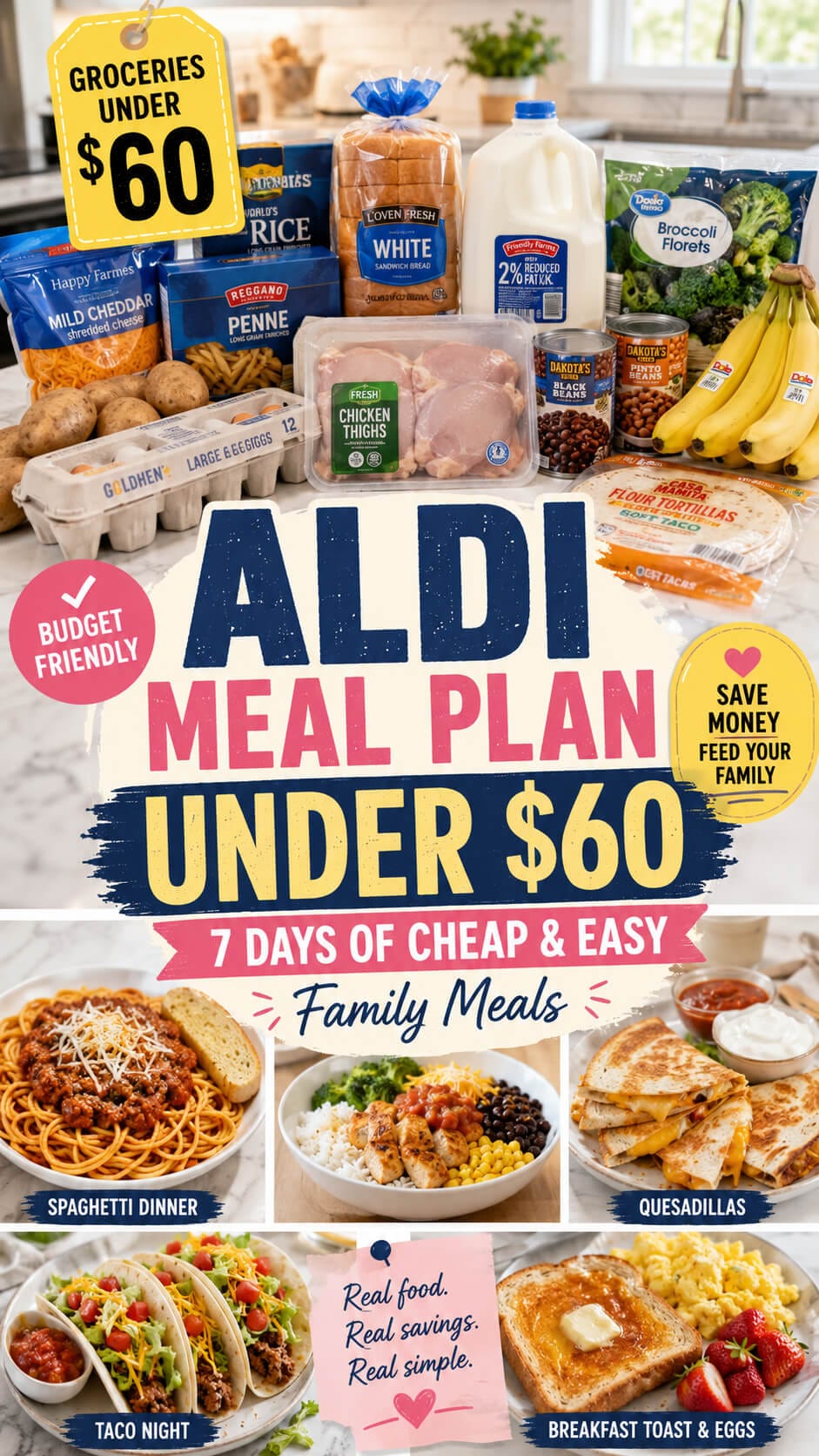
Aldi Meal Plan Under $60: 7 Days of Cheap & Easy Family Meals on a Budget
120 receipt of what seems like half a cart, you’re not visualizing points. Food rates have actually climbed up, and a great deal of households are quietly recalculating what “budget plan” also means any longer.
Aldi is where a great deal of those family members have landed. Not due to the fact that it’s fashionable, however due to the fact that the math simply works. Smaller sized shops, less brand names to select from, and costs that run noticeably less than many chains. For a family of four, striking a full week of suppers– plus lunches and morning meals– for under $60 is truly feasible there. Not comfortable-but-tight possible. Really feasible.
This article offers you a real grocery store list, a full 7-day dish plan with morning meal, lunch, and dinner for each and every day, approximated prices damaged down by group, and some useful ideas to make the week go smoothly. No $4 specialized sauces. No obscure ingredients. Just food that functions.
Why Aldi Works for Budget Meal Planning
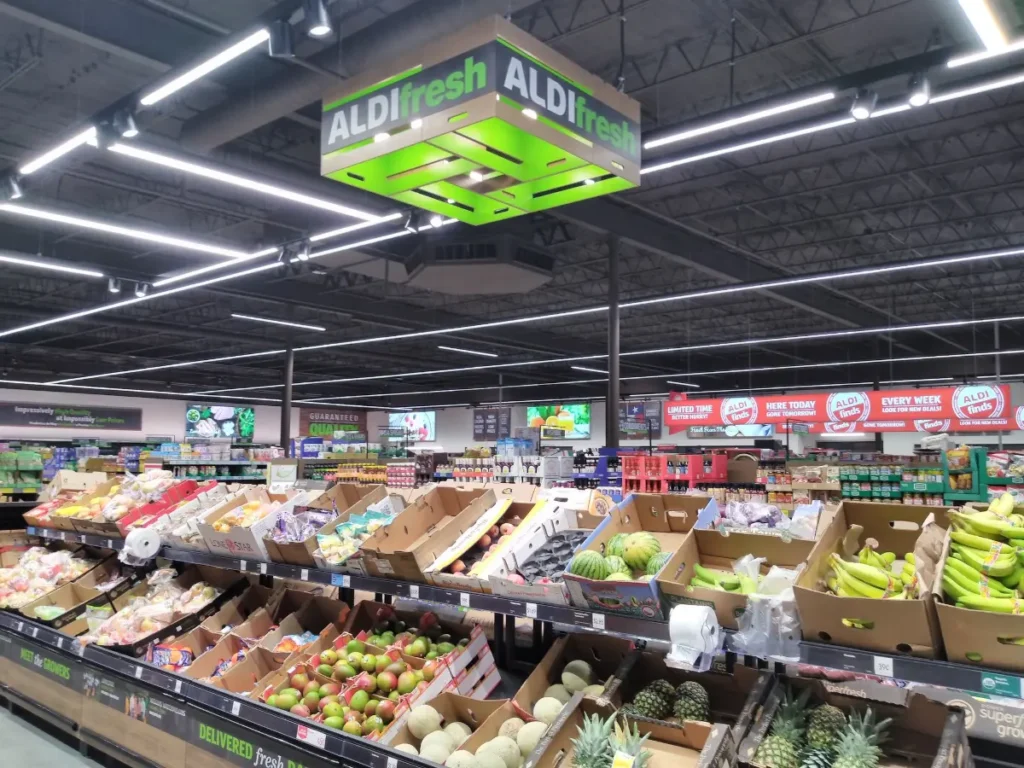
There are a few factors Aldi holds the cost line better than many shops.
One of the most crucial one: the majority of what they market is their very own brand name. Aldi does not bring 14 different pasta sauces competing for shelf area. They carry a couple of, and they’re more affordable than the name brand names at various other stores. When you’re getting every little thing from the same personal label, the savings add up fast.
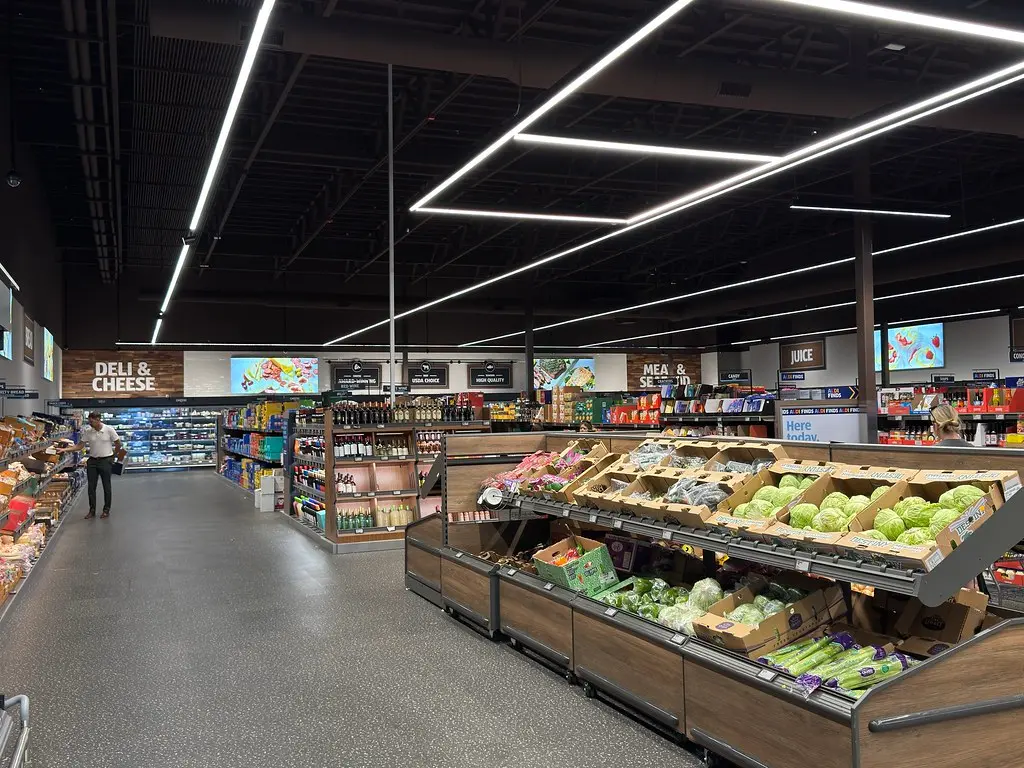
The shop layout helps also. Aldi runs lean– smaller footprint, much less aesthetic sound. You invest less time wandering, which indicates less impulse buys. The “Aldi Locates” aisle in the center of the shop is the one exception: it has plenty of random stuff at excellent rates, and it will absolutely draw you off your listing if you let it. Walk past it till after you have actually got everything on your list.
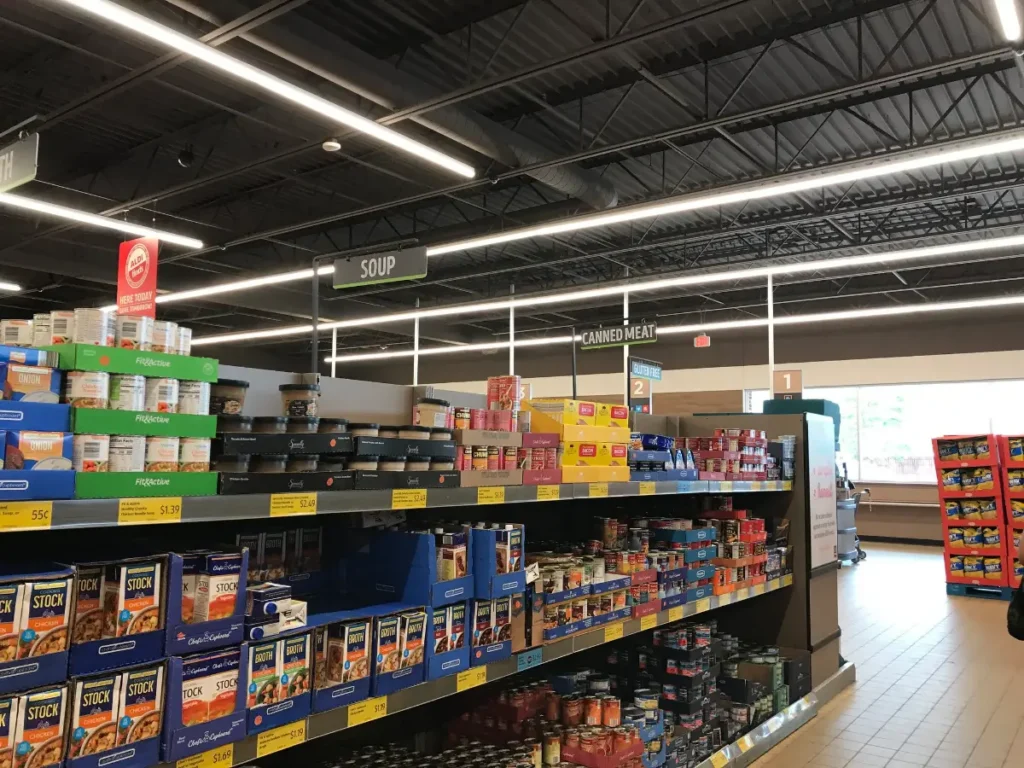
Staples like rice, dried pasta, eggs, canned beans, and frozen vegetables set you back less at Aldi than at many competitors. Those are specifically the active ingredients a budget plan meal plan is constructed around.
The Grocery List (Under $60 for a Family of 4)
This list is designed to cover a full week of dinners, most lunches, and every breakfast. Some items get used more than once across the week — that’s intentional.
Prices below reflect typical Aldi costs as of 2024–2025. They vary by region and season.
Proteins (~$20)
- Chicken thighs, bone-in, family pack (~3 lbs) — $7–$8
- Ground turkey, 1 lb — $4
- Eggs, 1 dozen — $2–$3
- Smoked sausage, 14 oz — $4
- Canned black beans, 2 cans — $1.50 total
- Refried beans, 1 can — $1
Produce (~$12–$15)
- Russet potatoes, 5 lb bag — $3–$4
- Yellow onions, 3 lb bag — $2–$3
- Broccoli, 1 head or bag — $1.50–$2
- Carrots, 1 lb bag — $1
- Lettuce, 1 head romaine — $1.50
- Bananas, 1 bunch — $1–$1.50
Pantry Staples (~$10–$12)
- White rice, 2 lb bag — $2
- Spaghetti, 1 lb box — $1.50
- Pasta sauce, 24 oz jar — $1.50–$2
- Flour tortillas, 10-count — $2
- Bread, 1 loaf — $2
- Oats, 42 oz canister — $3 (lasts well beyond one week)
Dairy (~$7–$9)
- Shredded cheese, 8 oz — $2.50
- Milk, 1 gallon — $3–$4
- Greek yogurt, 4-pack — $3–$4
Frozen Foods (~$4–$5)
- Mixed vegetables, 12–16 oz bag — $1.50–$2
- Tater tots, 32 oz bag — $2.50
Total estimated range: $53–$61
Prices land under $60 more often than not. If you’re over, the easiest cuts are the tater tots (skip them, serve potatoes instead) or swapping smoked sausage for a second can of beans.
| Category | Estimated Cost |
|---|---|
| Proteins | ~$20 |
| Produce | ~$13 |
| Pantry Staples | ~$11 |
| Dairy | ~$8 |
| Frozen Foods | ~$5 |
| Total | ~$57 |
7-Day Aldi Meal Plan Under $60
Each day covers breakfast, lunch, and dinner. Lunches lean on leftovers — that’s how you avoid buying extra ingredients and how you make sure nothing goes to waste.
Day 1 — Chicken Rice Bowls
Breakfast: Oatmeal with sliced banana and a splash of milk
Dinner: Season and roast 4–5 chicken thighs. Cook a full pot of rice — more than you need tonight, because you’ll use the rest on Day 6. Steam or microwave the frozen vegetables. Serve everything in bowls.
Lunch next day: Pack the leftover rice and chicken in containers. Cold rice bowl with a little soy sauce if you have it, or just plain.
Cost per serving (dinner): ~$2.50
Day 2 — Turkey Spaghetti with Garlic Bread
Breakfast: Eggs scrambled or fried, with toast
Dinner: Brown the ground turkey in a pan. Add the pasta sauce, let it simmer for 10 minutes. Cook the full box of spaghetti — again, make more than tonight needs. Toast bread slices with butter and garlic powder.
Lunch next day: Leftover pasta. It reheats well.
Cost per serving (dinner): ~$2
Day 3 — Bean and Cheese Quesadillas
Breakfast: Yogurt with banana
Dinner: Spread refried beans on tortillas. Add shredded cheese. Cook in a dry pan on medium heat until the cheese melts and the outside gets golden. Cut into wedges. Serve with leftover rice if you have any, or just as-is.
This is the cheapest dinner of the week. Around $1.50 per person.
Lunch next day: Leftover quesadilla wedges. They’re fine cold or quickly reheated.
Day 4 — Loaded Baked Potatoes
Breakfast: Oatmeal
Dinner: Bake 4–6 potatoes at 400°F for about an hour. Steam or microwave broccoli. Top potatoes with shredded cheese, broccoli, and sour cream if you picked some up. Otherwise, butter and cheese work fine.
Lunch next day: Leftover potato. Split it and reheat.
Cost per serving (dinner): ~$1.75
Day 5 — Sausage and Potato Skillet
Breakfast: Eggs and toast
Dinner: Slice the smoked sausage into rounds. Cube 3–4 potatoes. Cook the potatoes in a skillet with oil until they start to get some color, then add the sausage and onion. Toss in some frozen vegetables in the last few minutes. Season with salt, pepper, and garlic powder.
One pan, around 25 minutes.
Lunch next day: Leftover skillet reheated.
Cost per serving (dinner): ~$2.25
Day 6 — Fried Rice with Eggs
Breakfast: Yogurt with banana
Dinner: This is where Day 1’s leftover rice earns its keep. Cold rice works better in fried rice than fresh — it fries rather than steams. Heat a little oil in a pan, add the rice, frozen vegetables, and diced onion. Push everything to the sides and scramble 3 eggs in the center. Mix together. Season with salt and soy sauce if you have it.
Lunch next day: Leftover fried rice.
Cost per serving (dinner): ~$1.25 — the cheapest meal of the week.
Day 7 — Taco Night
Breakfast: Oatmeal or eggs
Dinner: Warm the black beans in a pan with a little cumin and salt. Warm the tortillas. Set out shredded cheese and lettuce. Serve everything family-style and let people build their own tacos. If you have salsa or hot sauce in the pantry, pull it out.
Lunch next day: Leftover bean tacos or a quick wrap with cheese and lettuce.
Cost per serving (dinner): ~$1.50
Quick Breakfast Reference
| Morning | Option |
|---|---|
| Oatmeal days | Rolled oats with milk and banana |
| Egg days | Scrambled or fried eggs on toast |
| Yogurt days | Greek yogurt with sliced banana |
Breakfasts from this list cost roughly $0.40–$0.75 per person.
How to Keep the Total Under $60
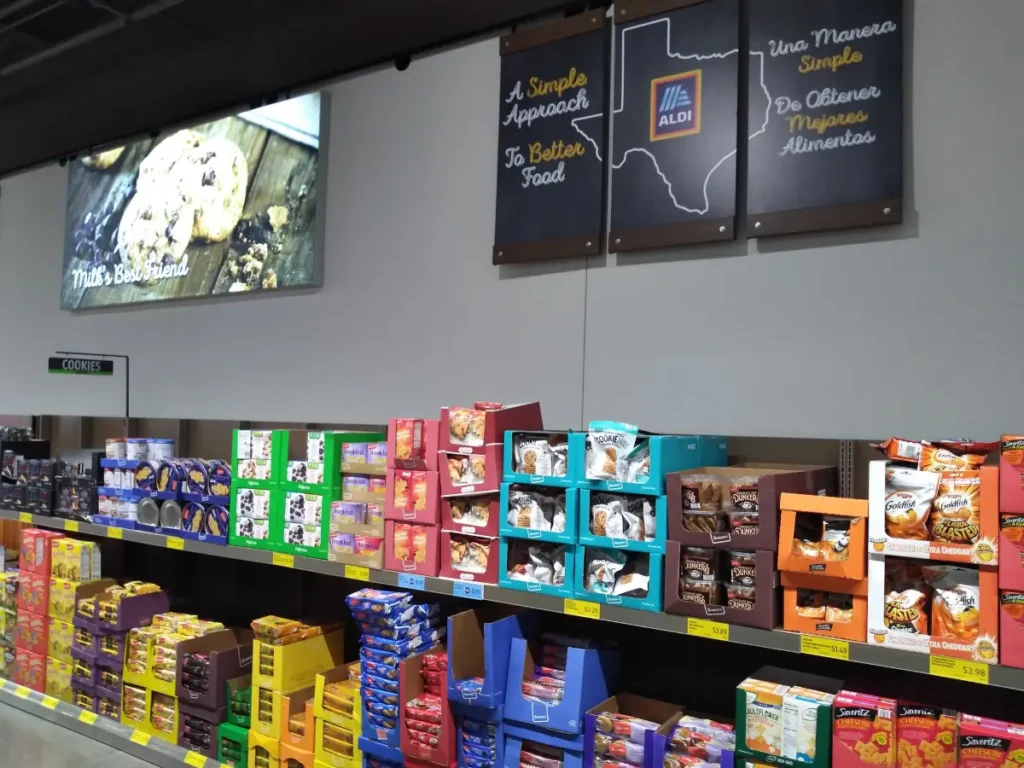
Buy only store brands. Aldi’s in-house labels cover almost everything on this list, and they’re consistently cheaper than the national brands at other stores. There’s no real reason to reach for a name-brand pasta sauce at Aldi anyway — they don’t carry it.
Use cheap proteins more than once. Chicken thighs stretch across two meals here (Day 1 dinner and Day 1 leftovers through lunch). Ground turkey covers Day 2 and its leftovers. Eggs appear at breakfast on multiple days and as the main protein in the fried rice.
Cook more than you need. The whole meal plan depends on leftovers. If you cook exact portions every night, you’ll either run out of food or need to shop again. Make big batches of rice, pasta, and potatoes.
Build around the cheap base ingredients. Rice, potatoes, and pasta cost almost nothing per serving and fill people up. The more dinners you can anchor to one of those three, the easier it is to stay under budget on the protein and produce side.
Don’t shop hungry. The Aldi Finds aisle has kayaks and cast iron skillets and 14-piece kitchen sets. It also has snacks and packaged foods that aren’t on your list. Walk past it first.
Substitutions If Something Costs More
Grocery prices shift. If you walk in and chicken thighs are expensive that week, here are easy swaps:
- Chicken thighs → canned chicken (cheaper, works fine in rice bowls)
- Ground turkey → canned tuna (works in pasta, costs less)
- Smoked sausage → a third can of beans (saves $3, still makes a filling skillet with potatoes)
- Broccoli → whatever vegetable is cheap that week (cabbage, zucchini, and green beans usually run low)
- Greek yogurt → plain yogurt or cottage cheese (both cheaper)
If produce prices are high in your area, frozen vegetables cover most of the nutrition at a lower cost. The 12-oz frozen bag is usually $1.50–$2 and works in almost every recipe here.
Best Aldi Products to Know
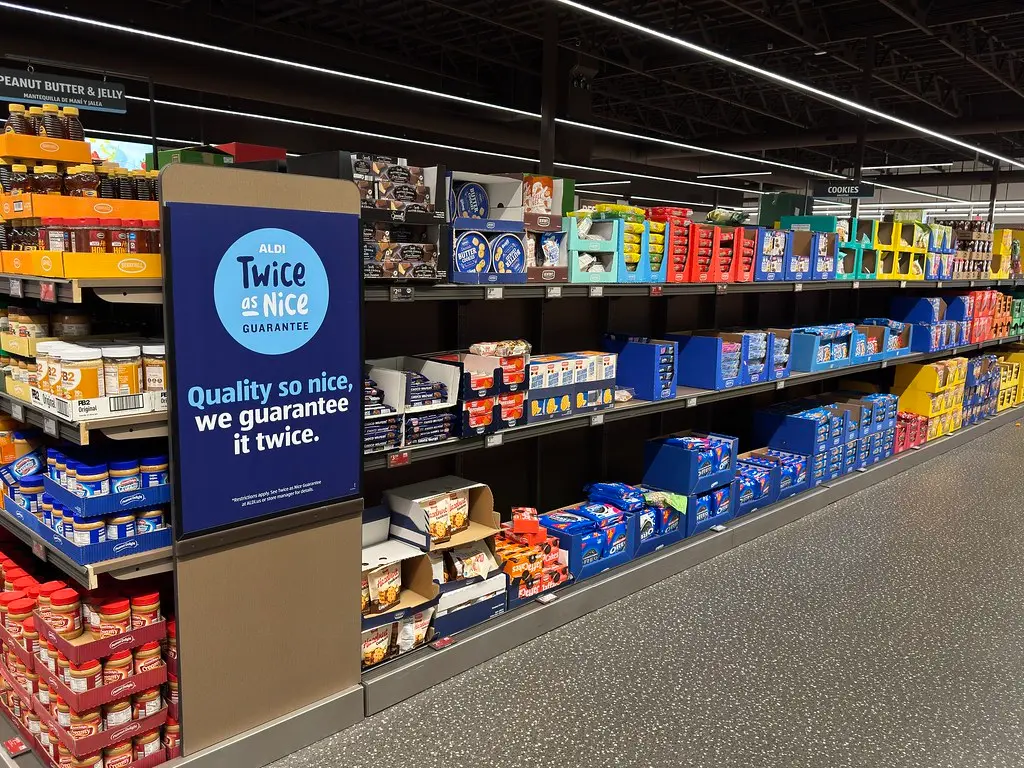
A few specific things worth grabbing when you see them:
Kirkwood chicken (Aldi’s brand) is consistently cheap and good quality. Bone-in thighs give you more meat per dollar than boneless.
Happy Farms cheese is Aldi’s dairy brand. The shredded versions work for everything in this meal plan.
Mama Cozzi’s pasta sauce runs about $1.50 for a big jar. It tastes like pasta sauce.
Season’s Choice frozen vegetables — the mixed bags work for stir-fries, fried rice, and anywhere you’d normally use fresh.
Never Never Land oats — the store brand oats come in a large canister for around $3 and last much longer than a single week.
Scaling for Different Household Sizes
Solo: Cut everything roughly in half. This meal plan produces a lot of leftovers, which works well as meal prep for one person — cook once on Sunday, eat for most of the week.
Couples: The quantities above will work for two people with generous portions and leftovers. You’ll probably have extra food by the end of the week.
Family of 4: This is what the list was built for. A couple of the dinners (baked potatoes, fried rice) can stretch to 5–6 people without adding much cost.
Large families (5+): Add a second bag of potatoes ($3–$4), another dozen eggs ($2–$3), and double the rice. Budget goes up to roughly $70–$75, but you’re still feeding a lot of people at a very low per-person cost.
Common Mistakes That Break a Budget Meal Plan
Buying too much fresh produce. Fresh vegetables are great, but they go bad. If you’re not confident you’ll use the broccoli by Day 4, get a frozen bag instead. It keeps until you need it.
Not planning what to do with leftovers. Leftovers don’t eat themselves. If you don’t have a plan for Tuesday’s lunch before you cook Monday’s dinner, you’ll either forget about the food or not make enough.
Shopping without a list. This one is obvious, but the number of people who walk into Aldi without a list and walk out having spent $80 on things they didn’t need is not small. Write the list at home. Bring it.
Buying convenience foods. Aldi sells pre-seasoned meats, microwaveable rice packs, and pre-cut vegetables. They cost more per serving than the unseasoned, uncut versions. Season your own chicken. It takes two minutes.
Ignoring the freezer. Freezer meals and frozen ingredients reduce waste and give you flexibility. If you make a big batch of soup or chili and freeze half, you’ve essentially bought yourself a free dinner later in the month.
Conclusion
An Aldi meal plan under $60 isn’t some optimized extreme-couponing experiment. It’s just shopping with a list, using cheap proteins and pantry staples, and cooking a little more than you need each night so lunch is already handled.
The 7-day plan above covers every meal. The grocery list lands at roughly $55–$58 in most Aldi locations, which leaves a small cushion for price variation. And most of the dinners take under 30 minutes.
If you haven’t tried planning a week at Aldi before, this is a reasonable place to start. Print the grocery list, walk through the store in order, and cook Day 1 before you decide whether the rest of the week is worth it. It usually is.
