
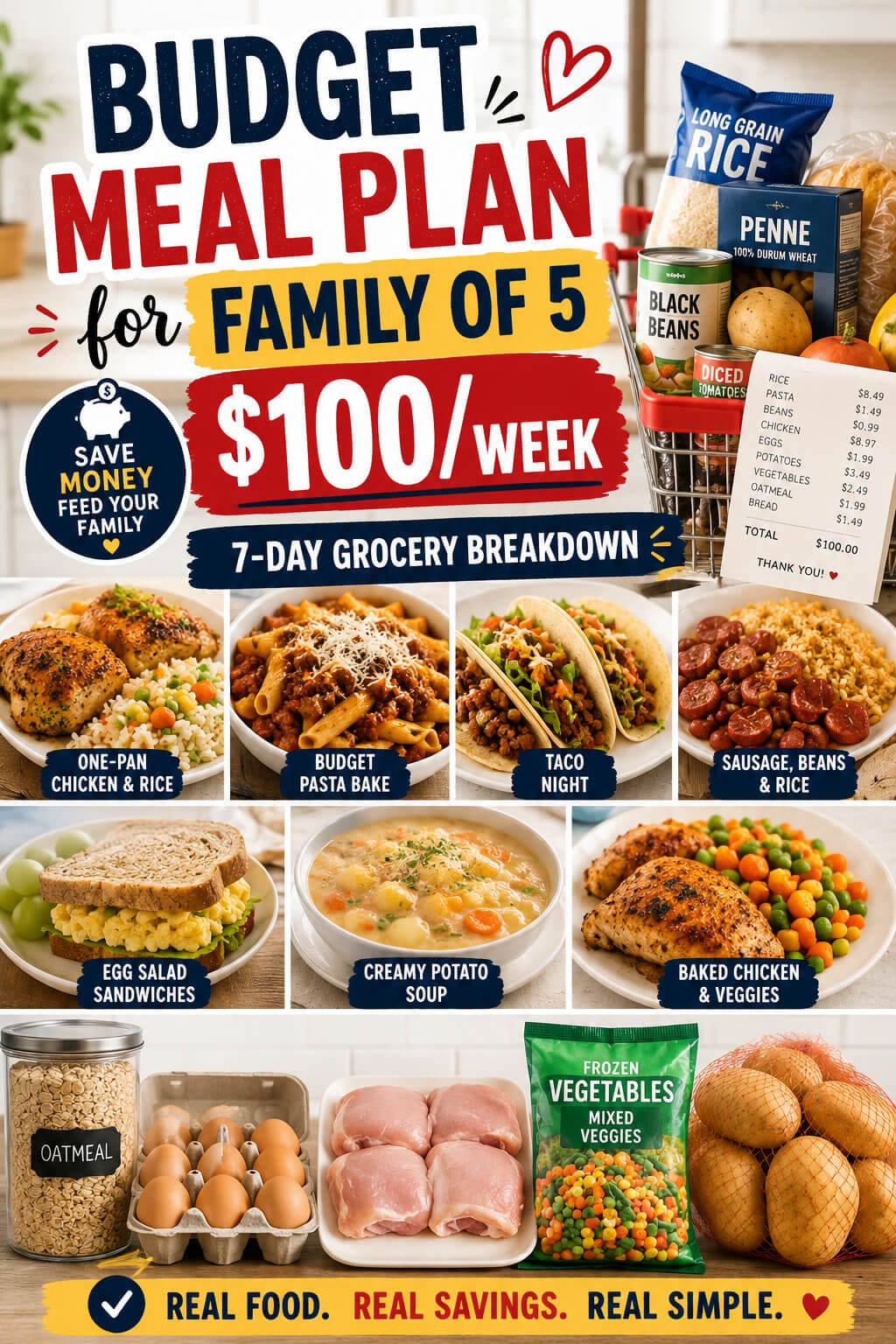
Budget Meal Plan for Family of 5: $100/Week
Grocery prices have gone up. You’ve probably felt it at checkout — loading up a cart that used to cost $80 and watching the total hit $130. For a family of five, that adds up fast.
Here’s the thing: you can feed your family real, filling food on $100 a week. Not fancy food. Not Instagram food. But good meals that your kids will eat, that don’t require a culinary degree, and that won’t leave you burning through your paycheck every Thursday at the supermarket.
This article walks you through exactly how to do it — a grocery list, a full 7-day meal plan with breakfast, lunch, and dinner, a budget breakdown, and tips to actually make it stick.
Is a $100/Week Grocery Budget for a Family of 5 Realistic?
Short answer: yes, for most families in most parts of the country.
The longer answer is that it depends on where you live. Groceries in rural Mississippi cost less than groceries in San Francisco.
If you’re in a high cost-of-living area, your realistic target might be $110–$120. That’s fine. The strategy here still works.
A few things that make this easier:
- You already have some pantry staples (oil, salt, pepper, spices). If you’re starting from scratch, your first week will cost more. That’s normal.
- You’re willing to use store brands. Generic pasta, canned beans, and store-brand frozen vegetables taste the same as name brands and cost 20–40% less.
- You’re okay cooking from scratch most nights. Convenience foods — frozen dinners, pre-marinated meats, boxed meal kits — eat your budget fast.
If you can check those boxes, $100/week is very doable.
The Strategy Behind Budget Meal Planning
Before the grocery list, you need to understand why some families spend $300/week and others spend $100. It almost always comes down to what’s anchoring their meals.
The cheapest ingredients per serving are things like rice, dried pasta, beans, lentils, oats, and potatoes. These are your budget backbone. Build meals around them, and everything else gets cheaper by default.
Proteins are where budgets blow up. Boneless skinless chicken breasts, salmon, ground beef — they sound normal, but at $5–8/lb, they add up quick. Chicken thighs are the move.
They run $1.50–2.50/lb in most stores, they’re hard to overcook, and they taste better than breasts in most recipes. Eggs are your other best friend — around $3–4 for a dozen and endlessly versatile.
Frozen vegetables are perfectly fine. Nutritionally, they’re basically the same as fresh. A 12 oz bag of frozen broccoli or mixed veggies costs about $1–1.50, versus $2.50–4 for fresh.
Two habits that separate budget meal planning from just “buying cheap stuff”:
- Cook once, eat twice. Make a big pot of something Monday and plan to use leftovers for Tuesday’s lunch or a remix dinner on Wednesday. A roast chicken becomes chicken fried rice. A pot of black beans becomes burrito filling and then taco night.
- Plan your meals before you shop. This sounds obvious, but most overspending happens from unplanned shopping. When you walk in with a list built around 7 dinners, you stop buying things you don’t need.
Weekly Grocery List (Estimated ~$95–105)

These are rough estimates based on typical US grocery store prices. Prices vary by region and store.
Produce
- Bananas (3 lbs) — $1.50
- Apples (3 lbs bag) — $4
- Baby carrots (1 lb bag) — $1.50
- Cabbage (1 head) — $2
- Onions (3 lb bag) — $3
- Garlic (1 head) — $0.75
- Potatoes (5 lb bag) — $4
Proteins
- Chicken thighs, bone-in (5–6 lbs) — $8–10
- Eggs (18-count) — $5
- Canned tuna (3 cans) — $3
- Dried black beans (1 lb) — $1.50
- Dried pinto beans (1 lb) — $1.50
Grains & Starches
- White rice (5 lb bag) — $5
- Dried pasta (2 lbs, spaghetti + rotini) — $3
- Oats, old-fashioned (42 oz canister) — $4
- Bread (store brand, 2 loaves) — $4
- Flour tortillas (20 count) — $3.50
Dairy
- Milk (1 gallon) — $4
- Shredded cheese (2 lb bag) — $7
- Butter (1 lb) — $4
Canned & Pantry
- Canned diced tomatoes (3 cans) — $3
- Canned tomato sauce (2 cans) — $2
- Chicken broth (32 oz carton) — $2.50
- Soy sauce (if not already have) — $2.50
Frozen
- Frozen mixed vegetables (3 x 12 oz bags) — $4.50
- Frozen corn (1 bag) — $1.50
Estimated Total: $95–105
You’ll use many of these items across multiple meals, so almost nothing goes to waste.
7-Day Meal Plan for a Family of 5
This plan reuses ingredients across multiple meals on purpose. No buying a pound of something and using a tablespoon.
Day 1 — Monday
Breakfast: Oatmeal with sliced bananas and a drizzle of honey or brown sugar
Lunch: Egg salad sandwiches on bread with carrots on the side
Dinner: Sheet pan chicken thighs with roasted potatoes and frozen mixed vegetables
Day 2 — Tuesday
Breakfast: Scrambled eggs and toast
Lunch: Leftover chicken and potatoes from last night (maybe wrap it in a tortilla)
Dinner: Spaghetti with tomato meat sauce — use the reserved chicken meat shredded in, or go vegetarian with canned tomatoes, garlic, and onion
Day 3 — Wednesday
Breakfast: Oatmeal with apples (diced and stirred in while it cooks)
Lunch: Bean and cheese burritos — black beans, shredded cheese, tortilla. Kids love these.
Dinner: Vegetable fried rice using leftover rice, frozen veggies, eggs, soy sauce, and a bit of onion and garlic
Day 4 — Thursday
Breakfast: Scrambled eggs with toast
Lunch: Tuna sandwiches with sliced apples
Dinner: Black bean soup — beans, broth, canned tomatoes, onion, garlic, cumin. Serve with bread or tortillas.
Day 5 — Friday
Breakfast: Oatmeal or toast with banana
Lunch: Leftover bean soup with bread
Dinner: Baked pasta — rotini, tomato sauce, cheese baked in the oven. Budget comfort food. Every kid eats this.
Day 6 — Saturday
Breakfast: Eggs any style, toast, sliced bananas
Lunch: Bean burritos or quesadillas with leftover pinto beans
Dinner: Chicken and rice soup — boil bone-in thighs with broth, onion, garlic, and carrots. Pull the meat off the bones, add rice, season well.
Day 7 — Sunday
Breakfast: Pancakes (flour, egg, milk, a bit of sugar and baking powder — cheap and the kids will be excited)
Lunch: Grilled cheese sandwiches and tomato soup made from canned tomatoes
Dinner: Use up whatever’s left. Fried rice remix, a burrito bowl, or pasta with whatever vegetables are still around.
Main Dinner Ideas: Quick Breakdowns
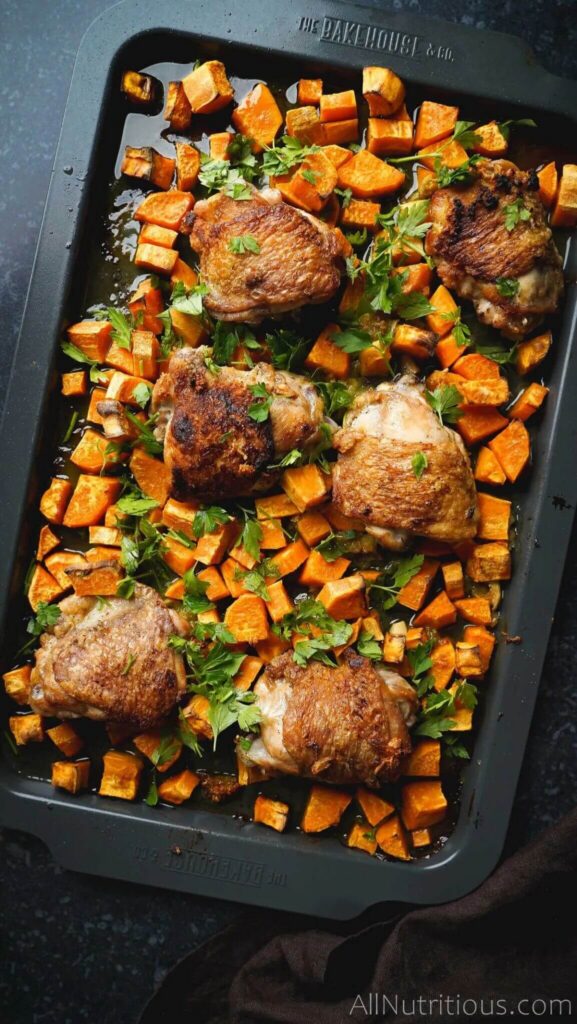
Sheet Pan Chicken Thighs Season chicken thighs with salt, pepper, garlic powder, and paprika. Toss chopped potatoes with olive oil and salt on the same pan. Roast at 425°F for 40–45 minutes. That’s the whole recipe.
Chicken Fried Rice Cook rice the day before. Day of: scramble eggs in a big pan, set aside. Sauté onion and garlic, toss in cold rice and frozen veggies, add soy sauce, stir in eggs. Done in 15 minutes.
Black Bean Soup Sauté diced onion and garlic. Add a can of diced tomatoes, a cup or two of cooked black beans (from dried), and chicken broth. Season with cumin, salt, and pepper. Simmer 20 minutes. This reheats well and tastes better the next day.
Baked Pasta Cook rotini, toss with tomato sauce and half the shredded cheese, pour into a baking dish, top with remaining cheese. Bake at 375°F for 20 minutes until bubbly. Feeds the whole family and everyone goes back for seconds.
Chicken Rice Soup This one’s forgiving. Put bone-in thighs in a pot with broth, diced carrots, onion, garlic, and a bay leaf. Simmer until the chicken falls off the bone. Pull the bones out, add uncooked rice directly to the soup, and cook another 20 minutes.
Money-Saving Tips That Actually Work
Buy store brands. Most store-brand canned goods, dried pasta, rice, and frozen vegetables are made by the same manufacturers as name brands. The label is different. The food is the same.
Check the sales before you plan. If chicken thighs are on sale, build the week around chicken. If canned tomatoes are 4 for $3, stock up. Let the deals shape the plan rather than planning first and hoping for sales.
Buy dried beans, not canned. A 1 lb bag of dried black beans costs about $1.50 and makes roughly what 3 cans would. You do need to soak them overnight, but it takes about 2 minutes of actual effort.
Cook once, plan twice. A batch of chicken on Monday should show up somewhere by Wednesday. A pot of beans Monday night should cover at least two meals.
Don’t shop hungry. This one is real. Studies consistently show people spend more when they’re hungry. Eat before you go.
Stick to your list. The store is designed to make you buy things you didn’t plan for. End caps, sales signs, smells from the bakery — it all works. Having a list and committing to it saves $15–25 per trip on average for most families.
Reduce food waste. The average American household throws away about $1,500 worth of food per year. Planning meals around what you actually have — instead of letting produce wilt in the crisper — is as good as a raise.
Meal Prep Tips to Save Time During the Week
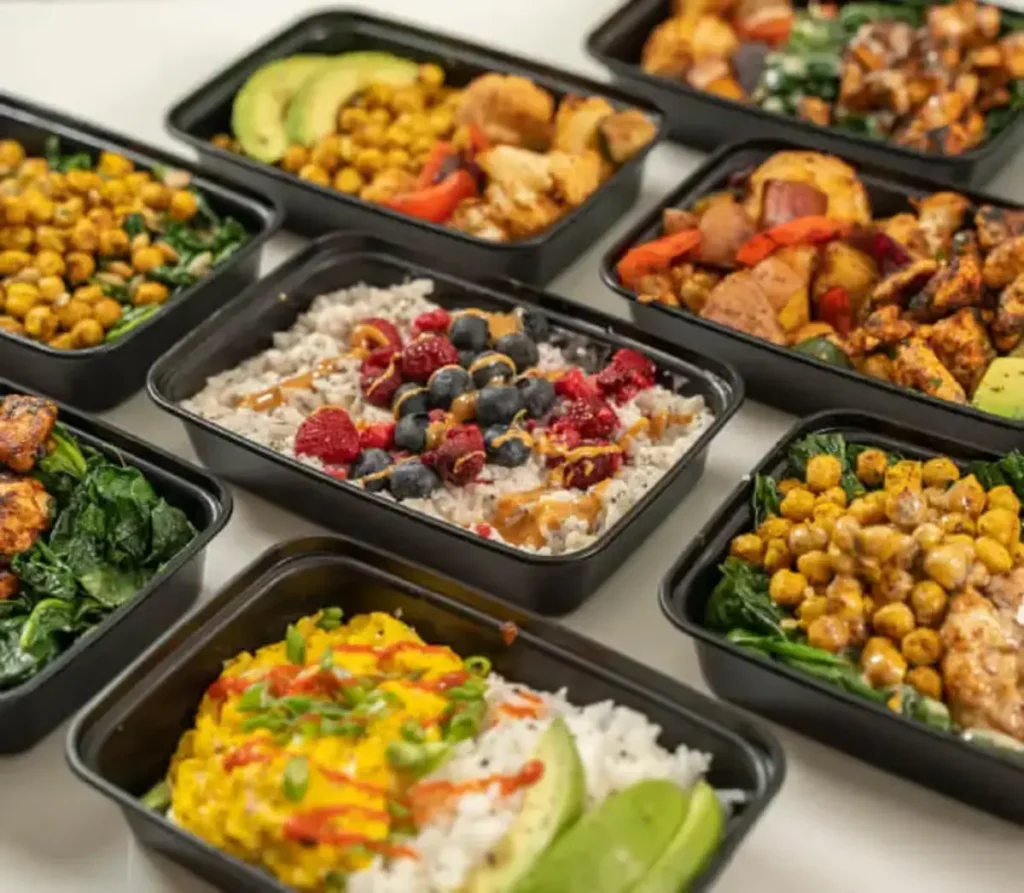
Sunday is your best friend here. You don’t have to cook everything — just the stuff that takes the longest.
Cook a big batch of rice. It takes the same amount of time to cook 4 cups as 1 cup. Cooked rice keeps in the fridge for 5 days and reheats in 2 minutes.
Cook your dried beans. Soak overnight Saturday, simmer Sunday for an hour or two, and you have beans for most of the week. Split them into portions and refrigerate.
Prep your vegetables. Wash, peel, and chop carrots, potatoes, and onions ahead of time. Cuts your actual cooking time in half on busy weeknights.
Brown chicken or hard-boil eggs. Having protein that’s already cooked makes weekday lunches instant. Hard-boiled eggs last a week in the fridge.
You don’t need to prep for 3 hours on Sunday. An hour of prep at the start of the week genuinely makes a difference.
Sample Budget Breakdown
Here’s roughly how the $100 breaks down by category:
| Category | Estimated Spend |
|---|---|
| Proteins (chicken, eggs, beans, tuna) | $25–28 |
| Grains & starches (rice, pasta, oats, bread, tortillas) | $18–20 |
| Produce (potatoes, onions, bananas, apples, carrots) | $17–19 |
| Dairy (milk, cheese, butter) | $15–16 |
| Canned & pantry goods | $10–12 |
| Frozen vegetables | $6–7 |
| Total | $91–102 |
The buffer gives you room to grab a sale item or pick up something you ran out of mid-week.
Frequently Asked Questions
Can this really feed a family of 5?
Yes. These meal portions are sized for five people. Some meals — like the chicken soup or pasta bake — make enough that adults can take more. If you have teenagers who eat enormous amounts, adjust the rice and pasta quantities up slightly, which barely changes the cost.
What if my kids are picky?
Most kids will eat pasta, burritos, scrambled eggs, pancakes, and grilled cheese. The 7-day plan here includes all of those. If there’s something specific they won’t touch, swap it out for something they will. The goal is feeding your family, not following a plan perfectly.
What if groceries cost more where I live?
Scale up slightly and focus on what’s cheapest in your area. In high-cost areas, $120–130/week is a more realistic target using this same approach. The categories that scale most affordably are grains, beans, and eggs — prioritize those. If meat is expensive locally, lean heavier on beans and eggs for protein.
Can this work for dietary restrictions?
For vegetarian families, skip the chicken and lean into beans, eggs, and lentils more. The bean soup, fried rice, pasta, burritos, and oatmeal are already vegetarian. For gluten-free, swap the pasta and bread for rice and corn tortillas. It adjusts without a lot of effort.
Do I need any special cooking skills?
No. Everything in this plan requires basic skills — boiling water, using an oven, sautéing in a pan. If you can follow simple directions, you can make every meal here.
Conclusion
A budget meal plan for a family of 5 at $100/week isn’t about eating worse. It’s about making smarter decisions before you walk into the store. Cook proteins that stretch, build meals around cheap starches, use leftovers on purpose, and skip the stuff that costs more for no real reason.
Simple meals are enough. Spaghetti, fried rice, soup, burritos — these aren’t sad food. They’re what billions of people eat every night and actually enjoy.
You don’t have to change everything at once. Try the grocery list for one week. See how it goes. Adjust what doesn’t work for your family. The goal isn’t perfection — it’s eating well without the financial stress.
